

How does the production scale affect the quality of patented steel wire?
As a supplier of patented steel wire, I've witnessed firsthand the intricate relationship between production scale and product quality. In this blog, I'll delve into how the scale of production can impact the quality of patented steel wire, exploring both the advantages and challenges that come with different production volumes.
The Impact of Large - Scale Production on Patented Steel Wire Quality
Consistency in Quality
One of the significant benefits of large - scale production is the potential for greater consistency in quality. When producing patented steel wire on a large scale, we can invest in advanced manufacturing equipment. These machines are designed to perform repetitive tasks with high precision, ensuring that each batch of steel wire meets the same set of specifications. For example, automated heat - treatment processes can precisely control the temperature and duration, which is crucial for achieving the desired mechanical properties of the patented steel wire, such as tensile strength and ductility.
Moreover, large - scale production allows for better quality control systems. We can implement in - line inspection techniques at multiple stages of the production process. For instance, using non - destructive testing methods like ultrasonic testing to detect internal flaws in the steel wire. With a large number of products being produced, statistical process control can be effectively applied. This helps us identify trends and variations in quality early on and make necessary adjustments to the production process to maintain a high - quality standard.
Cost - Effective Quality Improvements
Large - scale production often enables cost - effective quality improvements. We can afford to conduct extensive research and development (R&D) to enhance the quality of our patented steel wire. For example, by investing in new alloys or coating technologies. A large production volume spreads the cost of R&D over a greater number of products, making it more economically viable.
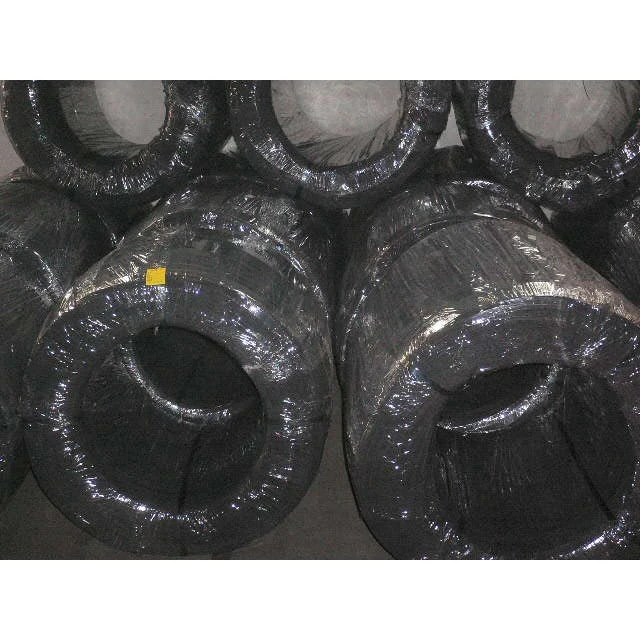

In terms of raw materials, we can negotiate better deals with suppliers due to the large quantity of materials we purchase. This allows us to source high - quality raw materials at a lower cost. For instance, we can obtain high - purity steel, which is essential for producing high - quality patented steel wire. The use of better raw materials directly contributes to the overall quality of the final product.
Meeting High - Volume Customer Demands
Large - scale production is essential for meeting the high - volume demands of customers. In industries such as construction and automotive, where large quantities of patented steel wire are required, our ability to produce on a large scale ensures a reliable supply. This reliability is a crucial aspect of quality from the customer's perspective. When customers can count on a consistent supply of high - quality patented steel wire, they are more likely to trust our products and continue to do business with us.
However, large - scale production also presents some challenges that can potentially affect the quality of patented steel wire.
Complexity in Production Management
As the production scale increases, the complexity of production management also rises. Coordinating different stages of the production process, such as wire drawing, heat treatment, and coating, becomes more difficult. Any miscommunication or inefficiency in the production management can lead to quality issues. For example, if there is a delay in the heat - treatment process, it can affect the mechanical properties of the steel wire.
Potential for Over - Standardization
Large - scale production may lead to over - standardization. In an effort to streamline the production process and achieve consistency, we may focus too much on meeting a set of standard specifications and overlook some unique customer requirements. This can result in a product that may not fully meet the specific needs of certain customers, even though it meets the general quality standards.
The Impact of Small - Scale Production on Patented Steel Wire Quality
Customization and Flexibility
Small - scale production offers a high degree of customization and flexibility. We can work closely with individual customers to understand their specific requirements and produce patented steel wire that precisely meets their needs. For example, if a customer needs a steel wire with a unique diameter or a special coating, we can adjust our production process accordingly. This level of customization is often associated with high - quality products, as it shows that we are committed to providing solutions that are tailored to the customer's exact needs.
Attention to Detail
In small - scale production, there is more room for attention to detail. Each product can be carefully inspected and monitored throughout the production process. Our workers can have a more hands - on approach, ensuring that every step is carried out with precision. This personal touch can result in a higher - quality product, especially for applications where the quality requirements are extremely high. For instance, in the production of steel wire for high - precision machinery, the attention to detail in small - scale production can make a significant difference.
Quick Response to Market Changes
Small - scale production allows us to quickly respond to market changes. If there is a sudden demand for a new type of patented steel wire or a change in quality requirements, we can adapt our production process relatively quickly. This agility is an important aspect of quality, as it shows that we can keep up with the evolving needs of the market.
However, small - scale production also has its limitations when it comes to quality.
Higher Production Costs
Small - scale production generally incurs higher production costs. We may not be able to take advantage of economies of scale in terms of raw material purchasing or equipment investment. This can limit our ability to invest in the latest technologies and high - quality raw materials, which can have a negative impact on the quality of the patented steel wire. For example, we may have to use lower - grade steel due to cost constraints, which can affect the mechanical properties of the wire.
Limited Quality Control Resources
Compared to large - scale production, small - scale production may have limited quality control resources. We may not be able to afford sophisticated in - line inspection equipment or conduct extensive statistical process control. This can make it more difficult to detect and correct quality issues early on, potentially leading to a higher rate of defective products.
Balancing Production Scale and Quality
In practice, finding the right balance between production scale and quality is crucial. We need to evaluate the specific requirements of different customers and markets and determine the most appropriate production scale.
For customers who require large quantities of standard - specification patented steel wire, large - scale production is the way to go. We can ensure consistency, cost - effectiveness, and reliable supply. On the other hand, for customers with unique or high - precision requirements, small - scale production can offer the customization and attention to detail they need.
We also need to continuously invest in quality control and improvement regardless of the production scale. For large - scale production, we should focus on optimizing production management and avoiding over - standardization. For small - scale production, we need to find ways to reduce costs without sacrificing quality, such as forming strategic partnerships with suppliers or sharing R&D resources.
Related Products and Their Quality in Different Production Scales
When it comes to related products like Phosphate Coating Steel Wire, Cold Drawn Steel Wire, and Black Annealed Tie Steel Wire, the relationship between production scale and quality is similar.
In large - scale production of phosphate coating steel wire, we can ensure a uniform coating thickness and good adhesion through advanced coating equipment and quality control systems. However, we need to be careful about maintaining the environmental conditions during the coating process to avoid quality issues such as coating defects. For cold drawn steel wire, large - scale production can lead to more consistent mechanical properties due to precise control of the drawing process. But we need to monitor the surface finish to prevent scratches or other surface defects. In the case of black annealed tie steel wire, large - scale production can provide a stable supply, but we must ensure proper annealing to achieve the desired softness and ductility.
In small - scale production of these related products, we can offer customized solutions. For example, we can produce phosphate coating steel wire with a special phosphate formula according to the customer's requirements. For cold drawn steel wire, we can pay more attention to the surface quality and produce wire with a mirror - like finish. And for black annealed tie steel wire, we can adjust the annealing process to meet the specific needs of different applications.
Conclusion
In conclusion, the production scale has a significant impact on the quality of patented steel wire. Both large - scale and small - scale production have their own advantages and challenges in terms of quality. As a supplier, our goal is to balance these factors and provide high - quality products that meet the diverse needs of our customers.
If you are interested in our patented steel wire or any of our related products, we invite you to contact us for a procurement discussion. We are committed to working with you to find the best solutions for your specific requirements.
References
- Smith, J. (2018). "Quality Control in Steel Wire Production". Journal of Metallurgical Engineering.
- Johnson, A. (2019). "The Impact of Production Scale on Manufacturing Quality". International Journal of Production Research.
- Brown, R. (2020). "Advances in Steel Wire Technology". Proceedings of the World Steel Congress.