

How to ensure the uniformity of round steel wire?
As a supplier of Round Steel Wire, ensuring the uniformity of our products is of utmost importance. Uniformity not only affects the quality and performance of the wire but also determines its suitability for various applications. In this blog, I will share some key strategies and practices that we adopt to guarantee the uniformity of our round steel wire.
Raw Material Selection
The journey to achieving uniform round steel wire begins with the careful selection of raw materials. We source high - quality steel from trusted suppliers. The chemical composition of the steel must be consistent within a narrow range. For example, the carbon content, which significantly influences the strength and hardness of the wire, should be precisely controlled. A variation in carbon content can lead to differences in mechanical properties along the length of the wire.
We also pay close attention to the purity of the raw steel. Impurities such as sulfur and phosphorus can cause brittleness and affect the wire's ductility. By working with suppliers who adhere to strict quality control standards, we can obtain steel with low impurity levels, which is essential for producing uniform round steel wire.
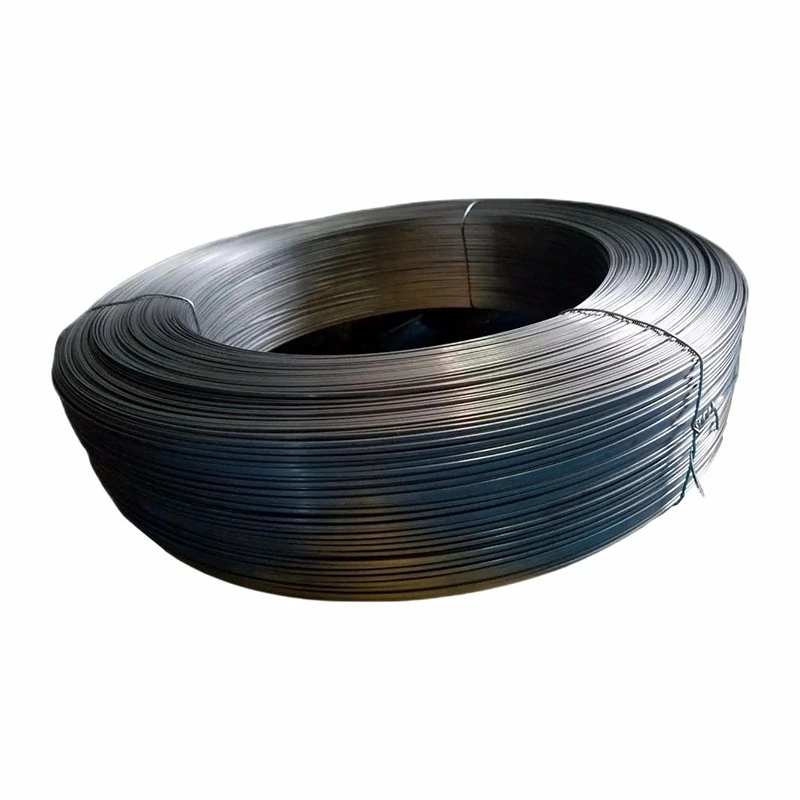

Melting and Casting Processes
Once the raw materials are selected, the melting and casting processes play a crucial role in ensuring uniformity. In our melting furnaces, we use advanced technology to precisely control the temperature and chemical reactions. The steel is melted at a specific temperature range to ensure complete homogeneity of the alloying elements.
During the casting process, we use continuous casting techniques. This method helps to reduce the formation of internal defects such as porosity and segregation. Continuous casting produces billets with a more uniform cross - section and structure, which is the foundation for producing high - quality round steel wire.
Hot Rolling
Hot rolling is a significant step in the production of round steel wire. The billets are heated to a high temperature and passed through a series of rolling mills. The rolling process reduces the cross - sectional area of the billet while increasing its length. To ensure uniformity, we carefully control the rolling parameters such as rolling speed, reduction ratio, and temperature.
A consistent rolling speed helps to maintain a uniform deformation rate across the entire length of the billet. The reduction ratio, which is the ratio of the initial cross - sectional area to the final cross - sectional area, must be carefully adjusted at each pass of the rolling mill. If the reduction ratio is too high or too low in some sections, it can lead to non - uniform grain size and mechanical properties in the wire.
Temperature control during hot rolling is also critical. The billet must be maintained at a suitable temperature throughout the rolling process. A drop in temperature can cause uneven deformation and hardening in some areas of the wire. We use infrared thermometers and other temperature monitoring devices to ensure that the temperature remains within the specified range.
Cold Drawing
After hot rolling, the wire is further processed through cold drawing. Cold drawing is a process that refines the diameter and surface finish of the wire. It also improves the mechanical properties of the wire by work hardening.
In our cold - drawing operations, we use a series of dies with gradually decreasing diameters. The wire is pulled through these dies under controlled tension. To ensure uniformity, we monitor the drawing speed, lubrication, and die wear.
A consistent drawing speed is necessary to ensure uniform deformation. If the speed is too fast, it can cause excessive stress and breakage in the wire. On the other hand, a slow speed may lead to uneven work hardening.
Proper lubrication is essential during cold drawing. It reduces friction between the wire and the die, preventing surface damage and ensuring a smooth and uniform surface finish. We use high - quality lubricants and regularly check their quality and application to ensure consistent performance.
Die wear is another factor that can affect the uniformity of the wire. As the dies are used, they gradually wear out, which can change the shape and size of the wire being drawn. We regularly inspect and replace the dies to maintain the accuracy of the wire diameter and surface quality.
Heat Treatment
Heat treatment is often used to further improve the mechanical properties and uniformity of the round steel wire. There are different types of heat treatment processes such as annealing, quenching, and tempering.
Annealing is a process that involves heating the wire to a specific temperature and then slowly cooling it. This process helps to relieve internal stresses, refine the grain structure, and improve the ductility of the wire. By carefully controlling the annealing temperature and cooling rate, we can ensure that the wire has a uniform microstructure and mechanical properties.
Quenching and tempering are used to increase the strength and hardness of the wire. During quenching, the wire is rapidly cooled from a high temperature, which causes a phase transformation in the steel. Tempering is then carried out to reduce the brittleness caused by quenching. The parameters of quenching and tempering, such as quenching medium, quenching time, and tempering temperature, must be precisely controlled to achieve uniform results.
Quality Control
Quality control is an integral part of ensuring the uniformity of round steel wire. We have a comprehensive quality control system in place that covers every stage of the production process.
We conduct regular inspections of the raw materials to ensure their compliance with our quality standards. During the production process, we use non - destructive testing methods such as ultrasonic testing and magnetic particle testing to detect internal defects in the wire. These methods can identify flaws such as cracks and inclusions that may affect the uniformity and performance of the wire.
We also perform mechanical testing on samples of the wire. Tensile testing, hardness testing, and torsion testing are some of the common tests we conduct. These tests help us to verify that the mechanical properties of the wire meet the specified requirements and are uniform along the length and across the cross - section of the wire.
In addition to in - house testing, we also participate in third - party certification programs. These independent certifications provide an additional level of assurance to our customers that our round steel wire meets international quality standards.
Applications and the Importance of Uniformity
Our uniform round steel wire has a wide range of applications. It is used in the construction industry for making reinforcement bars, in the automotive industry for manufacturing springs and fasteners, and in the wire mesh industry for producing various types of meshes.
In the construction industry, the uniformity of the round steel wire is crucial for ensuring the structural integrity of buildings. Non - uniform wire may have different strength and ductility in different sections, which can lead to uneven load distribution and potential failure of the structure.
In the automotive industry, springs made from non - uniform wire may have inconsistent performance, which can affect the safety and comfort of the vehicle. Fasteners made from non - uniform wire may not have the required strength and durability, leading to potential loosening and safety hazards.
In the wire mesh industry, uniform wire is necessary to produce meshes with a consistent aperture size and strength. Non - uniform wire can result in meshes with irregular shapes and varying mechanical properties, which may not meet the requirements of the end - use applications.
Conclusion
Ensuring the uniformity of round steel wire is a complex but essential task. By carefully controlling every stage of the production process, from raw material selection to heat treatment and quality control, we can produce high - quality round steel wire that meets the strictest standards.
If you are interested in our Round Steel Wire, Cold Rolled Flat Steel Wire Strips, or Rectangular Steel Wire, we welcome you to contact us for procurement and further discussion. We are committed to providing you with the best - quality products and services.
References
- ASM Handbook Volume 1: Properties and Selection: Irons, Steels, and High - Performance Alloys
- Fundamentals of Metal Forming by G. E. Dieter
- Manufacturing Engineering and Technology by S. Kalpakjian and S. R. Schmid