

Is stainless steel wire magnetic?
Is stainless steel wire magnetic? This is a question I often encounter as a supplier of stainless steel wire. It's a topic that combines science, industry, and practical applications. In this blog, I'll delve into the magnetic properties of stainless steel wire, explain the factors that influence them, and explore the implications for various industries.
Understanding Stainless Steel Basics
Stainless steel is an alloy primarily composed of iron, chromium, and often other elements such as nickel, molybdenum, and manganese. The addition of chromium is what gives stainless steel its corrosion - resistant properties. Chromium forms a thin, passive oxide layer on the surface of the steel, protecting it from oxidation and rust.
There are several types of stainless steel, classified mainly based on their crystalline structure. The three most common types are austenitic, ferritic, and martensitic stainless steels. Each type has distinct properties, including magnetic behavior.
Austenitic Stainless Steel Wire
Austenitic stainless steels are the most widely used type of stainless steel. They typically contain high levels of nickel (usually 8 - 12%) and chromium (16 - 26%). The most well - known grade is 304 stainless steel, which is used in a vast range of applications from kitchenware to architectural structures.
Austenitic stainless steel wire is generally non - magnetic in its annealed (softened) state. This is because the austenitic structure is face - centered cubic (FCC), which does not have the magnetic domains required for ferromagnetism. However, under certain conditions, austenitic stainless steel can become slightly magnetic. Cold working, such as cold drawing, can induce a phase transformation in the austenite to a martensitic phase. Martensite is ferromagnetic, so if a significant amount of martensite is formed during cold working, the wire may exhibit some magnetic properties.
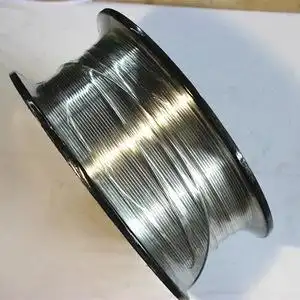
Our Cold Drawn Stainless Steel Wire may show a slight magnetic tendency due to the cold - drawing process. But this is usually a very minor effect and can vary depending on the specific grade and the degree of cold work.
Ferritic Stainless Steel Wire
Ferritic stainless steels have a body - centered cubic (BCC) crystal structure. They typically contain lower amounts of nickel (less than 1%) and higher amounts of chromium (10.5 - 27%). Ferritic stainless steel wire is magnetic because the BCC structure allows for the formation of magnetic domains.
Ferritic stainless steels are known for their good corrosion resistance, especially in mildly corrosive environments. They are often used in automotive exhaust systems, architectural trim, and some household appliances. The magnetic property of ferritic stainless steel wire can be an advantage in applications where magnetic attraction is required, such as in magnetic separators or in some electronic components.
Martensitic Stainless Steel Wire
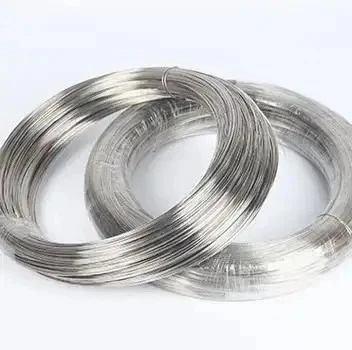
Martensitic stainless steels are similar to ferritic stainless steels in terms of their iron - chromium composition, but they can be heat - treated to achieve high strength and hardness. Martensitic stainless steel wire is also magnetic due to its body - centered tetragonal (BCT) structure, which is closely related to the BCC structure of ferritic stainless steel.
Martensitic stainless steels are commonly used in applications where high strength and wear resistance are required, such as in cutlery, surgical instruments, and some industrial tools. The magnetic property of martensitic stainless steel wire can be useful in applications where magnetic holding or positioning is needed.
Other Factors Affecting Magnetism
In addition to the type of stainless steel, other factors can affect the magnetic properties of stainless steel wire. Impurities in the alloy can influence the magnetic behavior. For example, the presence of certain elements like sulfur or phosphorus can change the magnetic characteristics of the steel.
The heat treatment history of the wire is also crucial. Annealing can restore the non - magnetic state of austenitic stainless steel by eliminating the martensitic phase formed during cold working. On the other hand, quenching and tempering of martensitic stainless steel can enhance its magnetic properties by optimizing the martensitic structure.
Implications for Different Industries
The magnetic properties of stainless steel wire have significant implications for various industries. In the food and beverage industry, non - magnetic austenitic stainless steel wire is preferred for applications where magnetic contamination is a concern. For example, in food processing equipment, non - magnetic wire ensures that there is no risk of magnetic particles getting into the food product.
In the electronics industry, the magnetic properties of stainless steel wire can be either an advantage or a disadvantage. In some cases, magnetic stainless steel wire can be used in components where magnetic shielding or electromagnetic induction is required. However, in other applications, such as in sensitive electronic devices, non - magnetic wire is necessary to avoid interference with the electronic signals.
In the construction industry, the choice between magnetic and non - magnetic stainless steel wire depends on the specific application. For example, in architectural facades, non - magnetic austenitic stainless steel wire may be preferred for its aesthetic appeal and corrosion resistance. In contrast, in some structural applications where magnetic anchoring or alignment is needed, ferritic or martensitic stainless steel wire may be more suitable.
Our Product Range and Applications
As a stainless steel wire supplier, we offer a wide range of stainless steel wire products, including austenitic, ferritic, and martensitic grades. Our Alloy Steel Wire is carefully manufactured to meet the specific requirements of different industries.
We understand that the magnetic properties of stainless steel wire can be a critical factor in many applications. That's why we provide detailed information about the magnetic characteristics of our products to our customers. Whether you need non - magnetic wire for a food processing application or magnetic wire for an electronic component, we can help you select the right product.
Contact Us for Procurement
If you're in the market for stainless steel wire and have questions about the magnetic properties or any other aspect of our products, we're here to assist you. Our team of experts can provide you with in - depth technical support and help you make the best choice for your application.
We invite you to contact us for procurement discussions. Whether you're a small - scale manufacturer or a large - scale industrial enterprise, we can offer you high - quality stainless steel wire at competitive prices. Let's work together to find the perfect solution for your stainless steel wire needs.
References
- "Stainless Steel: A Technical Guide" by ASM International.
- "The Science and Engineering of Materials" by Donald R. Askeland and Pradeep P. Phule.
- Industry standards and research papers on stainless steel alloys and their properties.