

What are the mechanical properties of rectangular steel wire?
What are the mechanical properties of rectangular steel wire?
As a supplier of Rectangular Steel Wire, I've had the privilege of working closely with this remarkable material, witnessing firsthand its unique mechanical properties and diverse applications. In this blog post, I'll delve into the key mechanical properties of rectangular steel wire, exploring how they contribute to its performance in various industries.
Tensile Strength
Tensile strength is one of the most critical mechanical properties of rectangular steel wire. It refers to the maximum amount of tensile stress that the wire can withstand before breaking. Rectangular steel wire typically exhibits high tensile strength, making it suitable for applications where strong and durable materials are required.
The high tensile strength of rectangular steel wire is due to its composition and manufacturing process. The wire is usually made from high - carbon steel or alloy steel, which provides excellent strength. During the manufacturing process, the wire is often cold - drawn or cold - rolled, which further enhances its strength by aligning the metal grains and increasing the density of dislocations within the material.
For example, in the construction industry, rectangular steel wire is used in the reinforcement of concrete structures. The high tensile strength of the wire allows it to resist the pulling forces that occur when the concrete is under stress, preventing cracks and ensuring the structural integrity of the building.
Yield Strength
Yield strength is another important mechanical property. It is the stress at which a material begins to deform plastically, meaning it will not return to its original shape after the stress is removed. Rectangular steel wire has a well - defined yield point, which is crucial for many engineering applications.
When designing structures or components using rectangular steel wire, engineers need to ensure that the applied stress does not exceed the yield strength. This is because once the yield strength is exceeded, the wire will undergo permanent deformation, which can compromise the safety and functionality of the structure.
In the automotive industry, rectangular steel wire is used in the production of springs. The yield strength of the wire determines the maximum load that the spring can support without permanent deformation. Springs need to be able to return to their original shape after being compressed or stretched, and the appropriate yield strength of the rectangular steel wire ensures this performance.
Ductility
Ductility is the ability of a material to deform plastically under tensile stress without fracturing. Rectangular steel wire generally has good ductility, which allows it to be bent, shaped, and formed into various configurations without breaking.
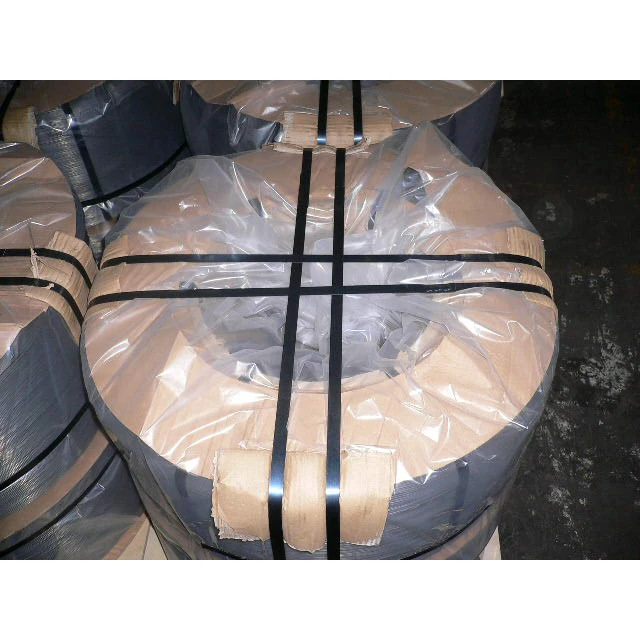

This property is particularly important in the manufacturing of wire products. For instance, in the production of wire mesh, the rectangular steel wire can be easily woven or welded into a mesh structure due to its ductility. The wire can be bent at sharp angles and still maintain its integrity, enabling the creation of complex and precise mesh patterns.
Moreover, the ductility of rectangular steel wire also plays a role in its ability to absorb energy during deformation. In applications where impact resistance is required, such as in the production of safety barriers, the wire's ductility allows it to deform and absorb the energy of an impact, reducing the force transmitted to the surrounding structure.
Hardness
Hardness is a measure of a material's resistance to indentation, scratching, or wear. Rectangular steel wire can have a wide range of hardness values depending on its composition and heat treatment.
A harder rectangular steel wire is more resistant to wear and abrasion, making it suitable for applications where the wire will be in contact with abrasive materials. For example, in the mining industry, rectangular steel wire is used in the production of conveyor belts. The hard wire can withstand the constant friction and abrasion caused by the movement of the ore and other materials on the belt, ensuring a longer service life.
On the other hand, a softer wire may be preferred in applications where formability is more important. The softer wire can be more easily shaped and manipulated during the manufacturing process.
Fatigue Resistance
Fatigue resistance is the ability of a material to withstand repeated loading and unloading cycles without failure. Rectangular steel wire often has good fatigue resistance, which is essential for applications where the wire is subjected to cyclic stresses.
In the aerospace industry, rectangular steel wire is used in the production of aircraft components such as cables and springs. These components are constantly exposed to cyclic loading during flight, including vibrations and changes in air pressure. The fatigue resistance of the rectangular steel wire ensures that these components can operate safely and reliably over a long period of time.
Elastic Modulus
The elastic modulus, also known as Young's modulus, is a measure of the stiffness of a material. It represents the ratio of stress to strain within the elastic range of the material. Rectangular steel wire has a relatively high elastic modulus, which means it is stiff and will not deform easily under small loads.
This property is important in applications where precise dimensional control is required. For example, in the production of precision instruments, the high elastic modulus of rectangular steel wire ensures that the wire maintains its shape and dimensions, providing accurate and reliable performance.
Applications Based on Mechanical Properties
The unique combination of these mechanical properties makes rectangular steel wire suitable for a wide range of applications. In addition to the industries mentioned above, it is also used in the furniture industry for making frames and supports, in the electrical industry for wiring and grounding, and in the jewelry industry for creating unique designs.
If you are interested in our Rectangular Steel Wire, you may also want to explore our other products such as Cold Rolled Flat Steel Wire Strips and Round Steel Wire.
Conclusion
In conclusion, the mechanical properties of rectangular steel wire, including tensile strength, yield strength, ductility, hardness, fatigue resistance, and elastic modulus, are what make it such a versatile and valuable material. These properties enable it to meet the diverse needs of different industries and applications.
Whether you are an engineer looking for a reliable material for your next project, a manufacturer in need of high - quality wire products, or a designer seeking a unique material for your creations, rectangular steel wire is an excellent choice.
If you have any questions about our rectangular steel wire or are interested in purchasing our products, please feel free to contact us for further discussions and procurement negotiations. We are committed to providing you with the best products and services.
References
- "Metallurgy and Mechanics of Wires" by John D. Verhoeven
- "Mechanical Properties of Engineering Materials" by George E. Dieter
- Industry reports on steel wire applications in various sectors.