

What are the quality inspection methods for traditional phosphating?
Hey there! I'm a supplier of traditional phosphating products, and today I wanna chat about the quality inspection methods for traditional phosphating. Traditional phosphating has been around for ages and is still widely used in various industries, from automotive to metal fabrication. Ensuring the quality of the phosphating process is crucial for getting the best results, so let's dive into the different inspection methods.
Visual Inspection
The first and simplest method is visual inspection. This is basically just looking at the phosphated surface with your own eyes. A good phosphated coating should have a uniform appearance. It shouldn't have any obvious signs of unevenness, like patches or streaks. You're also looking out for any blisters, cracks, or peeling. If you see any of these issues, it's a red flag that something might be wrong with the phosphating process.
For example, if there are patches on the surface, it could mean that the phosphating solution wasn't evenly distributed during the process. Maybe the parts weren't properly immersed or the agitation in the tank wasn't sufficient. Blisters could indicate that there was some gas trapped under the coating, which might be due to improper cleaning of the substrate before phosphating.
Visual inspection is quick and easy, but it does have its limitations. It's mostly good for detecting major flaws. Some smaller defects or internal issues might not be visible to the naked eye. That's where other inspection methods come in.
Thickness Measurement
The thickness of the phosphated coating is super important. If it's too thin, it might not provide enough protection for the metal substrate. On the other hand, if it's too thick, it could affect the fit and function of the parts. There are a few different ways to measure the coating thickness.
One common method is using a magnetic thickness gauge. This works on ferrous metals. The gauge measures the magnetic field between the probe and the metal substrate. The thickness of the non - magnetic phosphated coating affects this magnetic field, and the gauge can then calculate the coating thickness based on the change in the field.
For non - ferrous metals, an eddy - current thickness gauge is often used. It works by generating an eddy current in the metal substrate. The presence of the phosphated coating changes the eddy current, and the gauge can measure this change to determine the coating thickness.
Regularly measuring the coating thickness helps ensure that the phosphating process is consistent. If you notice that the thickness is consistently outside the desired range, you can adjust the process parameters, like the immersion time or the concentration of the phosphating solution.
Adhesion Testing
The adhesion of the phosphated coating to the metal substrate is another key factor. A coating that doesn't adhere well won't provide long - term protection. There are a couple of ways to test adhesion.
The cross - hatch test is a popular one. You use a sharp blade to make a series of parallel cuts in the coating, and then you make another set of cuts perpendicular to the first set, creating a grid pattern. Then, you apply a piece of adhesive tape over the grid and quickly pull it off. If a lot of the coating comes off with the tape, it means the adhesion is poor.
Another method is the pull - off test. In this test, a dollop of an adhesive is applied to the phosphated surface, and a loading fixture is attached to the adhesive. Then, a force is applied to pull the fixture away from the surface. The amount of force required to pull the coating off is a measure of its adhesion.
Poor adhesion could be caused by many things, such as improper surface preparation. If there was oil, grease, or rust on the metal surface before phosphating, the coating might not bond properly.
Chemical Analysis
Chemical analysis can tell you a lot about the quality of the phosphated coating. It can help you determine the composition of the coating and whether it meets the required specifications.
One way to do chemical analysis is through X - ray fluorescence (XRF). This technique can quickly and non - destructively analyze the elements present in the coating. You can find out the amounts of phosphorus, zinc, manganese, and other elements that are typically part of a phosphated coating.
Another method is wet chemical analysis. This involves taking a sample of the coating and dissolving it in a suitable chemical solution. Then, various chemical tests are performed to determine the concentrations of different elements.
Chemical analysis can also be used to check the quality of the phosphating solution itself. By analyzing the solution regularly, you can make sure that the concentrations of the key chemicals are within the right range. If the concentration of the phosphating agent is too low, the coating might not form properly.
Salt Spray Testing
Salt spray testing is a well - known method for evaluating the corrosion resistance of a phosphated coating. In this test, the phosphated parts are placed in a salt spray chamber. A fine mist of a salt solution (usually a 5% sodium chloride solution) is sprayed over the parts for a specified period of time.
After the test, the parts are examined for signs of corrosion. The longer it takes for corrosion to appear, the better the corrosion resistance of the coating. Salt spray testing simulates a harsh, corrosive environment, similar to what the parts might encounter in real - world applications.
If the parts show significant corrosion after a relatively short time in the salt spray chamber, it could mean that the phosphating process wasn't effective. Maybe the coating thickness was too thin, or there were some defects in the coating that allowed the salt solution to reach the metal substrate.
Our Products for Traditional Phosphating
As a supplier, we offer a range of high - quality phosphatizing agents. For continuous line applications, we have Phosphatizing Agents for Continuous Line. These agents are formulated to work efficiently in high - volume, continuous production lines, ensuring consistent and high - quality phosphating.

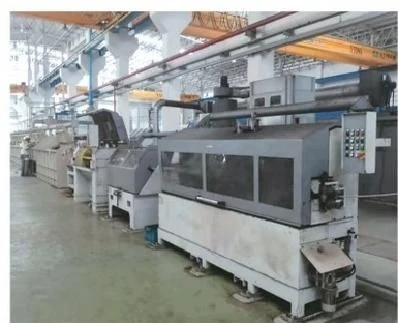
If you're working with cold - drawn steel, our Cold - drawn Steel Phosphatizing Agents are the way to go. They're specifically designed to provide excellent adhesion and corrosion resistance on cold - drawn steel surfaces.
For immersion line applications, we have Immersion Line Phosphatizing Agents. These agents are optimized for use in immersion tanks, giving you a reliable and effective phosphating process.
Let's Talk!
If you're in the market for traditional phosphating products and want to ensure the best quality for your processes, I'd love to have a chat with you. Whether you have questions about our products, the quality inspection methods, or need advice on setting up your phosphating process, don't hesitate to reach out. We're here to help you get the most out of your traditional phosphating operations.
References
- ASTM International standards on phosphating and coating inspection.
- Technical literature from leading chemical suppliers in the phosphating industry.
- Research papers on the science and technology of traditional phosphating.