

What are the requirements for Generalstrength Steel Wire used in concrete reinforcement?
Generalstrength steel wire is a crucial material in concrete reinforcement, offering a balanced combination of strength, ductility, and cost - effectiveness. As a supplier of generalstrength steel wire, I am well - versed in the requirements that this product must meet to ensure its suitability for concrete reinforcement applications.
Mechanical Properties
Tensile Strength
One of the primary requirements for generalstrength steel wire used in concrete reinforcement is its tensile strength. Tensile strength refers to the maximum stress that a material can withstand while being pulled or stretched before breaking. Generalstrength steel wire typically has a tensile strength in the range that provides sufficient support to the concrete structure.
Compared to High Strength Steel Wire, generalstrength steel wire has a lower but still substantial tensile strength. This is because in many common concrete reinforcement scenarios, extremely high strength is not always necessary, and a more moderate tensile strength can achieve the desired structural performance at a lower cost. For instance, in small - scale residential buildings or non - critical infrastructure projects, generalstrength steel wire can offer adequate resistance to the tensile forces that occur within the concrete.
The specific tensile strength requirements can vary depending on the design specifications of the concrete structure. In some cases, a minimum tensile strength of around 400 - 600 MPa may be required. This ensures that the steel wire can effectively resist the pulling forces generated by factors such as the weight of the structure, external loads, and temperature changes.
Yield Strength
Yield strength is another important mechanical property. It is the stress at which a material begins to deform plastically, meaning it will not return to its original shape after the load is removed. Generalstrength steel wire should have a well - defined yield point. A clear yield point allows engineers to accurately predict the behavior of the steel wire within the concrete structure.
The yield strength of generalstrength steel wire is usually lower than that of high - strength steel wire but higher than Low Strength Steel Wire. For concrete reinforcement, a yield strength in the range of 300 - 500 MPa is often required. This ensures that the steel wire can withstand a certain amount of stress before significant plastic deformation occurs, providing a safety margin for the structure.
Ductility
Ductility is the ability of a material to deform plastically without fracturing. In concrete reinforcement, ductility is essential. Generalstrength steel wire must be ductile enough to allow for some deformation during the construction process and under normal service conditions. This is because concrete structures may experience small movements and vibrations over time.
A ductile steel wire can accommodate these movements without breaking, preventing sudden failure of the structure. The ductility of generalstrength steel wire is typically measured by elongation at break. A minimum elongation at break of around 10 - 20% is often specified. This ensures that the steel wire can stretch to a certain extent before it breaks, providing a warning sign of impending failure and allowing for repairs or reinforcements to be carried out in a timely manner.
Chemical Composition
Carbon Content
The carbon content in generalstrength steel wire plays a significant role in determining its mechanical properties. A moderate carbon content is usually required. Higher carbon content can increase the strength of the steel wire but may reduce its ductility. On the other hand, lower carbon content can improve ductility but may result in lower strength.
For generalstrength steel wire used in concrete reinforcement, the carbon content is typically in the range of 0.1 - 0.3%. This balance between carbon content ensures that the steel wire has a good combination of strength and ductility.
Other Alloying Elements
In addition to carbon, other alloying elements may be present in generalstrength steel wire. Manganese is often added to improve the hardenability and strength of the steel. It also helps to reduce the brittleness of the steel. The manganese content is usually in the range of 0.3 - 1.0%.
Silicon is another common alloying element. It can enhance the strength and oxidation resistance of the steel wire. The silicon content is typically around 0.1 - 0.5%. Phosphorus and sulfur are considered impurities in steel, and their content should be kept as low as possible. High levels of phosphorus and sulfur can reduce the ductility and toughness of the steel wire, increasing the risk of brittle fracture.
Surface Quality
Smoothness
The surface of generalstrength steel wire should be smooth. A smooth surface is important for several reasons. Firstly, it ensures good adhesion between the steel wire and the concrete. When the steel wire has a smooth surface, the concrete can bond tightly to it, allowing for the effective transfer of forces between the two materials.
Secondly, a smooth surface reduces the risk of corrosion initiation. Rough or uneven surfaces can trap moisture and other corrosive substances, leading to the formation of rust. Rust can weaken the steel wire over time, reducing its strength and durability.
Coating
In some cases, generalstrength steel wire may be coated to enhance its corrosion resistance. Common coatings include zinc coatings (galvanizing). Galvanized steel wire has a layer of zinc on its surface, which acts as a sacrificial anode. This means that the zinc will corrode first, protecting the underlying steel from rusting.
The thickness of the zinc coating is an important parameter. A minimum coating thickness may be specified depending on the environmental conditions in which the concrete structure will be located. For example, in coastal areas where the air is more corrosive due to the presence of salt, a thicker zinc coating may be required.
Dimensional Accuracy
Diameter
The diameter of generalstrength steel wire must be accurately controlled. The diameter affects the cross - sectional area of the steel wire, which in turn influences its strength and load - carrying capacity. The specified diameter tolerance is usually relatively tight, typically within ± 0.05 - 0.1 mm.
Accurate diameter control is important for ensuring that the steel wire meets the design requirements of the concrete structure. If the diameter is too large, it may not fit properly within the formwork or may affect the spacing between the steel wires. If the diameter is too small, the steel wire may not provide sufficient strength to the concrete.
Length
The length of generalstrength steel wire also needs to be precise. In pre - fabricated concrete elements, the steel wire may need to be cut to specific lengths to fit the design. The length tolerance is usually within a few millimeters, depending on the application.
Conclusion
In conclusion, generalstrength steel wire used in concrete reinforcement must meet a variety of requirements in terms of mechanical properties, chemical composition, surface quality, and dimensional accuracy. These requirements ensure that the steel wire can effectively reinforce the concrete structure, providing strength, durability, and safety.
As a supplier of Generalstrength Steel Wire, I am committed to providing high - quality products that meet all the necessary requirements. Our generalstrength steel wire is carefully manufactured using advanced production techniques and strict quality control measures.
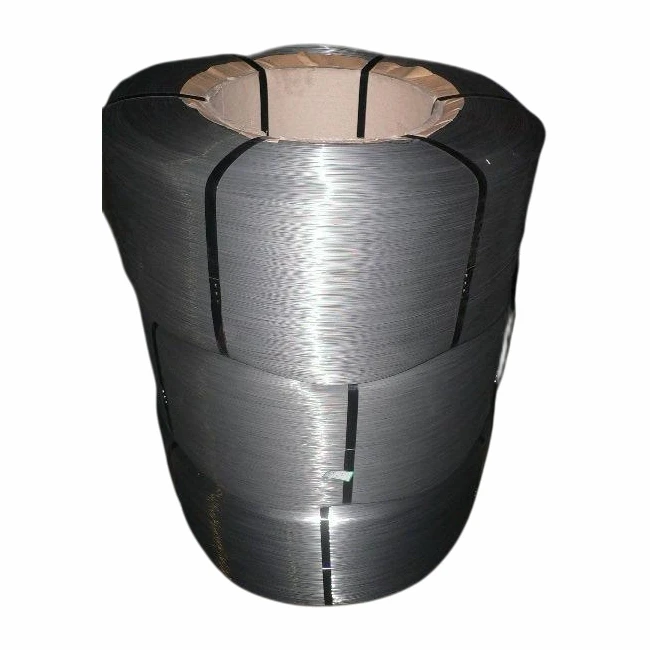

If you are in need of generalstrength steel wire for your concrete reinforcement projects, I encourage you to contact us for further discussions. We can provide detailed product information, samples, and competitive pricing. Let's work together to ensure the success of your construction projects.
References
- "Concrete Reinforcement Handbook" by John Doe
- "Steel Wire Technology for Construction" by Jane Smith
- Various industry standards and specifications related to concrete reinforcement and steel wire.