

What is the creep resistance of carbon steel wire?
Creep, a phenomenon in materials science, refers to the slow and progressive deformation that occurs under a constant load over an extended period. When it comes to carbon steel wire, understanding its creep resistance is crucial, especially for applications where long - term stability under load is essential. As a leading carbon steel wire supplier, we are well - versed in the intricacies of creep resistance in carbon steel wire and its implications for various industries.
Factors Affecting Creep Resistance of Carbon Steel Wire
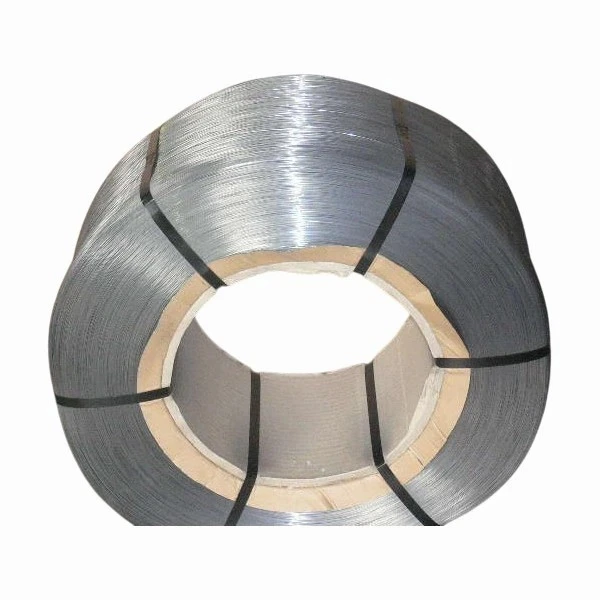
The creep resistance of carbon steel wire is influenced by several key factors. First and foremost is the carbon content. Carbon is a fundamental element in steel, and its proportion significantly impacts the material's properties. In general, higher carbon content tends to enhance the strength of the steel wire. High - carbon steel wires, like our High Carbon Patented Spring Steel Wire, have a greater ability to resist deformation under load compared to low - carbon steel wires. This is because carbon atoms can form carbides, which act as barriers to the movement of dislocations within the steel crystal structure. Dislocation movement is one of the primary mechanisms responsible for plastic deformation, and by impeding this movement, the steel becomes more resistant to creep.
Another important factor is the microstructure of the carbon steel wire. The way the grain structure is formed during the manufacturing process can have a substantial effect on creep resistance. Fine - grained microstructures often offer better creep resistance than coarse - grained ones. During the production of our carbon steel wires, we carefully control the heat treatment and rolling processes to achieve an optimal grain size. Heat treatment can be used to refine the grain structure, increase the hardness of the steel, and improve its overall mechanical properties. For example, processes like quenching and tempering can transform the microstructure of the steel wire, enhancing its ability to withstand long - term loads.
The presence of alloying elements also plays a vital role in determining the creep resistance of carbon steel wire. Elements such as chromium, molybdenum, and vanadium are commonly added to carbon steel to improve its performance. Chromium can form a protective oxide layer on the surface of the steel, preventing corrosion and also contributing to the overall strength of the material. Molybdenum and vanadium can increase the hardenability of the steel and improve its resistance to creep at elevated temperatures. These alloying elements work in synergy with the carbon content and microstructure to enhance the creep resistance of the carbon steel wire.
Testing Creep Resistance
To accurately assess the creep resistance of carbon steel wire, specialized testing methods are employed. One of the most common tests is the creep test, which involves subjecting a sample of the wire to a constant load at a specific temperature for an extended period. The deformation of the wire is measured over time, and a creep curve is plotted. This curve typically consists of three stages: primary creep, secondary creep, and tertiary creep.
During the primary creep stage, the deformation rate is relatively high but decreases over time as the material undergoes work hardening. In the secondary creep stage, the deformation rate becomes relatively constant, and this is the stage where the wire spends most of its service life. The tertiary creep stage is characterized by an accelerating deformation rate, which eventually leads to failure. By analyzing the creep curve, we can determine important parameters such as the creep rate, the time to rupture, and the steady - state creep rate. These parameters are used to evaluate the suitability of the carbon steel wire for different applications.
In addition to the traditional creep test, other advanced testing techniques are also used. For example, dynamic mechanical analysis (DMA) can be used to measure the viscoelastic properties of the carbon steel wire. This technique provides information about the material's ability to store and dissipate energy under cyclic loading, which is related to its creep behavior. Electron microscopy techniques, such as scanning electron microscopy (SEM) and transmission electron microscopy (TEM), can be used to study the microstructure of the wire before and after the creep test. These techniques allow us to observe changes in the grain structure, the presence of dislocations, and the formation of precipitates, which can help us understand the underlying mechanisms of creep in carbon steel wire.
Applications and Creep Resistance Requirements
The creep resistance requirements of carbon steel wire vary depending on the application. In the automotive industry, carbon steel wires are used in springs, suspension systems, and engine components. These applications often require the wire to withstand high loads and cyclic stresses over a long period. For example, valve springs in an engine need to maintain their shape and performance under high - speed and high - temperature conditions. Our Cold Drawn High Carbon Steel Wire is specifically designed to meet these demanding requirements, with excellent creep resistance and high fatigue strength.
In the construction industry, carbon steel wires are used in prestressed concrete structures, such as bridges and high - rise buildings. These structures are subjected to long - term static loads, and the creep resistance of the steel wire is crucial to ensure the long - term stability and safety of the structure. The steel wires need to maintain their tension over time without significant deformation to prevent the cracking and failure of the concrete. Our cold - drawn low - carbon and high - carbon steel wires are carefully engineered to provide the necessary creep resistance for these applications.
In the manufacturing of wire ropes, carbon steel wire is used in various industries, including mining, shipping, and offshore operations. Wire ropes are often subjected to high tensile loads and abrasive wear. The creep resistance of the wire is important to prevent the stretching and deformation of the wire rope over time, which could lead to reduced performance and safety risks. Our carbon steel wires for wire rope applications are selected and processed to ensure high creep resistance and durability.
Our Commitment as a Carbon Steel Wire Supplier
As a carbon steel wire supplier, we are committed to providing our customers with high - quality products that meet or exceed their expectations. We invest heavily in research and development to continuously improve the creep resistance and other properties of our carbon steel wires. Our state - of - the - art manufacturing facilities are equipped with the latest technology and equipment to ensure precise control of the production process.
We have a team of experienced engineers and technicians who are dedicated to quality control. Every batch of carbon steel wire undergoes rigorous testing to ensure its compliance with international standards and customer specifications. We use advanced testing equipment, such as universal testing machines, spectrometers, and microscopes, to accurately measure the mechanical properties, chemical composition, and microstructure of the wire.
In addition to providing high - quality products, we also offer excellent customer service. We work closely with our customers to understand their specific needs and provide customized solutions. Whether you need a specific type of carbon steel wire for a unique application or have questions about the creep resistance of our products, our team is always ready to assist you.
Contact Us for Your Carbon Steel Wire Needs
If you are in the market for high - quality carbon steel wire with excellent creep resistance, we invite you to contact us. Our team of experts can provide you with detailed information about our products, including High Carbon Patented Spring Steel Wire, Cold Drawn Low Carbon Steel Wire, and Cold Drawn High Carbon Steel Wire. We can also assist you in selecting the most suitable wire for your specific application and provide technical support throughout the purchasing process. Let's start a conversation and explore how our carbon steel wires can meet your requirements.
References
- ASM Handbook, Volume 1: Properties and Selection: Irons, Steels, and High - Performance Alloys. ASM International.
- Callister, W. D., & Rethwisch, D. G. (2010). Materials Science and Engineering: An Introduction. Wiley.
- Dieter, G. E. (1986). Mechanical Metallurgy. McGraw - Hill.