

What is the difference between single - pass and multi - pass cold drawing of steel wire?
In the realm of steel wire manufacturing, cold drawing is a pivotal process that significantly enhances the mechanical properties and dimensional accuracy of steel wire. As a seasoned Cold Drawn Steel Wire supplier, I've witnessed firsthand the nuances and differences between single - pass and multi - pass cold drawing. Understanding these differences is crucial for both manufacturers and end - users, as it directly impacts the quality, cost, and performance of the final product.
Understanding Cold Drawing
Cold drawing is a metalworking process where a steel wire is pulled through a die to reduce its cross - sectional area. This process is carried out at room temperature, which imparts several benefits such as increased tensile strength, improved surface finish, and better dimensional control. The reduction in cross - sectional area causes the steel's grains to elongate along the direction of drawing, resulting in enhanced mechanical properties.
Single - Pass Cold Drawing
Single - pass cold drawing is a straightforward process. In this method, the steel wire is pulled through a single die in one continuous operation to achieve the desired reduction in diameter. This process is relatively simple and quick, which makes it cost - effective for small - scale production or when only a minor reduction in diameter is required.
One of the main advantages of single - pass cold drawing is its simplicity. There is less equipment involved, and the setup time is minimal. This makes it ideal for producing small batches of steel wire with relatively large initial diameters that only need a small reduction. For example, if a customer needs a wire with a slight reduction in diameter for a specific application like a simple wire mesh, single - pass cold drawing can be a viable option.
However, single - pass cold drawing also has its limitations. The amount of reduction that can be achieved in a single pass is restricted. Excessive reduction in a single pass can lead to several problems. Firstly, it can cause internal stresses in the wire. These stresses can result in cracking or even breakage during the drawing process. Secondly, the surface finish of the wire may be compromised. As the wire is forced through the die under high pressure, there is a greater chance of surface irregularities such as scratches or rough spots.
Multi - Pass Cold Drawing
Multi - pass cold drawing, on the other hand, involves pulling the steel wire through a series of dies in multiple successive passes. Each die in the sequence has a slightly smaller diameter than the previous one, allowing for a gradual and controlled reduction in the wire's diameter. This method is used when a significant reduction in diameter is required or when a high - quality finish and precise dimensional accuracy are needed.
One of the key advantages of multi - pass cold drawing is the ability to achieve a large reduction in diameter without causing excessive internal stresses. By gradually reducing the diameter in each pass, the wire has time to adjust to the changes, minimizing the risk of cracking or breakage. This results in a wire with more uniform mechanical properties and a better surface finish.
Another benefit of multi - pass cold drawing is the improved control over the wire's dimensions. Since the reduction is carried out in small increments, it is easier to achieve the exact desired diameter and tolerance. This is particularly important in applications where precision is critical, such as in the production of springs or high - end electrical components.
Multi - pass cold drawing also allows for better work hardening of the wire. Work hardening is the process by which the strength and hardness of the steel increase as it is deformed. By subjecting the wire to multiple passes through the dies, the work hardening effect is enhanced, resulting in a wire with higher tensile strength and better wear resistance.
However, multi - pass cold drawing is a more complex and time - consuming process. It requires more equipment, including multiple dies and a more sophisticated drawing machine. The setup time is also longer, as each die needs to be carefully aligned and calibrated. Additionally, the cost of production is higher due to the increased labor and equipment requirements.
Applications and Considerations
The choice between single - pass and multi - pass cold drawing depends on several factors, including the application requirements, the initial and final diameters of the wire, and the desired mechanical properties.
For applications that require a large reduction in diameter and high - quality finish, multi - pass cold drawing is usually the preferred method. For instance, in the production of Phosphate Coating Steel Wire, which is commonly used in automotive and construction industries, multi - pass cold drawing is often employed to ensure the wire has the necessary strength and surface quality. Similarly, Oil Tempered Steel Wire used for making high - performance springs also benefits from the precise control and enhanced mechanical properties achieved through multi - pass cold drawing.
On the other hand, single - pass cold drawing is suitable for applications where a minor reduction in diameter is sufficient and cost - efficiency is a priority. For example, in the production of simple wire products like clothes hangers or basic wire ropes, single - pass cold drawing can meet the requirements at a lower cost.
Impact on Material Properties
The cold drawing process, whether single - pass or multi - pass, has a significant impact on the material properties of the steel wire. In single - pass cold drawing, as mentioned earlier, the limited reduction and potential for internal stresses can result in a wire with less uniform mechanical properties. The work hardening effect is also less pronounced compared to multi - pass cold drawing.

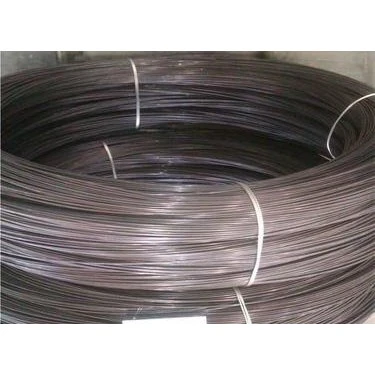
In multi - pass cold drawing, the gradual reduction in diameter and multiple passes allow for a more uniform distribution of internal stresses. This results in a wire with consistent mechanical properties along its length. The enhanced work hardening also leads to a wire with higher tensile strength, better ductility, and improved fatigue resistance. For example, Patented Steel Wire often undergoes multi - pass cold drawing to achieve the desired combination of strength and ductility for applications such as prestressed concrete structures.
Cost Considerations
Cost is an important factor in the decision - making process between single - pass and multi - pass cold drawing. Single - pass cold drawing is generally more cost - effective in terms of equipment and setup. Since there is less equipment involved and the process is simpler, the initial investment is lower. Additionally, the production time is shorter, which can lead to lower labor costs.
Multi - pass cold drawing, however, requires a more significant investment in equipment, including multiple dies and a more advanced drawing machine. The setup time is longer, and the labor costs are higher due to the need for more skilled operators to manage the complex process. However, in applications where high - quality and precise dimensional accuracy are required, the additional cost of multi - pass cold drawing is often justified by the improved performance and quality of the final product.
Conclusion
In conclusion, the choice between single - pass and multi - pass cold drawing of steel wire depends on a variety of factors, including the application requirements, the desired reduction in diameter, the quality of the final product, and cost considerations. As a Cold Drawn Steel Wire supplier, we understand the importance of choosing the right process to meet our customers' needs.
If you are in the market for high - quality cold - drawn steel wire and need assistance in determining whether single - pass or multi - pass cold drawing is the best option for your application, we are here to help. Our team of experts has extensive experience in steel wire manufacturing and can provide you with the guidance and solutions you need. We can offer a wide range of steel wire products, including Phosphate Coating Steel Wire, Oil Tempered Steel Wire, and Patented Steel Wire, all produced using the most appropriate cold - drawing techniques. Contact us today to discuss your requirements and start a fruitful procurement negotiation.
References
- ASM Handbook Volume 7: Metalworking: Forging, Extrusion, Rolling, and Drawing. ASM International.
- "Cold Drawing of Steel Wires" by H. K. D. H. Bhadeshia. Cambridge University Press.
- "Mechanical Behavior of Materials" by Donald R. Askeland and Pradeep P. Phule. Cengage Learning.