

What is the yield strength of low strength steel wire?
Hey there! As a supplier of Low Strength Steel Wire, I often get asked about the yield strength of this product. So, I thought I'd write a blog post to share some insights and clear up any confusion.
First off, let's talk about what yield strength actually means. Yield strength is the point at which a material starts to deform plastically. In simpler terms, it's the stress level at which the steel wire will no longer return to its original shape after the load is removed. This is an important property because it helps us understand how much stress the wire can handle before it starts to permanently change its form.
Now, when it comes to low strength steel wire, the yield strength can vary depending on a few factors. One of the main factors is the composition of the steel. Low strength steel wire typically contains a lower percentage of carbon and other alloying elements compared to high strength steel wire. This results in a softer and more ductile material, which generally has a lower yield strength.
Another factor that can affect the yield strength is the manufacturing process. The way the wire is drawn, annealed, and treated can all have an impact on its mechanical properties. For example, a wire that has been cold drawn will generally have a higher yield strength than one that has been hot rolled.
So, what is the typical yield strength of low strength steel wire? Well, it can range anywhere from around 200 MPa (megapascals) to 400 MPa. To put that into perspective, high strength steel wire can have a yield strength of up to 1500 MPa or more. The lower yield strength of low strength steel wire makes it more suitable for applications where flexibility and ductility are important, such as in fencing, binding, and general-purpose wiring.
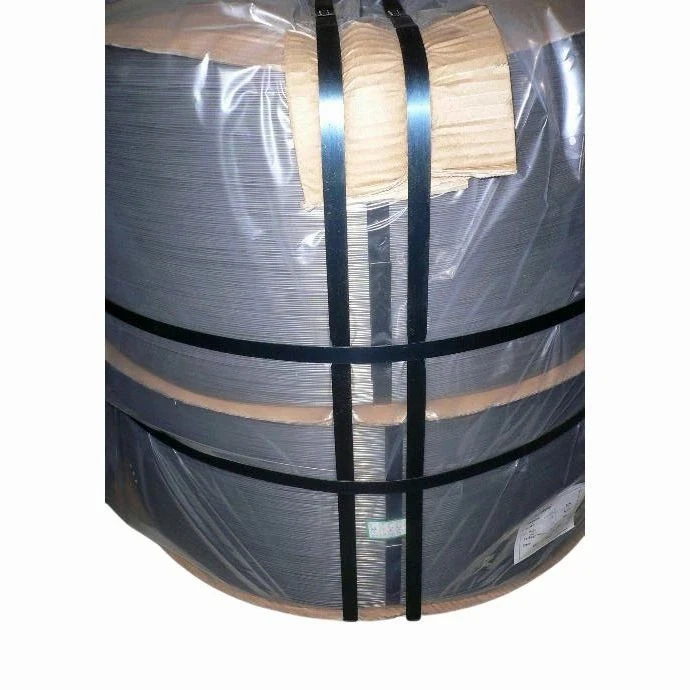

It's also worth noting that the yield strength is just one of many properties that we consider when selecting the right steel wire for a particular application. Other properties, such as tensile strength, elongation, and corrosion resistance, are also important and need to be taken into account.
At our company, we offer a wide range of Low Strength Steel Wire products to meet the diverse needs of our customers. Whether you're looking for a wire with a specific yield strength or other mechanical properties, we can help you find the right solution.
In addition to low strength steel wire, we also supply Generalstrength Steel Wire and High Strength Steel Wire. Each type of wire has its own unique properties and applications, so it's important to choose the right one for your project.
If you're not sure which type of steel wire is best for your application, our team of experts is here to help. We can provide you with technical advice and guidance to ensure that you make the right choice.
When it comes to purchasing steel wire, quality is key. That's why we only source our products from reputable manufacturers who adhere to strict quality control standards. This ensures that our customers receive high-quality wire that meets their specifications and performs as expected.
In conclusion, the yield strength of low strength steel wire is an important property that can vary depending on factors such as composition and manufacturing process. Typically, it ranges from around 200 MPa to 400 MPa, making it suitable for applications where flexibility and ductility are important. At our company, we offer a wide range of steel wire products, including low strength, general strength, and high strength options. If you have any questions or need help selecting the right wire for your project, don't hesitate to get in touch. We're here to assist you every step of the way.
If you're interested in learning more about our Low Strength Steel Wire products or have any questions about yield strength or other mechanical properties, please feel free to reach out. We'd be happy to discuss your requirements and provide you with a quote. Let's work together to find the perfect steel wire solution for your needs.
References
- ASM Handbook Volume 1: Properties and Selection: Irons, Steels, and High-Performance Alloys
- Metals Handbook Desk Edition, Third Edition