

How is uncoated steel wire produced?
Uncoated steel wire is a fundamental material with a wide range of applications in various industries, from construction and manufacturing to agriculture and automotive. As a leading supplier of Uncoated Steel Wire, I'm excited to share the detailed process of how this essential product is produced.
Raw Material Selection
The production of uncoated steel wire begins with the careful selection of raw materials. High - quality steel billets are the starting point. These billets are typically made from iron ore that has been refined through a series of processes in a steel mill. The chemical composition of the steel is crucial as it determines the wire's mechanical properties, such as strength, ductility, and hardness.
For most uncoated steel wires, low - carbon steel is a popular choice due to its good formability and weldability. However, depending on the specific application, medium - carbon or high - carbon steel may be used. For example, high - carbon steel is often used in applications where high strength and wear resistance are required, such as in the production of springs.
Heating and Rolling
Once the appropriate steel billets are selected, they are heated in a furnace to a specific temperature. This heating process is essential as it makes the steel more malleable and easier to work with. The billets are usually heated to temperatures between 1,100°C and 1,300°C.
After heating, the billets are sent through a series of rolling mills. In the rolling process, the billets are gradually reduced in cross - section and elongated into long rods. The rolling mills consist of a set of rotating rolls that apply pressure to the steel. The first few passes in the rolling mill are called roughing passes, which significantly reduce the size of the billet. Subsequent finishing passes are used to achieve the desired diameter and surface finish of the rod.
Wire Drawing
The next step in the production of uncoated steel wire is wire drawing. The rolled rods are first cleaned to remove any scale or impurities on the surface. This is typically done through a pickling process, where the rods are immersed in an acid solution.
After cleaning, the rods are lubricated to reduce friction during the wire - drawing process. The lubricant also helps to prevent the wire from sticking to the dies and improves the surface finish of the wire.
The wire - drawing process involves pulling the rod through a series of dies, each with a smaller diameter than the previous one. As the rod passes through the dies, its diameter is gradually reduced, and its length is increased. The reduction in diameter at each die is carefully controlled to ensure that the wire maintains its mechanical properties. Multiple passes through the dies may be required to achieve the final desired diameter of the uncoated steel wire.
Annealing
During the wire - drawing process, the steel wire undergoes significant deformation, which can cause it to become hard and brittle. To restore its ductility and improve its mechanical properties, the wire is annealed.
Annealing is a heat - treatment process where the wire is heated to a specific temperature and then slowly cooled. The heating temperature and cooling rate depend on the type of steel and the desired properties of the wire. For low - carbon steel wire, the annealing temperature is typically around 600°C - 700°C.
The annealing process relieves internal stresses in the wire, refines the grain structure, and makes the wire more malleable. This allows the wire to be further processed, such as being bent, coiled, or used in manufacturing processes without breaking.
Surface Treatment (Optional)
Although the wire is uncoated, some surface treatments may be applied to improve its performance or appearance. For example, a light oil coating may be applied to protect the wire from rust during storage and transportation. This oil coating can be easily removed before the wire is used in its final application.
In some cases, the wire may be shot - peened. Shot - peening involves bombarding the surface of the wire with small metal shots. This process improves the surface hardness and fatigue resistance of the wire by introducing compressive stresses on the surface.
Quality Control
Throughout the production process, strict quality control measures are implemented to ensure that the uncoated steel wire meets the required standards. Various tests are conducted at different stages of production.
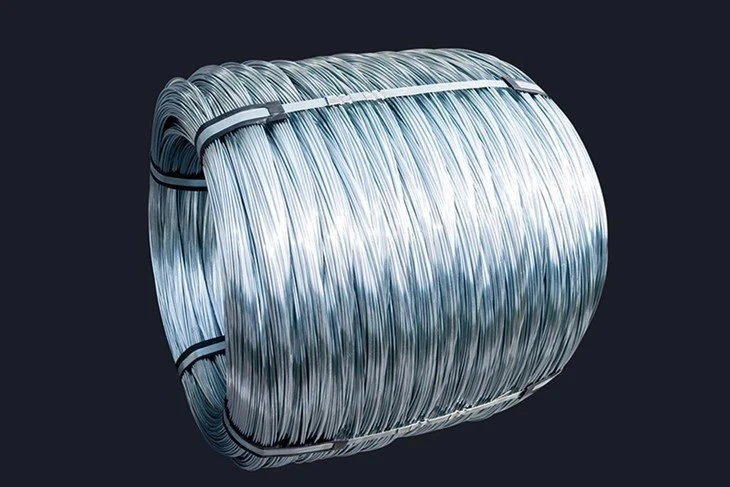
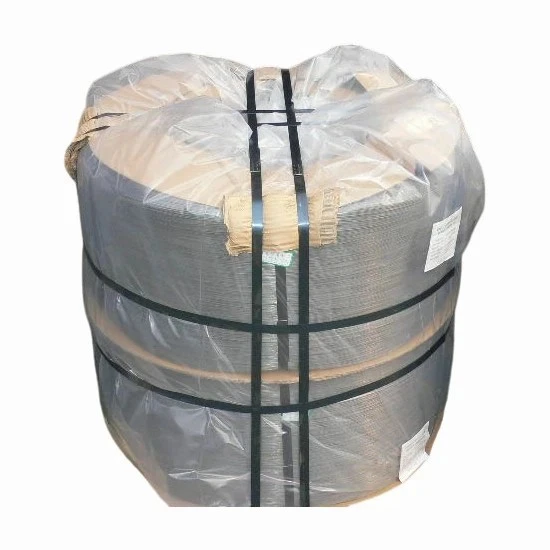
Dimensional measurements are taken to ensure that the wire has the correct diameter and length. Tensile tests are performed to determine the wire's strength and ductility. Hardness tests are also carried out to check the wire's hardness, which is an important indicator of its mechanical properties.
In addition, visual inspections are conducted to detect any surface defects, such as cracks, scratches, or inclusions. Only wires that pass all the quality control tests are packaged and sent to customers.
Applications of Uncoated Steel Wire
Uncoated steel wire has a wide range of applications. In the construction industry, it is used for tying rebar, making wire mesh for concrete reinforcement, and in fencing. In the manufacturing industry, it is used to produce springs, nails, screws, and wire ropes.
In the agricultural sector, uncoated steel wire is used for fencing livestock, making trellises for plants, and in various farm equipment. The automotive industry also uses uncoated steel wire in the production of seat springs, suspension components, and other parts.
Comparison with Coated Steel Wires
While uncoated steel wire has its own advantages, such as lower cost and better weldability, coated steel wires like Tin Plated Copper Steel Wire and Hot Dipped Galvanized Steel Wire offer enhanced corrosion resistance. Tin - plated copper steel wire is often used in electrical applications due to its good conductivity and corrosion resistance. Hot - dipped galvanized steel wire is widely used in outdoor applications where protection against rust is essential.
Conclusion
The production of uncoated steel wire is a complex and precise process that involves multiple steps, from raw material selection to quality control. As a supplier, we are committed to providing high - quality uncoated steel wire that meets the diverse needs of our customers.
If you are in need of uncoated steel wire for your project or business, we invite you to contact us for a detailed discussion. Our team of experts is ready to assist you in choosing the right type of wire and providing you with the best possible solutions.
References
- ASM Handbook Volume 1: Properties and Selection: Irons, Steels, and High - Performance Alloys
- Metals Handbook Desk Edition, 3rd Edition
- ASTM International Standards for Steel Wires