

What are the differences between traditional and modern steel wire technology?
Yo, what's up! I'm a supplier in the steel wire technology game, and today I wanna talk about the differences between traditional and modern steel wire technology. It's been a wild ride watching how this industry has evolved over the years, and there are some pretty significant distinctions between the old - school ways and the new - fangled tech.
Let's start with traditional steel wire technology. Back in the day, the process was way more hands - on and labor - intensive. The production of steel wire was a slow and often inconsistent process. For example, the raw materials used were often sourced locally, and the quality could vary a lot. There wasn't the same level of control over the chemical composition of the steel, which meant that the properties of the final wire product could be all over the place.
The manufacturing techniques were also quite basic. Traditional methods relied on simple machinery that had limited capabilities. Drawing the wire through dies was a common process, but the dies themselves were not as precisely engineered as they are today. This led to issues like uneven wire diameters and surface roughness. In terms of heat treatment, it was a bit of a hit - or - miss situation. They used basic furnaces with less accurate temperature control, so the tempering and annealing processes weren't always as effective. As a result, the strength and ductility of the steel wire were not optimized.
Now, let's shift gears and talk about modern steel wire technology. One of the biggest differences is the level of precision and control. Thanks to advancements in materials science, we can now have a much more accurate control over the chemical composition of the steel. We can add specific alloying elements in exact amounts to achieve the desired properties. For instance, adding a bit of chromium can improve corrosion resistance, and nickel can enhance toughness.
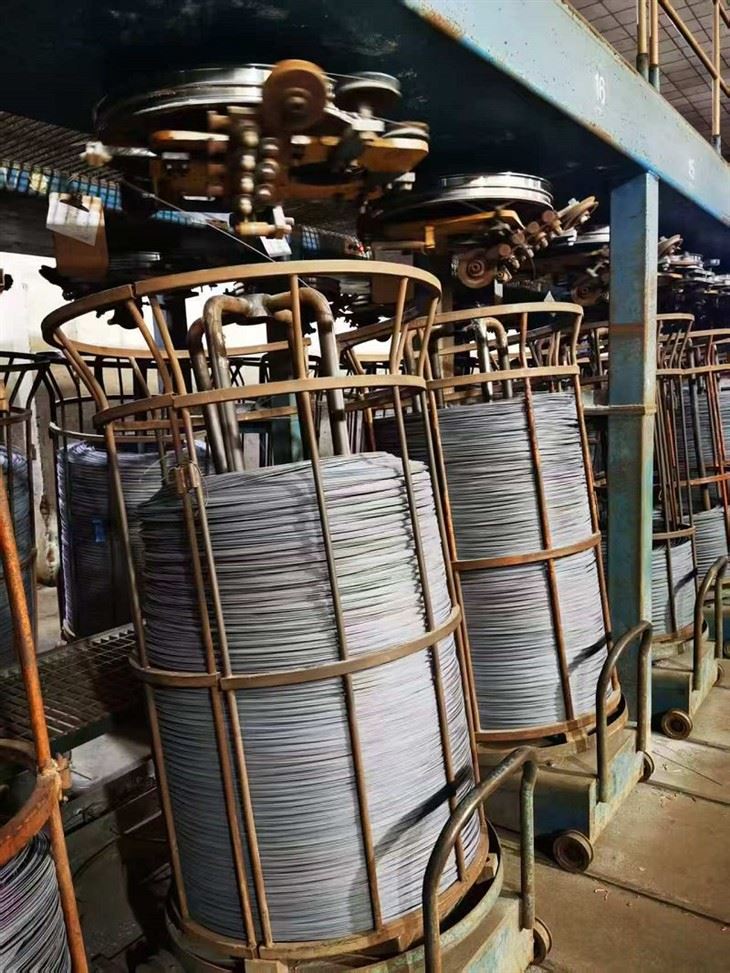
The manufacturing processes have also come a long way. Modern wire - drawing machines are highly automated and can produce wire with extremely consistent diameters. The dies used are made with advanced materials and are precision - machined to ensure a smooth and uniform surface finish on the wire. Heat treatment has also seen a huge upgrade. We use state - of - the - art furnaces with computer - controlled temperature and atmosphere. This allows us to precisely control the tempering and annealing processes, resulting in steel wire with superior strength, ductility, and fatigue resistance.
Another major difference is in the coating technologies. Traditional steel wire often had simple coatings, if any at all. These coatings were mainly for basic protection against rust, but they weren't very durable. In modern technology, we have a wide range of advanced coating options. For example, Oil Tempered Steel Wire has a special oil - based coating that not only provides excellent corrosion protection but also reduces friction during the wire - forming process. Patented Steel Wire goes through a unique patenting process that gives it enhanced strength and ductility. And Phosphate Coating Steel Wire has a phosphate coating that improves paint adhesion and corrosion resistance.
In terms of production efficiency, modern steel wire technology blows traditional methods out of the water. With automation and advanced machinery, we can produce large quantities of high - quality steel wire in a much shorter time. Traditional methods were slow and required a lot of manual labor, which limited the production volume and increased the cost.
The quality control in modern technology is also far more rigorous. We use advanced testing equipment to check every aspect of the steel wire, from its mechanical properties to its chemical composition. This ensures that only the highest - quality products make it to the market. In traditional times, quality control was more basic, mainly relying on visual inspection and simple mechanical tests.
Now, let's talk about the applications. Traditional steel wire was mainly used in simple applications like fencing, basic wire ropes, and some light - duty springs. Due to its inconsistent quality and limited properties, it wasn't suitable for more demanding applications. Modern steel wire, on the other hand, is used in a wide range of high - tech and critical applications. It's used in automotive engines for valve springs, in aerospace for cables and fasteners, and in medical devices for surgical sutures. The high strength, precision, and reliability of modern steel wire make it indispensable in these advanced industries.
If you're in the market for steel wire, whether it's for a small - scale project or a large - scale industrial application, it's clear that modern steel wire technology offers a lot more benefits. The precision, quality, and performance are just on a whole different level compared to traditional methods.
If you're interested in learning more about our steel wire products or have any questions about how our modern steel wire technology can meet your specific needs, don't hesitate to reach out. We're here to help you find the perfect steel wire solution for your project.
References:

- Various industry reports on the development of steel wire technology
- Technical papers on materials science and engineering related to steel wire production