

What are the requirements for Generalstrength Steel Wire used in springs?
As a supplier of Generalstrength Steel Wire, I've witnessed firsthand the crucial role this material plays in various industries, especially in the manufacturing of springs. Springs are ubiquitous, found in everything from automotive suspensions to household appliances, and the quality of the steel wire used significantly impacts their performance and longevity. In this blog post, I'll delve into the requirements for Generalstrength Steel Wire used in springs, exploring the key factors that manufacturers and engineers need to consider.
Tensile Strength
Tensile strength is one of the most critical properties of Generalstrength Steel Wire for springs. It refers to the maximum amount of tensile stress that the wire can withstand before breaking. Springs are designed to absorb and release energy, and they are constantly subjected to tension and compression forces. Therefore, the steel wire must have sufficient tensile strength to ensure that the spring can operate under these conditions without failing.
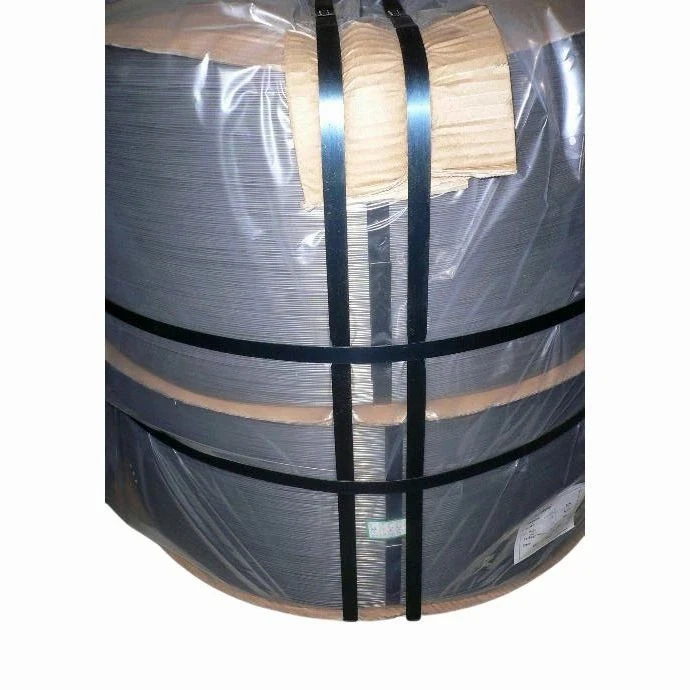
The required tensile strength of Generalstrength Steel Wire depends on the specific application of the spring. For example, springs used in heavy - duty industrial machinery may require a higher tensile strength compared to those used in consumer products. As a supplier, we offer a range of Generalstrength Steel Wire with different tensile strength levels to meet the diverse needs of our customers. You can find more information about our Generalstrength Steel Wire on our website: Generalstrength Steel Wire.
Ductility
Ductility is another important requirement for Generalstrength Steel Wire in spring manufacturing. It is the ability of the wire to deform plastically without fracturing. When a spring is formed, the steel wire needs to be bent and coiled into the desired shape. A wire with good ductility can undergo these forming processes without cracking or breaking, ensuring the integrity of the spring.
Poor ductility can lead to manufacturing defects such as cracks in the spring, which can significantly reduce its performance and lifespan. We ensure that our Generalstrength Steel Wire has excellent ductility through careful selection of raw materials and advanced manufacturing processes. This allows our customers to form high - quality springs with ease.
Surface Quality
The surface quality of Generalstrength Steel Wire is also crucial for spring applications. A smooth and clean surface helps to prevent stress concentrations and corrosion, which can weaken the wire and cause premature failure of the spring.
Surface defects such as scratches, pits, or scale can act as stress risers, increasing the likelihood of crack initiation under load. Corrosion, on the other hand, can gradually reduce the cross - sectional area of the wire, leading to a decrease in its strength. Our Generalstrength Steel Wire is produced with strict quality control measures to ensure a smooth and defect - free surface. We also offer optional surface treatments such as galvanizing or coating to enhance the corrosion resistance of the wire.
Fatigue Resistance
Springs are often subjected to repeated loading and unloading cycles during their service life. Fatigue resistance is the ability of the Generalstrength Steel Wire to withstand these cyclic loads without failing. A spring with poor fatigue resistance may break after a relatively small number of cycles, which can be a serious safety hazard in some applications.
To improve the fatigue resistance of our Generalstrength Steel Wire, we optimize the chemical composition and microstructure of the steel. We also use advanced heat treatment processes to enhance the material's properties. By providing high - fatigue - resistant steel wire, we help our customers produce springs that can last longer and perform more reliably.
Chemical Composition
The chemical composition of Generalstrength Steel Wire has a significant impact on its mechanical properties. The main elements in steel wire include carbon, manganese, silicon, and sometimes small amounts of other alloying elements.
Carbon is one of the most important elements as it affects the strength and hardness of the steel. Higher carbon content generally results in higher strength but lower ductility. Manganese helps to improve the hardenability and strength of the steel, while silicon enhances its resistance to oxidation and scaling. As a supplier, we carefully control the chemical composition of our Generalstrength Steel Wire to ensure that it meets the specific requirements of spring applications.
Comparison with Low and High Strength Steel Wires
It's worth comparing Generalstrength Steel Wire with Low Strength Steel Wire and High Strength Steel Wire. Low Strength Steel Wire is typically used in applications where the load requirements are relatively low, such as in some light - duty springs or decorative items. It is more ductile and easier to form but has lower strength.
High Strength Steel Wire, on the other hand, is designed for applications that require high - load - bearing capacity, such as in aerospace or high - performance automotive springs. It has a much higher tensile strength but may be less ductile and more difficult to form. Generalstrength Steel Wire offers a balance between strength and ductility, making it suitable for a wide range of spring applications.
Conclusion
In conclusion, the requirements for Generalstrength Steel Wire used in springs are multifaceted, including tensile strength, ductility, surface quality, fatigue resistance, and chemical composition. As a supplier, we are committed to providing high - quality Generalstrength Steel Wire that meets these requirements. Our products are carefully manufactured and tested to ensure reliable performance in spring applications.
If you are in the market for Generalstrength Steel Wire for your spring manufacturing needs, we invite you to contact us for further discussions. We can provide you with detailed product information, samples, and technical support to help you make the right choice. Whether you are a small - scale manufacturer or a large - scale industrial enterprise, we are here to meet your needs and contribute to the success of your projects.

References
- ASM Handbook Volume 1: Properties and Selection: Irons, Steels, and High - Performance Alloys.
- Spring Design Handbook, Second Edition by William A. Nash.
- ASTM Standards for Steel Wire for Springs.