

What are the training requirements for workers in steel wire technology?
As a supplier in the steel wire technology industry, I understand the significance of well - trained workers. The steel wire technology field is a complex and highly specialized one, where precision, safety, and efficiency are of utmost importance. In this blog, I will discuss the training requirements for workers in steel wire technology.
Technical Knowledge Training
Material Science
Workers need to have a solid understanding of the materials used in steel wire production. They should know the different types of steel alloys, their chemical compositions, and how these compositions affect the properties of the steel wire. For example, carbon content can significantly impact the strength and hardness of the wire. High - carbon steel wires are generally stronger but more brittle, while low - carbon steel wires are more ductile.
Knowledge of heat treatment processes is also crucial. Heat treatment can modify the microstructure of the steel, enhancing its mechanical properties. Workers should be trained on processes such as annealing, quenching, and tempering. Annealing is used to soften the steel and relieve internal stresses, while quenching and tempering can increase the strength and toughness of the wire. For instance, Oil Tempered Steel Wire is produced through a specific tempering process that gives it excellent fatigue resistance and high tensile strength.

Manufacturing Processes
There are several manufacturing processes involved in steel wire production, and workers must be well - versed in each of them. Cold drawing is a common process where the steel wire is pulled through a series of dies to reduce its diameter and increase its strength. Workers need to understand the principles of cold drawing, including the selection of appropriate dies, the control of drawing speed, and the prevention of wire breakage. Cold Drawn Steel Wire is produced using this process, and its quality depends on the skill of the workers operating the cold - drawing equipment.
Another important process is wire rolling. Rolling can be used to produce wire with specific cross - sectional shapes and surface finishes. Workers should know how to adjust the rolling mills, control the temperature during rolling, and ensure the uniformity of the wire.
Quality Control
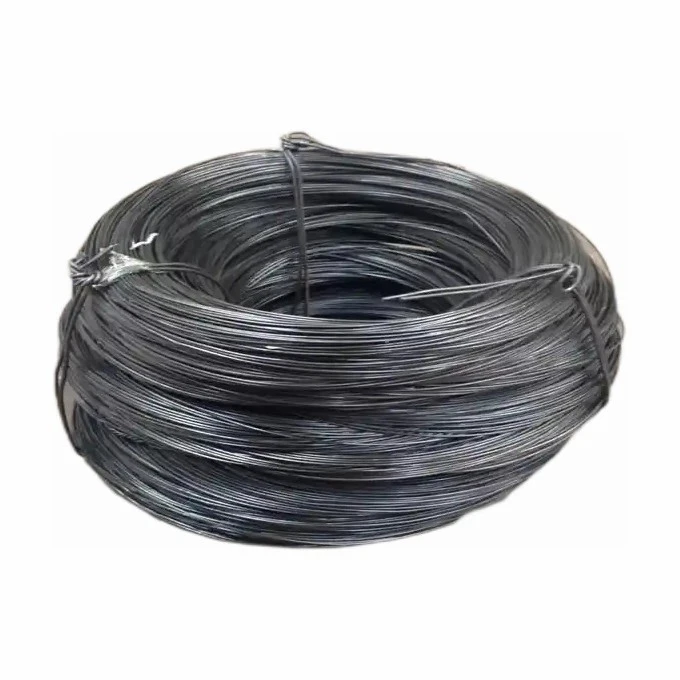
Quality control is an integral part of steel wire production. Workers need to be trained in various quality control methods, such as dimensional measurement, tensile testing, and surface inspection. They should be able to use measuring tools accurately, interpret test results, and identify any defects in the wire. For example, in the case of Black Annealed Tie Steel Wire, proper quality control ensures that the wire has the right strength, flexibility, and corrosion resistance for its intended use.
Safety Training
Workplace Safety
Steel wire production involves the use of heavy machinery, high - temperature equipment, and potentially hazardous chemicals. Workers must be trained on general workplace safety rules, such as wearing appropriate personal protective equipment (PPE). This includes safety glasses, gloves, and steel - toed boots. They should also be aware of the location of safety equipment, such as fire extinguishers and first - aid kits.
Machinery Safety
Each piece of machinery in the steel wire production process has its own safety requirements. Workers need to be trained on how to operate the equipment safely, including starting, stopping, and maintaining the machines. They should know the potential hazards associated with each machine, such as moving parts, sharp edges, and electrical hazards. For example, when operating a wire - drawing machine, workers need to be careful not to get their hands caught in the dies or the wire - feeding mechanism.
Chemical Safety
Some processes in steel wire production may involve the use of chemicals, such as pickling solutions for surface treatment. Workers should be trained on the proper handling, storage, and disposal of these chemicals. They need to understand the potential health risks associated with chemical exposure, such as skin irritation, respiratory problems, and chemical burns. Safety procedures, such as using ventilation systems and wearing chemical - resistant clothing, should be strictly followed.
Equipment Maintenance Training
Preventive Maintenance
Workers should be trained in preventive maintenance procedures to ensure the smooth operation of the equipment. This includes regular cleaning, lubrication, and inspection of the machines. By performing preventive maintenance, workers can detect and address potential problems before they lead to equipment breakdowns. For example, checking the tension of belts, the alignment of pulleys, and the condition of electrical connections can prevent unexpected failures in the production process.
Troubleshooting
In addition to preventive maintenance, workers need to have basic troubleshooting skills. They should be able to identify common problems with the equipment, such as abnormal noises, vibrations, or malfunctions. Workers should know how to use diagnostic tools and follow a systematic approach to troubleshoot the problems. For example, if a wire - annealing furnace is not reaching the desired temperature, workers should be able to check the heating elements, the thermocouples, and the control systems to find the root cause of the problem.
Soft Skills Training
Teamwork
Steel wire production is a team - oriented process. Workers need to be able to work effectively with their colleagues, including operators, technicians, and supervisors. Teamwork skills, such as communication, cooperation, and conflict resolution, are essential. For example, during a production run, workers need to communicate with each other to ensure that the different processes are coordinated smoothly. If there is a problem in one part of the production line, workers need to cooperate to find a solution quickly.
Problem - Solving
The steel wire technology industry is constantly facing new challenges, such as changes in customer requirements, equipment failures, and quality issues. Workers need to have strong problem - solving skills. They should be able to analyze problems, generate possible solutions, and evaluate the effectiveness of these solutions. For example, if a batch of steel wire does not meet the required tensile strength, workers need to be able to investigate the possible causes, such as improper heat treatment or material defects, and come up with a corrective action plan.
Adaptability
The steel wire technology field is evolving rapidly, with new materials, processes, and technologies being introduced. Workers need to be adaptable and willing to learn new skills. They should be open to changes in the production process, such as the adoption of new equipment or the implementation of new quality control standards. For example, if a new type of die is introduced for cold drawing, workers need to be able to quickly learn how to use it and adjust their operating procedures accordingly.
Conclusion
In conclusion, the training requirements for workers in steel wire technology are comprehensive and cover a wide range of areas. Technical knowledge, safety, equipment maintenance, and soft skills are all essential for ensuring the quality, efficiency, and safety of steel wire production. As a supplier in the steel wire technology industry, I am committed to providing high - quality training to our workers to meet the ever - changing demands of the market.
If you are interested in our steel wire products or have any questions about our technology, we welcome you to contact us for procurement discussions. We are confident that our well - trained workers and advanced technology can meet your specific needs.
References
- ASM Handbook Volume 1: Properties and Selection: Irons, Steels, and High - Performance Alloys
- Manufacturing Engineering and Technology by Serope Kalpakjian and Steven R. Schmid
- Safety Standards for the Steel Industry published by relevant industry associations