

What is the application of cold drawn steel wire in the cable industry?
In the intricate world of the cable industry, the selection of materials plays a pivotal role in determining the performance, durability, and overall quality of the cables. Among the various materials available, cold drawn steel wire stands out as a versatile and indispensable component. As a trusted Cold Drawn Steel Wire supplier, I have witnessed firsthand the profound impact this material has on the cable industry. In this blog post, I will delve into the diverse applications of cold drawn steel wire in the cable industry, exploring its unique properties and advantages.
Understanding Cold Drawn Steel Wire
Before we explore its applications, it's essential to understand what cold drawn steel wire is. Cold drawn steel wire is produced by pulling hot-rolled steel wire through a series of dies at room temperature. This process reduces the wire's diameter and enhances its mechanical properties, such as strength, hardness, and surface finish. The cold drawing process also aligns the steel's grain structure, resulting in improved ductility and resistance to fatigue.
The Cold Drawn Steel Wire we supply is manufactured using high-quality steel and advanced production techniques, ensuring consistent quality and performance. Our cold drawn steel wire is available in various diameters, strengths, and finishes to meet the specific requirements of different cable applications.
Applications of Cold Drawn Steel Wire in the Cable Industry
1. Cable Reinforcement
One of the primary applications of cold drawn steel wire in the cable industry is cable reinforcement. Cables are often subjected to high tensile forces, bending stresses, and environmental factors during installation and operation. Cold drawn steel wire provides the necessary strength and stiffness to withstand these forces and prevent cable failure.
In power cables, for example, cold drawn steel wire is used as a reinforcing element in the cable core or armor. The steel wire helps to support the weight of the cable and protect it from mechanical damage, such as abrasion, impact, and crushing. It also enhances the cable's resistance to tensile forces, ensuring reliable power transmission over long distances.
In telecommunications cables, cold drawn steel wire is used to reinforce the cable's outer sheath or strength members. This helps to protect the delicate fiber optic or copper conductors inside the cable from damage and maintain the cable's structural integrity. The steel wire also provides additional support to the cable, allowing it to be installed in harsh environments, such as underground, underwater, or in high-rise buildings.
2. Cable Armoring
Cold drawn steel wire is also widely used for cable armoring. Cable armoring is a protective layer applied to the outside of the cable to provide mechanical protection and prevent damage from external factors, such as rodents, termites, and physical impact.
There are two main types of cable armoring: wire armoring and tape armoring. Wire armoring involves wrapping cold drawn steel wire around the cable in a helical pattern. The steel wire provides excellent mechanical protection and is suitable for cables that are exposed to high levels of mechanical stress, such as underground cables or cables installed in industrial areas.
Tape armoring, on the other hand, involves wrapping a steel tape around the cable. The steel tape provides a continuous protective layer and is suitable for cables that require a high degree of flexibility, such as overhead cables or cables used in mobile applications.
The Phosphate Coating Steel Wire we supply is often used for cable armoring due to its excellent corrosion resistance and adhesion properties. The phosphate coating helps to protect the steel wire from rust and corrosion, ensuring long-term durability and performance of the cable.
3. Cable Suspension
In some cable applications, such as overhead power lines and suspension bridges, cold drawn steel wire is used for cable suspension. The steel wire is used to support the weight of the cable and maintain its position in the air or over a long span.
In overhead power lines, cold drawn steel wire is used as a messenger wire or a support cable. The messenger wire is attached to the poles or towers and provides a support structure for the power cables. The support cable is used to suspend the power cables between the poles or towers, ensuring a safe and reliable power transmission.
In suspension bridges, cold drawn steel wire is used to form the main cables that support the weight of the bridge deck. The steel wire is bundled together and tensioned to provide the necessary strength and stiffness to support the bridge. The use of cold drawn steel wire in suspension bridges ensures the long-term stability and safety of the structure.
4. Cable Binding and Tying
Cold drawn steel wire is also used for cable binding and tying. In cable manufacturing and installation, it is often necessary to bundle and secure cables together to prevent them from becoming tangled or damaged. Cold drawn steel wire provides a strong and reliable way to bind and tie cables together.

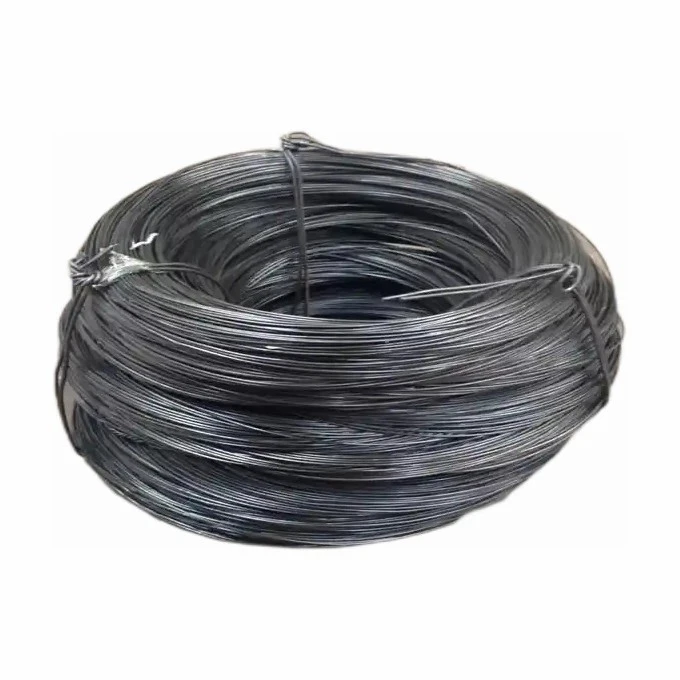
The Black Annealed Tie Steel Wire we supply is commonly used for cable binding and tying. The black annealed surface finish of the wire provides excellent corrosion resistance and flexibility, making it easy to bend and tie around the cables. The wire is available in various diameters and strengths to meet the specific requirements of different cable applications.
Advantages of Using Cold Drawn Steel Wire in the Cable Industry
- High Strength and Durability: Cold drawn steel wire has high tensile strength and excellent fatigue resistance, making it suitable for use in demanding cable applications. It can withstand high levels of mechanical stress and environmental factors without breaking or deforming, ensuring long-term reliability and performance of the cable.
- Corrosion Resistance: The cold drawn steel wire can be coated with various protective layers, such as zinc, phosphate, or epoxy, to enhance its corrosion resistance. This helps to protect the wire from rust and corrosion, extending the lifespan of the cable and reducing maintenance costs.
- Versatility: Cold drawn steel wire is available in various diameters, strengths, and finishes, making it suitable for a wide range of cable applications. It can be customized to meet the specific requirements of different cable designs and installation environments.
- Cost-Effective: Cold drawn steel wire is a cost-effective material compared to other high-strength materials, such as stainless steel or titanium. It provides a good balance between performance and cost, making it an ideal choice for cable manufacturers and installers.
Conclusion
Cold drawn steel wire is a crucial material in the cable industry, offering a wide range of applications and advantages. Its high strength, durability, corrosion resistance, versatility, and cost-effectiveness make it an ideal choice for cable reinforcement, armoring, suspension, binding, and tying.
As a leading Cold Drawn Steel Wire supplier, we are committed to providing high-quality products and excellent customer service. Our team of experts can help you select the right cold drawn steel wire for your specific cable application and provide technical support and advice throughout the process.
If you are interested in learning more about our cold drawn steel wire products or have any questions about their applications in the cable industry, please feel free to contact us. We look forward to discussing your requirements and working with you to find the best solutions for your cable needs.
References
- ASTM International. (2023). ASTM Standards for Steel Wire.
- American Iron and Steel Institute (AISI). (2023). Steel Wire Products Handbook.
- International Electrotechnical Commission (IEC). (2023). IEC Standards for Cables and Wires.