

What is the difference between Generalstrength Steel Wire and high - strength steel wire?
As a supplier of Generalstrength Steel Wire, I've often been asked about the differences between Generalstrength Steel Wire and High - strength Steel Wire. In this blog post, I'll delve into the details to help you understand these two types of steel wires better.
Composition and Manufacturing
The composition of steel wire plays a crucial role in determining its strength. Generalstrength Steel Wire, also known as Generalstrength Steel Wire, typically has a relatively simple chemical composition. It is mainly composed of iron with a small amount of carbon, usually in the range of 0.1% - 0.3%. Other elements such as manganese, silicon, and sulfur are present in trace amounts. The manufacturing process of Generalstrength Steel Wire is relatively straightforward. It usually involves hot - rolling the steel billet into a wire rod, followed by cold - drawing to reduce the diameter and improve the surface finish. This process is cost - effective and can produce large quantities of steel wire in a short time.
On the other hand, High - strength Steel Wire, as the name suggests, is designed to have a much higher strength. Its carbon content is generally higher, ranging from 0.6% - 1.2%. In addition to carbon, High - strength Steel Wire often contains alloying elements such as chromium, nickel, vanadium, and molybdenum. These alloying elements enhance the strength, toughness, and corrosion resistance of the steel wire. The manufacturing process of High - strength Steel Wire is more complex. It may involve special heat - treatment processes such as quenching and tempering to achieve the desired mechanical properties. The production of High - strength Steel Wire requires more precise control of the manufacturing parameters, which makes it more expensive than Generalstrength Steel Wire.
Mechanical Properties
One of the most significant differences between Generalstrength Steel Wire and High - strength Steel Wire lies in their mechanical properties. The tensile strength of Generalstrength Steel Wire is typically in the range of 300 - 600 MPa. This level of strength is sufficient for many common applications where high - load - bearing capacity is not required. For example, Generalstrength Steel Wire is often used in the manufacture of wire mesh for fencing, binding materials, and some light - duty springs.

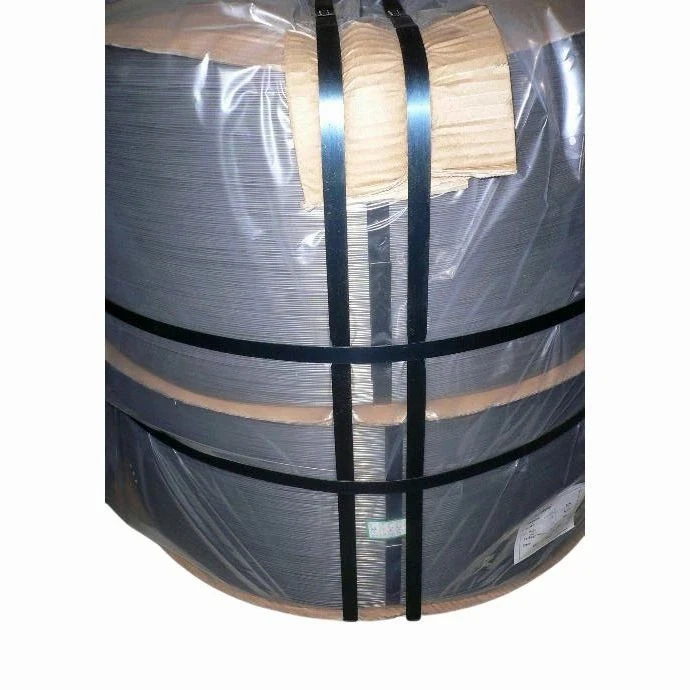
In contrast, High - strength Steel Wire has a much higher tensile strength, usually exceeding 1000 MPa and can even reach up to 2000 MPa or more in some high - end applications. This high strength allows High - strength Steel Wire to withstand heavy loads and stresses. It is commonly used in applications such as suspension bridges, prestressed concrete structures, and high - performance cables. The high strength of High - strength Steel Wire also means that it can be used in thinner diameters while still providing the necessary strength, which can reduce the weight and cost of the overall structure in some cases.
Another important mechanical property is the ductility. Generalstrength Steel Wire generally has good ductility, which means it can be easily bent, formed, and drawn without breaking. This property makes it suitable for applications where the wire needs to be shaped or deformed during the manufacturing process. High - strength Steel Wire, however, may have lower ductility due to its high carbon content and the presence of alloying elements. While it can still be formed to some extent, special care needs to be taken during the forming process to avoid cracking or breaking.
Applications
The differences in mechanical properties lead to different applications for Generalstrength Steel Wire and High - strength Steel Wire. Generalstrength Steel Wire is widely used in various industries due to its affordability and good workability. In the construction industry, it is used for tying reinforcement bars together, making wire fences, and creating wire mesh for plastering. In the packaging industry, Generalstrength Steel Wire is used for binding packages and securing goods. It is also used in the automotive industry for making some non - critical components such as seat springs and wire clips.
High - strength Steel Wire, on the other hand, is used in applications where high strength and reliability are essential. In the civil engineering field, it is used in prestressed concrete structures to enhance the load - carrying capacity of beams, slabs, and columns. In the aerospace industry, High - strength Steel Wire is used for making cables and ropes for aircraft control systems. It is also used in the manufacturing of high - performance sports equipment such as bicycle chains and fishing lines.
Cost and Availability
Cost is an important factor to consider when choosing between Generalstrength Steel Wire and High - strength Steel Wire. Generalstrength Steel Wire is generally more affordable due to its simpler composition and manufacturing process. It is widely available in the market, and suppliers can usually provide large quantities at short notice. This makes it a popular choice for applications where cost is a major concern.
High - strength Steel Wire, however, is more expensive due to its complex composition and manufacturing process. The cost of the alloying elements and the additional heat - treatment processes contribute to the higher price. In addition, the production of High - strength Steel Wire requires more specialized equipment and expertise, which limits the number of suppliers. As a result, the availability of High - strength Steel Wire may be more limited, especially for some high - end grades.
Conclusion
In conclusion, Generalstrength Steel Wire and High - strength Steel Wire have significant differences in composition, mechanical properties, applications, cost, and availability. Generalstrength Steel Wire, like the Generalstrength Steel Wire I supply, is a cost - effective option for many common applications where high strength is not the primary requirement. It offers good workability and is widely available in the market. High - strength Steel Wire, on the other hand, is designed for applications where high strength and reliability are essential, but it comes at a higher cost and may have more limited availability.
When choosing between the two types of steel wires, it is important to consider the specific requirements of your application, including the load - bearing capacity, workability, and cost. If you have any questions or need further information about Generalstrength Steel Wire, feel free to contact me for a detailed discussion. We can work together to find the most suitable solution for your needs.
References
- ASM Handbook Volume 1: Properties and Selection: Irons, Steels, and High - Performance Alloys.
- "Steel Wire Handbook" by various industry experts.
- Journal articles on steel wire manufacturing and applications.