

What is the impact of saltwater on low strength steel wire?
As a supplier of Low Strength Steel Wire, I've witnessed firsthand the diverse applications and challenges associated with this product. One significant factor that can greatly affect the performance and longevity of low strength steel wire is its exposure to saltwater. In this blog, I'll delve into the impact of saltwater on low strength steel wire, drawing on my experiences and industry knowledge.
Understanding Low Strength Steel Wire
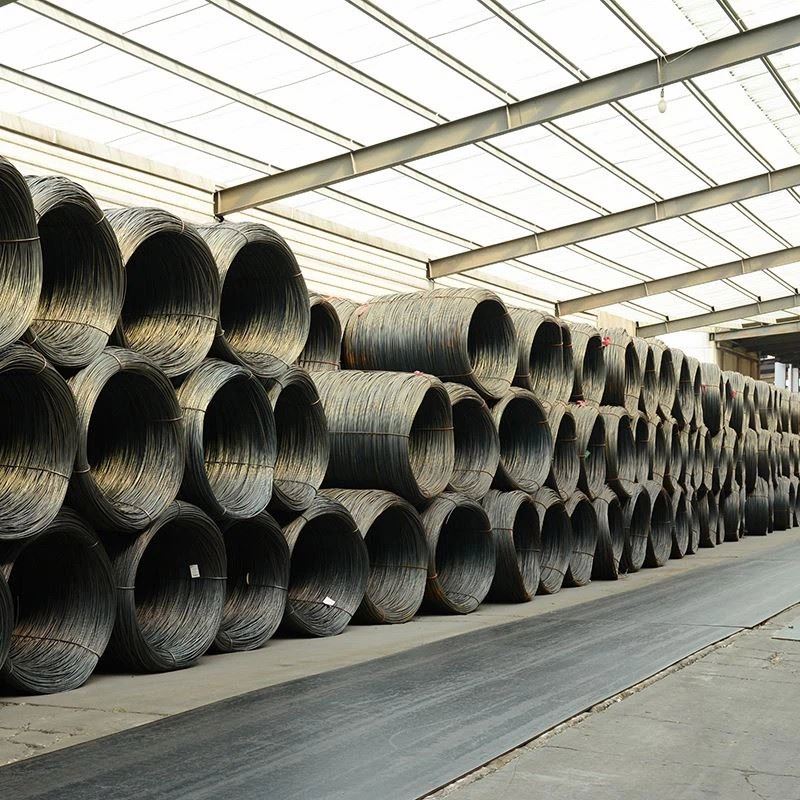
Before we explore the effects of saltwater, let's briefly understand what low strength steel wire is. Low Strength Steel Wire, as the name suggests, has a relatively lower tensile strength compared to High Strength Steel Wire and Generalstrength Steel Wire. It is commonly used in applications where high strength is not the primary requirement, such as in fencing, binding, and some light - duty construction projects. The lower strength is often a result of its chemical composition and the manufacturing process, which may involve less alloying elements and less rigorous heat - treatment.
The Corrosive Nature of Saltwater
Saltwater, or seawater, is a highly corrosive environment for steel. It contains a variety of dissolved salts, mainly sodium chloride (NaCl), along with other minerals and ions. When low strength steel wire comes into contact with saltwater, a series of electrochemical reactions occur.

The basic mechanism of corrosion in saltwater involves the formation of a galvanic cell on the surface of the steel wire. Steel is an alloy mainly composed of iron (Fe). In the presence of saltwater, iron atoms on the surface of the wire lose electrons and form iron ions (Fe²⁺). The reaction can be represented as:
Fe → Fe²⁺ + 2e⁻
These electrons are then transferred through the steel wire to areas where oxygen (O₂) is present. At these areas, oxygen reacts with water and the electrons to form hydroxide ions (OH⁻):
O₂ + 2H₂O+ 4e⁻ → 4OH⁻
The iron ions (Fe²⁺) and hydroxide ions (OH⁻) combine to form iron hydroxide (Fe(OH)₂), which further reacts with oxygen in the water to form iron oxide, commonly known as rust (Fe₂O₃).
4Fe(OH)₂+ O₂ → 2Fe₂O₃+ 4H₂O
Physical and Mechanical Impacts on Low Strength Steel Wire
Loss of Cross - Sectional Area
As corrosion progresses, the surface of the low strength steel wire gradually erodes. This leads to a reduction in the cross - sectional area of the wire. Since the strength of a wire is directly related to its cross - sectional area, a decrease in area results in a decrease in the wire's load - bearing capacity. For example, in a fencing application, a corroded wire may not be able to withstand the same amount of tension as a non - corroded wire, increasing the risk of breakage.
Brittleness
Rust is a brittle material compared to steel. As rust forms on the surface of the low strength steel wire, it can cause the wire to become more brittle. This brittleness makes the wire more prone to cracking and breaking under stress. In a marine environment where the wire may be subjected to wave action, wind forces, or other dynamic loads, the increased brittleness can significantly reduce the wire's service life.
Fatigue
In addition to the static corrosion effects, saltwater can also accelerate the fatigue of low strength steel wire. Fatigue is the process by which a material fails under repeated cyclic loading. The presence of saltwater can cause pitting corrosion on the surface of the wire. These pits act as stress concentrators, which can initiate cracks at lower stress levels compared to a smooth - surfaced wire. As the wire is subjected to cyclic loading, these cracks can propagate more rapidly, leading to premature failure.
Impact on Different Applications
Marine Fencing
In marine fencing applications, low strength steel wire is often used to enclose areas or mark boundaries. When exposed to saltwater, the corrosion of the wire can compromise the integrity of the fence. The loss of strength and the development of brittleness can cause the wire to break, allowing animals or debris to pass through. This not only reduces the functionality of the fence but also requires frequent repairs and replacements, increasing the overall cost of maintenance.
Binding in Marine Construction
In some light - duty marine construction projects, low strength steel wire is used for binding purposes, such as tying together formwork or reinforcing bars. Corrosion in saltwater can weaken the binding force of the wire. As the wire loses its strength, it may loosen over time, leading to a loss of structural integrity in the construction.
Mitigation Strategies
Coating
One of the most common ways to protect low strength steel wire from saltwater corrosion is to apply a protective coating. There are several types of coatings available, including zinc - based coatings (galvanization), epoxy coatings, and polymer coatings.
Galvanization involves coating the steel wire with a layer of zinc. Zinc is more reactive than iron, so in the presence of saltwater, zinc corrodes preferentially, acting as a sacrificial anode. This protects the underlying steel wire from corrosion. Epoxy and polymer coatings create a physical barrier between the steel wire and the saltwater, preventing direct contact and thus reducing the risk of corrosion.
Cathodic Protection
Cathodic protection is another effective method for protecting low strength steel wire in saltwater. It involves the use of a sacrificial anode or an impressed current system. A sacrificial anode, usually made of a more reactive metal such as magnesium or aluminum, is connected to the steel wire. The sacrificial anode corrodes in place of the steel wire, providing protection. In an impressed current system, an external power source is used to supply electrons to the steel wire, making it the cathode of an electrochemical cell and preventing corrosion.
Conclusion
As a supplier of Low Strength Steel Wire, I understand the importance of providing customers with information about the potential impacts of saltwater on the product. The corrosive nature of saltwater can have significant physical and mechanical effects on low strength steel wire, including loss of cross - sectional area, increased brittleness, and accelerated fatigue. However, through appropriate mitigation strategies such as coating and cathodic protection, the service life of the wire in saltwater environments can be significantly extended.
If you are considering using low strength steel wire in a saltwater - exposed application, I encourage you to contact me for more detailed information and advice. We can discuss the best protection methods for your specific needs and ensure that you get the most out of our low strength steel wire products.
References
- Fontana, M. G. (1986). Corrosion Engineering. McGraw - Hill.
- Uhlig, H. H., & Revie, R. W. (1985). Corrosion and Corrosion Control: An Introduction to Corrosion Science and Engineering. Wiley.
- ASTM International. (2019). Standard Practice for Evaluation of Corrosion Resistance of Steel Reinforcing Bars Exposed to Chloride - Containing Environments. ASTM G109 - 19.