

What is the torsional strength of rectangular steel wire?
Hey there! As a supplier of Rectangular Steel Wire, I often get asked about the torsional strength of this product. So, I thought I'd take a moment to break it down for you.
First off, let's talk about what torsional strength actually means. In simple terms, torsional strength is the ability of a material to resist twisting forces. When you apply a torque or a twisting force to a piece of wire, the torsional strength determines how much it can withstand before it starts to deform or break.
Now, when it comes to rectangular steel wire, its torsional strength is influenced by several factors. One of the key factors is the material itself. The type of steel used, its composition, and the manufacturing process all play a role in determining the wire's torsional strength. For example, high - carbon steels generally have higher strength compared to low - carbon steels. They can better resist the twisting forces due to their stronger atomic bonds.
The dimensions of the rectangular steel wire also matter a great deal. The width, thickness, and aspect ratio (the ratio of the width to the thickness) of the wire affect its torsional behavior. A wire with a larger cross - sectional area will generally have higher torsional strength. However, the shape of the rectangle also comes into play. A wire with a more square - like cross - section might have different torsional characteristics compared to a wire with a very long and thin rectangular cross - section.
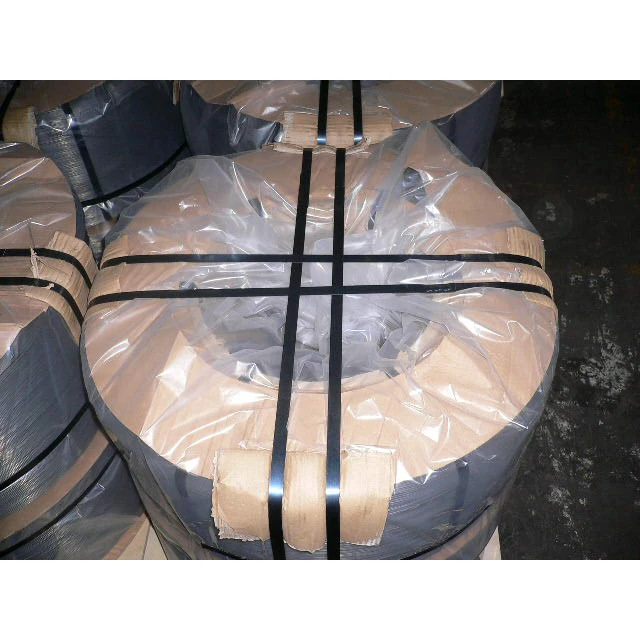

Let's compare rectangular steel wire with Round Steel Wire. Round steel wire has a uniform cross - section around its circumference. This symmetry gives it certain advantages when it comes to torsional strength. The stress distribution in a round wire under torsion is more uniform compared to a rectangular wire. In a rectangular wire, the stress is concentrated at the corners, which can lead to premature failure if the torsional load is too high.
On the other hand, rectangular steel wire has its own unique benefits. Its flat shape makes it suitable for applications where a wider contact surface is required. For example, in some electrical applications, the flat surface of Rectangular Steel Wire can provide better electrical conductivity and heat dissipation.
Another related product in our range is Cold Rolled Flat Steel Wire Strips. These strips are similar to rectangular steel wire but might have different manufacturing processes and properties. Cold rolling can improve the surface finish and mechanical properties of the strips. The torsional strength of cold - rolled flat steel wire strips can be enhanced through the work - hardening that occurs during the cold - rolling process.
To measure the torsional strength of rectangular steel wire, we typically use a torsion testing machine. This machine applies a controlled twisting force to the wire and measures the amount of torque and the angle of twist. By analyzing the data from these tests, we can determine the yield point (the point at which the wire starts to deform permanently) and the ultimate torsional strength (the maximum torque the wire can withstand before breaking).
In real - world applications, the torsional strength of rectangular steel wire is crucial. For instance, in the automotive industry, rectangular steel wire might be used in suspension components. These components need to withstand the torsional forces generated during vehicle movement. If the wire doesn't have sufficient torsional strength, it could lead to component failure, which can be dangerous.
In the construction industry, rectangular steel wire can be used in reinforcement applications. When the structure is subjected to twisting or torsional loads, the wire needs to be able to resist these forces to maintain the integrity of the structure.
We, as a supplier of rectangular steel wire, take great care in ensuring that our products meet the required torsional strength standards. We use high - quality raw materials and advanced manufacturing processes to produce wires with consistent and reliable torsional properties. Our quality control team conducts regular torsion tests to verify the strength of our products.
If you're in the market for rectangular steel wire, it's important to consider your specific application requirements. You need to know the expected torsional loads and the environmental conditions in which the wire will be used. This will help you choose the right type of rectangular steel wire with the appropriate torsional strength.
Whether you're looking for a wire with high torsional strength for heavy - duty applications or a wire with a specific cross - sectional shape for a unique project, we've got you covered. We can work with you to understand your needs and provide the best solution.
If you're interested in learning more about our rectangular steel wire products or have questions about torsional strength, don't hesitate to get in touch. We're always happy to have a chat and discuss how our products can meet your requirements. Whether you're a small - scale manufacturer or a large - scale industrial user, we're here to support your procurement needs.
References
- "Mechanical Behavior of Materials" by Donald R. Askeland and Pradeep P. Phule
- "Materials Science and Engineering: An Introduction" by William D. Callister Jr. and David G. Rethwisch