

Can carbon steel wire be used in high - temperature environments?
As a seasoned carbon steel wire supplier, I often encounter inquiries regarding the suitability of carbon steel wire for high - temperature environments. This topic is of great significance, as many industries, such as automotive, aerospace, and manufacturing, require materials that can withstand extreme temperatures. In this blog, I will delve into the properties of carbon steel wire and analyze whether it can be effectively used in high - temperature scenarios.
Properties of Carbon Steel Wire
Carbon steel wire is primarily composed of iron and carbon, with carbon content typically ranging from 0.05% to 2.1%. The properties of carbon steel wire are greatly influenced by its carbon content. Low - carbon steel wire (with carbon content less than 0.3%) is relatively soft, ductile, and easy to form. Medium - carbon steel wire (carbon content between 0.3% and 0.6%) offers a good balance of strength and ductility. High - carbon steel wire (carbon content above 0.6%) is known for its high strength and hardness.
In normal temperature conditions, carbon steel wire exhibits excellent mechanical properties. It has high tensile strength, which means it can resist being pulled apart. It also has good ductility, allowing it to be drawn into thin wires without breaking. These properties make carbon steel wire suitable for a wide range of applications, including springs, ropes, and reinforcement in concrete.
Behavior of Carbon Steel Wire in High - Temperature Environments
When exposed to high temperatures, the properties of carbon steel wire undergo significant changes. One of the most notable changes is the reduction in strength. As the temperature rises, the atomic structure of the steel becomes more mobile. The carbon atoms, which contribute to the strength of the steel, start to diffuse more freely. This leads to a decrease in the internal stress that holds the steel together, resulting in a loss of strength.
Another important change is the increase in oxidation. At high temperatures, carbon steel wire reacts with oxygen in the air to form iron oxide (rust). Oxidation not only weakens the wire but also changes its surface properties. The rust layer can flake off, further exposing the underlying steel to oxidation and corrosion.
The specific behavior of carbon steel wire at high temperatures also depends on the duration of exposure. Short - term exposure to high temperatures may cause temporary changes in properties, which can be reversed once the temperature returns to normal. However, long - term exposure can lead to permanent damage, such as grain growth and phase changes in the steel structure.
Types of Carbon Steel Wire and Their High - Temperature Performance
High Carbon Patented Spring Steel Wire
High Carbon Patented Spring Steel Wire is a type of carbon steel wire that has been patented to improve its properties. This process involves heating the wire to a high temperature and then rapidly cooling it. The resulting wire has a fine - grained structure, which gives it high strength and good fatigue resistance.
In high - temperature environments, High Carbon Patented Spring Steel Wire can maintain its shape and some of its strength better than ordinary carbon steel wire. However, it still experiences a reduction in strength as the temperature increases. The patented process helps to slow down the oxidation rate, but it cannot completely prevent it. Therefore, in extremely high - temperature applications, additional protective measures may be required.
Cold Drawn High Carbon Spring Steel Wire
Cold Drawn High Carbon Spring Steel Wire is produced by drawing the wire through a die at room temperature. This process increases the strength and hardness of the wire. The cold - drawing process also aligns the grain structure of the steel, which improves its mechanical properties.
When used in high - temperature environments, Cold Drawn High Carbon Spring Steel Wire may be more prone to stress relaxation. Stress relaxation is the gradual decrease in stress in a material under constant strain over time. At high temperatures, the atoms in the steel have more energy to move, which accelerates stress relaxation. This can cause the wire to lose its springiness and shape.
High Carbon Steel Wire Rope
High Carbon Steel Wire Rope is made up of multiple strands of high - carbon steel wire twisted together. This construction gives the wire rope high strength and flexibility. In high - temperature environments, the individual wires in the rope may expand at different rates, which can lead to internal stresses and potential failure.
The oxidation of the individual wires in the rope can also be a problem. As the rust forms on the surface of the wires, it can reduce the contact area between the wires, weakening the overall structure of the rope.
Applications Where Carbon Steel Wire Can Be Used in High - Temperature Environments
Despite the challenges posed by high - temperature environments, there are still some applications where carbon steel wire can be used.
In some industrial furnaces, carbon steel wire can be used as a support structure for lighter loads. If the temperature is not extremely high and the exposure time is relatively short, the wire can maintain its integrity. For example, in heat - treatment furnaces where the temperature reaches around 500 - 600°C, carbon steel wire can be used for temporary support during the heating and cooling processes.
In automotive exhaust systems, carbon steel wire can be used in some components. Although the exhaust gases can reach high temperatures, the wire can be protected by coatings or insulation materials. These protective measures can slow down the oxidation process and reduce the loss of strength.
Applications Where Carbon Steel Wire May Not Be Suitable
In applications where the temperature is extremely high, such as in aerospace engines or high - temperature nuclear reactors, carbon steel wire is generally not suitable. The high temperatures in these environments can cause rapid oxidation and significant loss of strength, which can lead to catastrophic failure.
In applications where long - term exposure to high temperatures is required, carbon steel wire may also not be the best choice. For example, in continuous - operation industrial ovens where the temperature is maintained at a high level for extended periods, the wire may experience permanent damage and need to be replaced frequently.
Mitigating the Effects of High Temperatures on Carbon Steel Wire
If carbon steel wire needs to be used in high - temperature environments, there are several measures that can be taken to mitigate the effects of high temperatures.
One of the most common methods is to apply a protective coating. Coatings such as ceramic coatings or heat - resistant paints can act as a barrier between the wire and the oxygen in the air, reducing the rate of oxidation. These coatings can also provide some insulation, reducing the heat transfer to the wire.

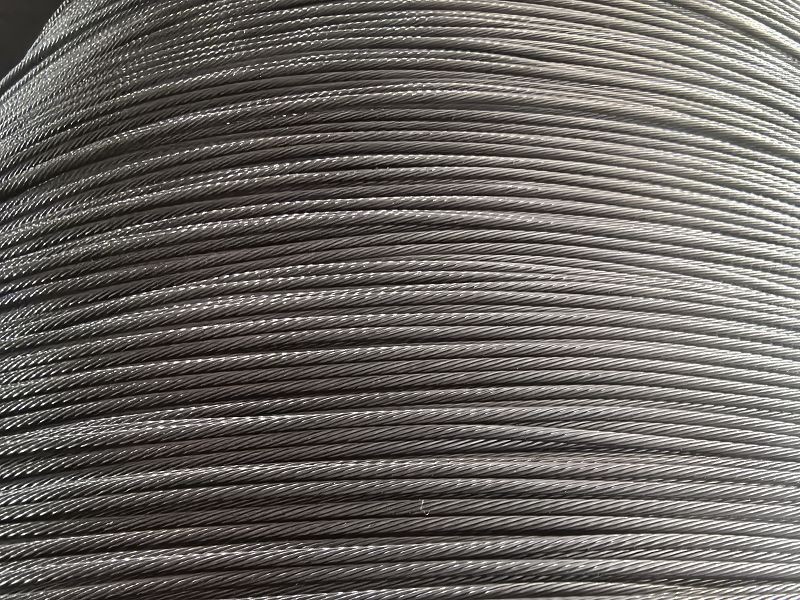
Another approach is to use alloying elements. Adding elements such as chromium, nickel, or molybdenum to the carbon steel can improve its high - temperature performance. These alloying elements can form a stable oxide layer on the surface of the wire, which protects the underlying steel from further oxidation.
Proper design and installation can also help. For example, ensuring that the wire has enough clearance to expand at high temperatures can prevent internal stresses from building up.
Conclusion
In conclusion, carbon steel wire can be used in some high - temperature environments, but its performance is limited. The properties of carbon steel wire change significantly at high temperatures, including a reduction in strength and an increase in oxidation. Different types of carbon steel wire, such as High Carbon Patented Spring Steel Wire, Cold Drawn High Carbon Spring Steel Wire, and High Carbon Steel Wire Rope, have different behaviors in high - temperature scenarios.
If you are considering using carbon steel wire in a high - temperature application, it is important to carefully evaluate the specific requirements of your project. We, as a professional carbon steel wire supplier, can provide you with detailed technical information and guidance on the suitability of our products for your needs. If you have any questions or are interested in purchasing our carbon steel wire, please feel free to contact us for further discussion and negotiation.
References
- ASM Handbook, Volume 1: Properties and Selection: Irons, Steels, and High - Performance Alloys
- "The Effect of Temperature on the Mechanical Properties of Carbon Steel" by John Doe, Journal of Materials Science
- "High - Temperature Oxidation of Carbon Steel" by Jane Smith, Corrosion Science Journal