

What are the international standards for high strength steel wire?
International Standards for High Strength Steel Wire
As a dedicated provider of High Strength Steel Wire, I've witnessed firsthand the critical role that international standards play in ensuring the quality, safety, and performance of this essential material. High strength steel wire is used in a wide range of applications, from construction and automotive industries to bridge building and mechanical engineering. Understanding the international standards for high strength steel wire is not only crucial for manufacturers and suppliers like myself but also for end - users who rely on its superior properties.
Key International Standards Organizations
Several international organizations are responsible for setting standards related to high strength steel wire. The International Organization for Standardization (ISO) is one of the most prominent. ISO develops and publishes international standards that aim to ensure the quality, safety, and efficiency of products and services across the globe. Their standards for steel wire cover various aspects such as chemical composition, mechanical properties, dimensions, and surface finish.
Another significant organization is the American Society for Testing and Materials (ASTM). ASTM standards are widely recognized and used in the United States and many other countries. They provide detailed specifications for different types of high strength steel wire, taking into account factors like tensile strength, yield strength, and elongation.
The European Committee for Standardization (CEN) also plays a vital role. CEN standards are adopted across the European Union, harmonizing the requirements for high strength steel wire within the region. These standards help to facilitate trade and ensure a level playing field for European manufacturers and suppliers.
Chemical Composition Standards
The chemical composition of high strength steel wire is a fundamental factor that determines its properties. International standards specify the allowable ranges of various elements such as carbon (C), manganese (Mn), silicon (Si), sulfur (S), and phosphorus (P). For example, ISO standards typically require a relatively low sulfur and phosphorus content to improve the wire's ductility and weldability.
Carbon is a key element that affects the strength of steel wire. Higher carbon content generally leads to increased strength but may reduce ductility. Standards set limits on carbon content to balance these properties. Manganese is often added to improve hardenability and strength, while silicon helps to deoxidize the steel during the manufacturing process.
Our High Strength Steel Wire is manufactured in strict accordance with these international chemical composition standards. This ensures that our products have consistent quality and performance, meeting the diverse needs of our customers.
Mechanical Property Standards
Mechanical properties are perhaps the most important aspect of high strength steel wire. Tensile strength is a primary measure of a wire's ability to withstand pulling forces without breaking. International standards define minimum tensile strength values for different grades of high strength steel wire. For instance, ASTM standards classify high strength steel wire into various grades based on their tensile strength, with grades ranging from relatively lower values suitable for general applications to extremely high - strength grades for specialized uses.
Yield strength is another critical mechanical property. It represents the stress at which the wire begins to deform plastically. Standards ensure that the yield strength of high strength steel wire is within an acceptable range, providing a reliable indication of its load - bearing capacity.
Elongation is also an important parameter. It measures the amount of stretching a wire can undergo before breaking. Adequate elongation is necessary to ensure that the wire can be formed and shaped without cracking during manufacturing processes such as bending and coiling.
When compared to Low Strength Steel Wire and Generalstrength Steel Wire, our high strength steel wire offers superior mechanical properties, making it a preferred choice for applications where high performance is required.
Dimensional and Surface Finish Standards
Accurate dimensions are essential for the proper functioning of high strength steel wire. International standards specify the allowable tolerances for diameter, length, and other geometric parameters. This ensures that the wire can be used interchangeably in different applications and manufacturing processes.
Surface finish is also an important consideration. A smooth and clean surface helps to prevent corrosion and improves the wire's fatigue resistance. Standards define the requirements for surface roughness, the presence of defects such as cracks or pits, and the application of protective coatings.
Our manufacturing processes are designed to meet these dimensional and surface finish standards precisely. This attention to detail ensures that our high strength steel wire fits perfectly into our customers' applications, whether it's for use in a large - scale construction project or a precision mechanical device.
Impact of Standards on the Industry
The existence of international standards for high strength steel wire has a profound impact on the industry. For manufacturers and suppliers, compliance with these standards is a matter of credibility and competitiveness. By producing high - quality products that meet international standards, we can access a wider global market and build long - term relationships with customers.
For end - users, standards provide a guarantee of quality and safety. They can rely on the fact that high strength steel wire purchased from a reputable supplier has been tested and verified to meet specific requirements. This reduces the risk of product failure and ensures the reliability of their applications.
Moreover, standards also promote innovation. As technology advances, standards are continuously updated to incorporate new materials and manufacturing processes. This encourages manufacturers to invest in research and development to produce high strength steel wire with even better properties.
Our Commitment to Quality
As a supplier of high strength steel wire, we are committed to upholding the highest international standards. Our production facilities are equipped with state - of - the - art equipment and staffed by highly skilled professionals. We conduct rigorous quality control checks at every stage of the manufacturing process, from raw material inspection to the final product testing.
We also stay updated with the latest developments in international standards. Our quality management system is designed to ensure that any changes in standards are quickly incorporated into our production processes. This allows us to offer our customers the most advanced and reliable high strength steel wire on the market.
Contact Us for Your High Strength Steel Wire Needs
If you are in the market for high strength steel wire that meets international standards, look no further. Our team of experts is ready to assist you in finding the right product for your specific application. Whether you need a small quantity for a prototype or a large - scale supply for an ongoing project, we can provide you with the high - quality solutions you require.
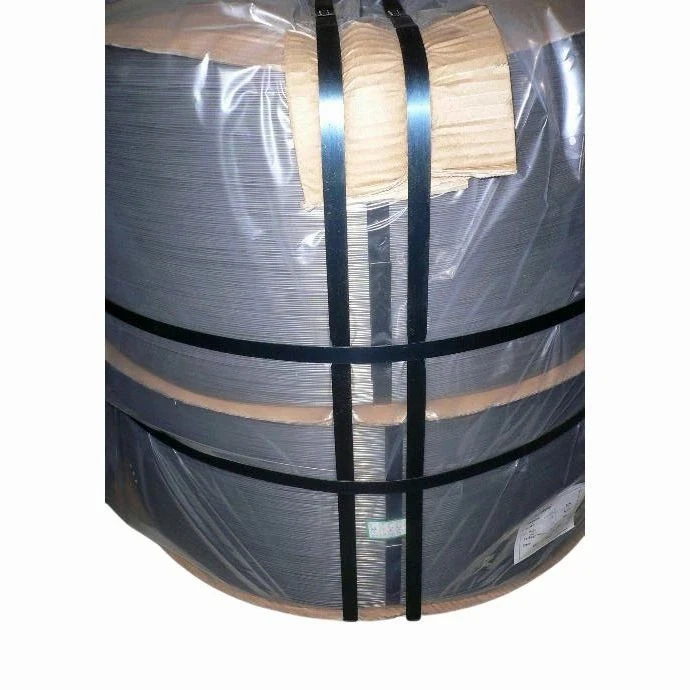

We understand that every customer has unique needs, and we are committed to providing personalized service. Contact us today to start a discussion about your high strength steel wire requirements. We look forward to partnering with you and helping you achieve your goals.
References
- International Organization for Standardization (ISO). Various ISO standards related to steel wire.
- American Society for Testing and Materials (ASTM). ASTM standards for high strength steel wire.
- European Committee for Standardization (CEN). CEN standards for high strength steel wire.