

What is the compressibility of patented steel wire?
Hey there! As a supplier of Patented Steel Wire, I often get asked about the compressibility of this product. So, I thought I'd take some time to break it down for you all.
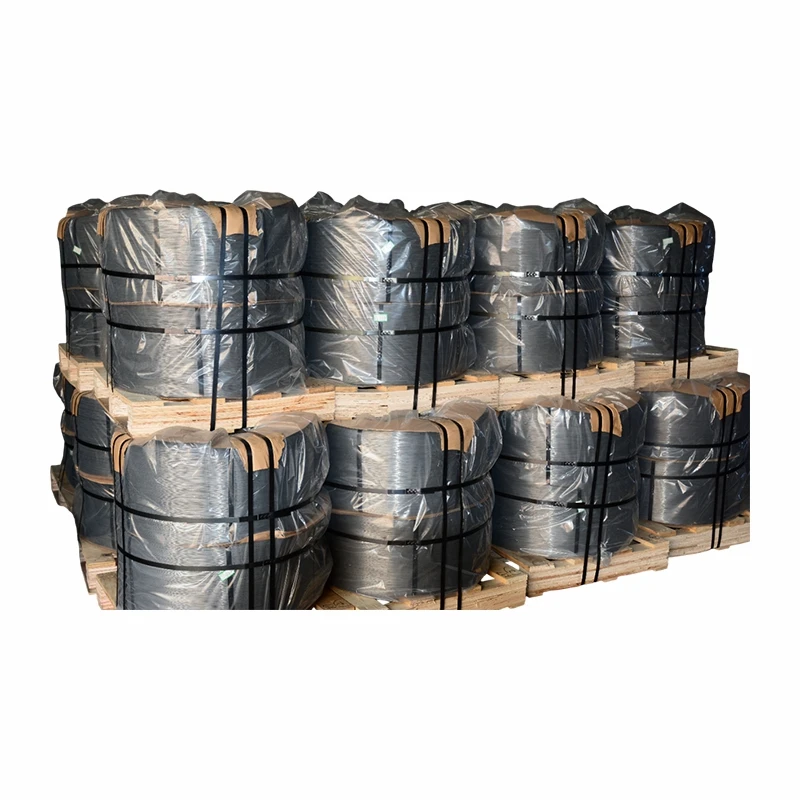
First off, let's understand what Patented Steel Wire is. Patented Steel Wire is a high - quality steel wire that goes through a special heat - treatment process called patenting. This process involves heating the wire to a specific temperature and then rapidly cooling it. This gives the wire unique mechanical properties, making it suitable for a wide range of applications. You can learn more about it on our Patented Steel Wire page.
Now, onto compressibility. Compressibility refers to the ability of a material to be reduced in volume when a force is applied. In the case of Patented Steel Wire, its compressibility is influenced by several factors.
One of the key factors is the chemical composition of the steel. Different alloys of steel have different levels of compressibility. For example, steels with higher carbon content tend to be more rigid and less compressible compared to those with lower carbon content. The heat - treatment process also plays a crucial role. The patenting process aligns the crystal structure of the steel in a way that affects its response to compressive forces.
When we talk about the practical implications of the compressibility of Patented Steel Wire, it's important in various industries. In the construction industry, for instance, the compressibility of the wire can determine its suitability for use in structures. If a structure needs to withstand heavy loads, a wire with low compressibility would be preferred. This ensures that the wire doesn't deform under pressure, maintaining the integrity of the structure.
In the manufacturing of springs, the compressibility of Patented Steel Wire is also a vital factor. Springs need to be able to compress and then return to their original shape. A wire with the right compressibility will allow the spring to function effectively over a long period. If the wire is too compressible, the spring may lose its elasticity and not perform as expected.
Another industry where the compressibility of Patented Steel Wire matters is the automotive industry. In automotive components such as suspension systems, the wire's ability to handle compression is crucial. A suspension system needs to absorb shocks and vibrations, and the right wire can ensure that the system operates smoothly and safely.
Let's compare Patented Steel Wire with some other types of steel wires in terms of compressibility. Oil Tempered Steel Wire is another popular type of steel wire. Oil - tempered steel wire is heat - treated in oil, which gives it different mechanical properties compared to Patented Steel Wire. Generally, oil - tempered steel wire may have a different compressibility profile. It might be more flexible and have a higher degree of compressibility in some cases, depending on its specific composition and treatment.
Black Annealed Tie Steel Wire is yet another option. Black annealed tie steel wire is annealed to make it more ductile. This annealing process can result in a wire that is more compressible than Patented Steel Wire. It's often used for tying and binding applications where a certain degree of flexibility and compressibility is required.
Now, measuring the compressibility of Patented Steel Wire is not a straightforward task. There are several testing methods available. One common method is the compression test, where a sample of the wire is placed between two plates, and a gradually increasing force is applied until a certain deformation occurs. The amount of deformation relative to the applied force is then used to calculate the compressibility.
However, it's important to note that the compressibility of Patented Steel Wire can also vary depending on the manufacturing process and quality control measures. At our company, we take great care in ensuring that our Patented Steel Wire meets the highest standards. We use advanced manufacturing techniques and conduct rigorous quality checks to ensure that the wire has consistent compressibility properties.
In addition to the factors mentioned above, environmental conditions can also affect the compressibility of Patented Steel Wire. For example, temperature can have an impact. At higher temperatures, the steel may become more malleable and thus more compressible. On the other hand, in cold environments, the wire may become more brittle and less compressible.
Moisture can also play a role. If the wire is exposed to a humid environment, it may rust over time. Rust can change the structure of the wire, potentially altering its compressibility. That's why proper storage and handling of the wire are essential to maintain its quality and compressibility characteristics.
When it comes to purchasing Patented Steel Wire, it's important to consider your specific requirements. If you need a wire with low compressibility for a high - load application, make sure to communicate this to the supplier. We, as a Patented Steel Wire supplier, are always ready to help you choose the right product based on your needs.
We understand that every customer's situation is unique, and we're committed to providing the best - suited wire for your project. Whether you're in the construction, manufacturing, or automotive industry, we have the expertise and the product range to meet your demands.
If you're interested in learning more about our Patented Steel Wire or have any questions regarding its compressibility or other properties, don't hesitate to reach out. We're here to assist you in making the right choice for your business. Contact us to start a conversation about your procurement needs, and let's work together to find the perfect solution.

References
- "Steel Wire Handbook" - A comprehensive guide on the properties and applications of steel wires.
- Industry research papers on the mechanical properties of different types of steel wires.