

What is the elongation rate of stainless steel wire?
Hey there! As a supplier of stainless steel wire, I often get asked about the elongation rate of stainless steel wire. So, I thought I'd take a moment to break it down for you.
First off, let's talk about what elongation rate actually means. In simple terms, the elongation rate is the amount that a material can stretch before it breaks. When it comes to stainless steel wire, this is a crucial property. It tells us how much the wire can be deformed under tension without snapping.
Now, the elongation rate of stainless steel wire isn't a one - size - fits - all number. It can vary depending on a bunch of factors. One of the main factors is the type of stainless steel alloy used. Different alloys have different chemical compositions, and these compositions can greatly affect the wire's mechanical properties, including its elongation rate.
For instance, austenitic stainless steels, which are very common in wire production, generally have good ductility and a relatively high elongation rate. They can stretch quite a bit before breaking. On the other hand, some ferritic stainless steels might have a lower elongation rate because of their different crystal structures and alloying elements.
Another factor that impacts the elongation rate is the manufacturing process. If the wire is cold - drawn, like our Cold Drawn Stainless Steel Wire, the process can change the microstructure of the wire. Cold drawing involves pulling the wire through a die at room temperature, which can increase the wire's strength but may also reduce its elongation rate to some extent. The deformation during cold drawing aligns the grains in the steel, making it stronger but less ductile compared to the original material.
Heat treatment is also a key player here. When stainless steel wire is heat - treated, it can have a significant impact on the elongation rate. Annealing, for example, is a heat - treatment process where the wire is heated to a specific temperature and then slowly cooled. This process can relieve internal stresses in the wire and restore its ductility, increasing the elongation rate.
The diameter of the wire also matters. Generally, thinner wires tend to have a higher elongation rate compared to thicker ones. This is because thinner wires have less material to resist deformation, so they can stretch more easily.
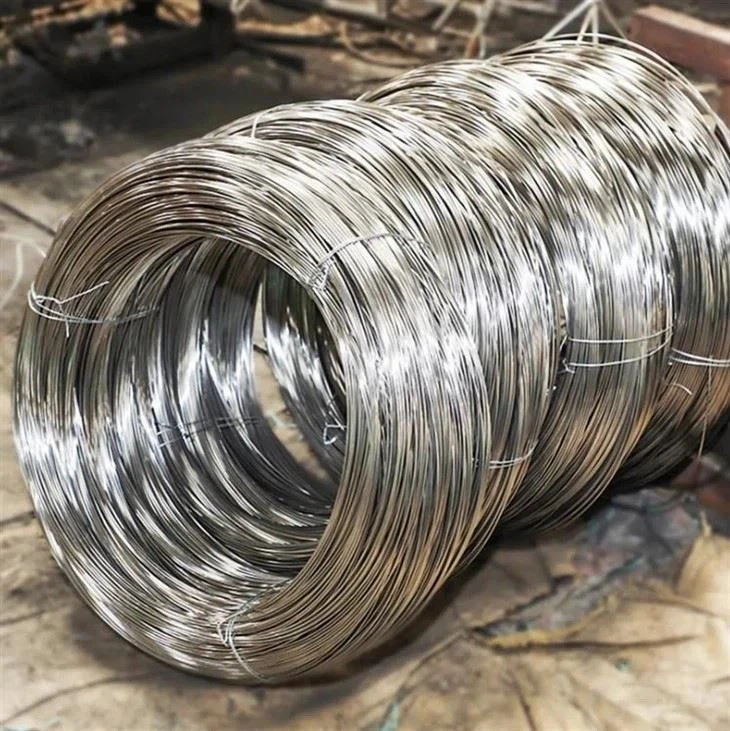
So, what kind of elongation rates can you expect from stainless steel wire? Well, it can range anywhere from around 20% to 50% or even more in some cases. For a standard austenitic stainless steel wire that's been properly annealed, you might see an elongation rate of around 40% - 50%. This means that the wire can stretch to about 1.4 - 1.5 times its original length before it breaks.
Let's compare stainless steel wire with Alloy Steel Wire. Alloy steel wire often has different elongation characteristics. Some alloy steels are designed for high strength and may have a lower elongation rate, while others can be made to have good ductility similar to stainless steel. However, stainless steel wire is often preferred in applications where corrosion resistance is important, and its elongation rate can still meet the requirements for many uses.
Now, why is the elongation rate so important? In many applications, the wire needs to be able to withstand some amount of stretching without breaking. For example, in the jewelry industry, stainless steel wire is used to make chains and other decorative elements. The wire needs to be able to be bent and shaped during the manufacturing process, and a good elongation rate ensures that it won't break easily.
In the construction industry, stainless steel wire is used for reinforcement in concrete structures. When the concrete expands and contracts due to temperature changes or other factors, the wire needs to be able to stretch along with it. A high elongation rate allows the wire to accommodate these movements without failing.
In the automotive industry, stainless steel wire is used in various components such as springs and cables. Springs need to be able to compress and expand repeatedly, and a proper elongation rate ensures that they can do this without breaking.
If you're in the market for stainless steel wire, it's crucial to consider the elongation rate based on your specific application. We, as a stainless steel wire supplier, can help you choose the right wire with the appropriate elongation rate for your needs. Whether you need a wire with a high elongation rate for a flexible application or a wire with a lower elongation rate for a high - strength requirement, we've got you covered.
We have a wide range of stainless steel wires in different alloys, diameters, and heat - treatment conditions. Our team of experts can provide you with detailed information about the elongation rates of our products and help you make an informed decision.
If you're interested in purchasing stainless steel wire or have any questions about the elongation rate or other properties, don't hesitate to get in touch with us. We're always here to assist you in finding the perfect solution for your project. Whether you're a small - scale jewelry maker or a large construction company, we can supply you with high - quality stainless steel wire that meets your exact requirements.
References
- ASM Handbook Volume 1: Properties and Selection: Irons, Steels, and High - Performance Alloys
- Metallurgy for Dummies by Jeff Kramer