

What is the maximum load that low strength steel wire can bear?
What is the maximum load that low strength steel wire can bear?
As a supplier of Low Strength Steel Wire, I often encounter inquiries from customers about the maximum load - bearing capacity of our products. Understanding this crucial aspect is essential for various applications, whether it's for light - duty fencing, general binding, or other non - critical uses.
Low Strength Steel Wire, as the name implies, has a relatively lower tensile strength compared to its counterparts such as High Strength Steel Wire High Strength Steel Wire and Generalstrength Steel Wire Generalstrength Steel Wire. But what exactly determines its maximum load - bearing capacity?
Factors Affecting the Load - Bearing Capacity of Low Strength Steel Wire
1. Material Composition
The chemical composition of low strength steel wire plays a significant role. Generally, it contains a lower percentage of carbon and other alloying elements compared to high - strength wires. Carbon is a key element that affects the hardness and strength of steel. In low strength steel wire, the carbon content is usually kept relatively low, typically around 0.05% - 0.25%. This lower carbon content results in a more ductile material, which can deform more easily under load but has a lower ultimate strength. Other elements like manganese, silicon, and sulfur also have an impact. Manganese can improve the hardenability and strength of steel to a certain extent, while sulfur in excessive amounts can reduce the ductility and toughness of the wire.
2. Wire Diameter
The diameter of the low strength steel wire is directly related to its load - bearing capacity. According to the basic principles of mechanics, the cross - sectional area of the wire is a critical factor. The larger the diameter of the wire, the greater its cross - sectional area. The load - bearing capacity is proportional to the cross - sectional area of the wire. For example, if we have two low strength steel wires made of the same material, and one has a diameter twice that of the other, the cross - sectional area of the thicker wire is four times that of the thinner one. As a result, the thicker wire can generally bear a much larger load.
3. Manufacturing Process
The manufacturing process of low strength steel wire can also influence its load - bearing capacity. Processes such as cold drawing can improve the surface finish and dimensional accuracy of the wire. During cold drawing, the wire is pulled through a series of dies to reduce its diameter. This process can also increase the strength of the wire to some degree due to work hardening. However, if the cold - drawing process is not well - controlled, it may introduce internal stresses in the wire, which can reduce its ductility and ultimately its load - bearing capacity under certain conditions. Heat treatment is another important process. Although low strength steel wire usually does not undergo complex heat - treatment processes like high - strength steel, proper annealing can relieve internal stresses and improve the uniformity of the material structure, thus enhancing its performance under load.
Calculating the Maximum Load
To calculate the maximum load that low strength steel wire can bear, we typically use the concept of tensile strength. Tensile strength is defined as the maximum stress that a material can withstand before it breaks. The formula for calculating the load (F) is (F=\sigma\times A), where (\sigma) is the tensile strength of the low strength steel wire and (A) is the cross - sectional area of the wire.
The tensile strength of low strength steel wire usually ranges from about 300 - 500 MPa (megapascals). For example, if we have a low strength steel wire with a diameter of 5 mm, the cross - sectional area (A=\frac{\pi d^{2}}{4}), where (d = 5mm=0.005m). So (A=\frac{\pi\times(0.005)^{2}}{4}\approx1.96\times10^{-5}m^{2}). If the tensile strength (\sigma = 400\times10^{6}Pa), then the maximum load (F=\sigma\times A=400\times10^{6}\times1.96\times10^{-5}=784N).
Applications and Load Requirements
Low strength steel wire is commonly used in a variety of applications where high - strength requirements are not necessary.
Fencing
In light - duty fencing applications, such as for small gardens or enclosures for small animals, low strength steel wire is often used. The load requirements in these cases are relatively low. The wire mainly needs to withstand the forces exerted by wind, the weight of the fence itself, and minor impacts. For example, a simple wire fence around a flower garden may only need to bear a few tens of newtons of load under normal conditions.
Binding
For general binding purposes, like binding bundles of hay or small packages, low strength steel wire is also a popular choice. The load in these applications is mainly the force required to hold the objects together. The wire needs to be able to withstand the tension created during the binding process and maintain its integrity over time.
Limitations and Considerations
It's important to note that the calculated maximum load is based on ideal conditions. In real - world applications, several factors can reduce the actual load - bearing capacity of low strength steel wire.
Corrosion
Corrosion is a major concern for low strength steel wire. When the wire is exposed to a corrosive environment, such as in a humid or salty atmosphere, the surface of the wire will gradually corrode. Corrosion reduces the cross - sectional area of the wire, which in turn reduces its load - bearing capacity. For example, if a wire loses 10% of its cross - sectional area due to corrosion, its load - bearing capacity will also decrease by approximately 10%.
Fatigue
In applications where the wire is subjected to repeated loading and unloading, fatigue can occur. Fatigue is the weakening of the material due to cyclic stress. Even if the applied stress is well below the ultimate tensile strength of the low strength steel wire, after a large number of cycles, cracks can initiate and propagate in the wire, eventually leading to failure. For example, in a vibrating structure where the wire is used as a support, fatigue can significantly reduce the wire's long - term load - bearing capacity.
Conclusion
As a supplier of Low Strength Steel Wire, I understand the importance of providing customers with accurate information about the load - bearing capacity of our products. The maximum load that low strength steel wire can bear is determined by multiple factors, including material composition, wire diameter, and manufacturing process. By carefully considering these factors and using appropriate calculation methods, we can estimate the maximum load for different applications.
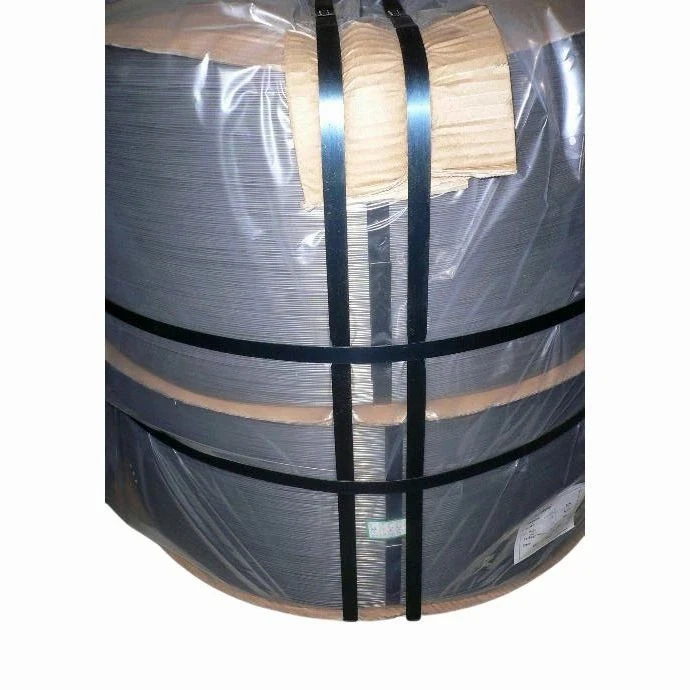
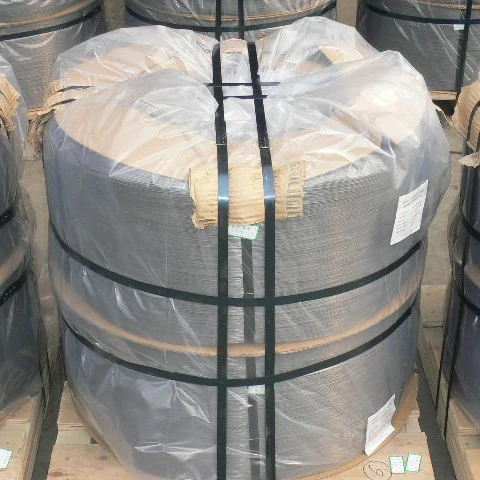
However, it's crucial for customers to also take into account real - world factors such as corrosion and fatigue when using low strength steel wire. If you have any specific requirements for low strength steel wire, whether it's for a particular application or with specific load - bearing needs, please feel free to contact us for further discussion. We are committed to providing high - quality products and professional advice to meet your needs.
References
- Callister, W. D., & Rethwisch, D. G. (2014). Materials Science and Engineering: An Introduction. Wiley.
- ASM Handbook Committee. (1990). ASM Handbook: Properties and Selection: Irons, Steels, and High - Performance Alloys. ASM International.