

What is the maximum load that round steel wire can bear?
Hey there! As a supplier of Round Steel Wire, I often get asked about the maximum load that this type of wire can bear. It's a crucial question, especially for those in construction, manufacturing, and other industries where the strength and reliability of materials are non - negotiable. So, let's dive right into it and explore what factors determine the maximum load capacity of round steel wire.
Understanding Round Steel Wire
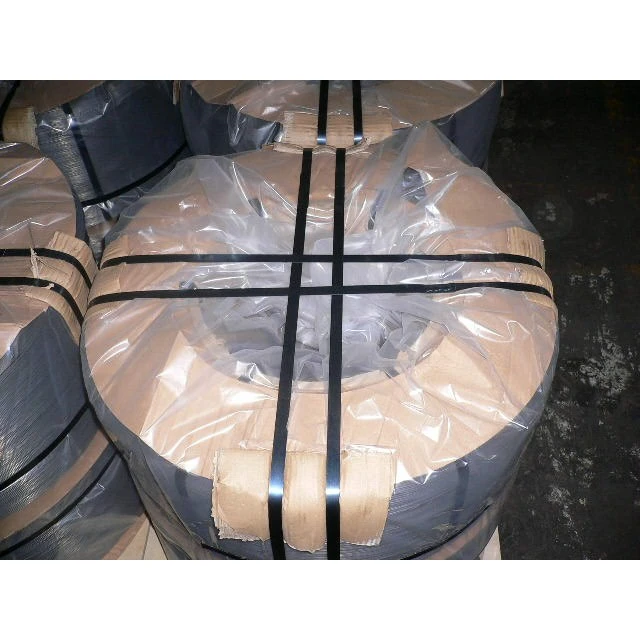
First off, let me give you a bit of background on round steel wire. Round steel wire is a versatile product that's used in a wide range of applications. You can find it in everything from simple household items like wire fences to high - tech machinery components. The wire comes in various diameters and grades, each designed to meet different strength requirements. You can check out our Round Steel Wire for more details on the different options available.
Factors Affecting the Maximum Load
There are several factors that play a role in determining how much weight a round steel wire can handle.
1. Material Composition
The type of steel used in the wire is a major factor. Different steel alloys have different mechanical properties. For example, high - carbon steel wires are generally stronger than low - carbon steel wires. High - carbon steel contains more carbon, which gives it greater hardness and tensile strength. This means that it can withstand higher loads before breaking. On the other hand, low - carbon steel is more ductile and easier to form, but it may not be able to bear as much weight.
2. Wire Diameter
The diameter of the wire is another critical factor. As you might expect, a thicker wire can generally bear more weight than a thinner one. This is because the cross - sectional area of the wire is larger, which means there is more material to resist the applied load. For instance, a 10 - millimeter diameter round steel wire will be able to handle a significantly higher load than a 2 - millimeter diameter wire. The relationship between diameter and load - bearing capacity is not linear, though. Doubling the diameter doesn't necessarily double the load - bearing capacity.
3. Surface Finish
The surface finish of the wire can also impact its load - bearing capacity. A smooth surface finish can reduce stress concentrations, which are areas where the stress in the wire is higher than average. Stress concentrations can lead to premature failure of the wire under load. On the other hand, a rough or damaged surface can create weak points in the wire, making it more likely to break under relatively low loads.
4. Heat Treatment
Heat treatment is a process used to alter the mechanical properties of the steel wire. By heating and then cooling the wire in a controlled manner, we can increase its strength, hardness, or ductility. For example, quenching and tempering is a common heat - treatment process for steel wires. Quenching involves rapidly cooling the wire from a high temperature, which makes it hard but brittle. Tempering then follows, which reduces the brittleness and improves the toughness of the wire. A properly heat - treated wire can have a much higher maximum load capacity than an untreated wire.
Calculating the Maximum Load
Calculating the exact maximum load that a round steel wire can bear is a complex process that involves a lot of technical knowledge. However, there are some general guidelines and formulas that can give you a rough estimate.

The tensile strength of the wire is a key parameter in these calculations. Tensile strength is the maximum stress that the wire can withstand before breaking. It's usually measured in units of force per unit area, such as pounds per square inch (psi) or megapascals (MPa).
The formula for calculating the maximum load (F) that a wire can bear is based on its cross - sectional area (A) and its tensile strength (σ):
F = σ × A
The cross - sectional area of a round wire can be calculated using the formula for the area of a circle:
A = π × (d/2)^2
where d is the diameter of the wire.
For example, let's say we have a round steel wire with a diameter of 5 millimeters and a tensile strength of 500 MPa. First, we calculate the cross - sectional area:
A = π × (5/2)^2 = 19.63 mm²
Then we convert the area to square meters (since 1 MPa = 1 N/mm² and we want the load in newtons):
A = 19.63 × 10^(-6) m²
Now we can calculate the maximum load:
F = 500 × 10^6 N/m² × 19.63 × 10^(-6) m² = 9815 N
This is a simplified calculation, and in real - world applications, other factors such as the type of loading (e.g., static or dynamic), the length of the wire, and the end - conditions also need to be considered.
Applications and Load Requirements
The maximum load that a round steel wire needs to bear depends on its application.
Construction
In construction, round steel wires are often used in reinforcement, such as in concrete structures. The wires need to be able to withstand the weight of the structure and any additional loads, like wind or seismic forces. For example, in high - rise buildings, the steel wires used in the reinforcement need to have a very high load - bearing capacity to ensure the safety of the structure.
Manufacturing
In manufacturing, round steel wires are used in various machinery components. For example, in springs, the wire needs to be able to stretch and compress repeatedly without breaking. The load - bearing capacity of the wire in this case is related to the amount of force that the spring needs to exert.
Agriculture
In agriculture, round steel wires are used for fencing. The wires need to be strong enough to keep livestock contained and to withstand environmental factors like wind and snow. The load - bearing capacity required here may not be as high as in construction or manufacturing, but it still needs to be sufficient for the specific application.
Other Types of Steel Wire
If round steel wire doesn't quite meet your needs, we also offer other types of steel wire. Check out our Cold Rolled Flat Steel Wire Strips and Rectangular Steel Wire. These products have different shapes and properties, which may be more suitable for certain applications.
Conclusion
So, there you have it! The maximum load that round steel wire can bear depends on a variety of factors, including material composition, wire diameter, surface finish, and heat treatment. Calculating the exact load - bearing capacity is a complex process, but understanding these factors can help you choose the right wire for your application.
If you're in the market for round steel wire or any of our other steel wire products, I'd love to have a chat with you. Whether you need help selecting the right wire for your project or have questions about load - bearing capacities, I'm here to assist. Don't hesitate to reach out and start a conversation about your procurement needs.
References
- "Materials Science and Engineering: An Introduction" by William D. Callister Jr. and David G. Rethwisch
- "Mechanics of Materials" by Ferdinand P. Beer, E. Russell Johnston Jr., John T. DeWolf, and David F. Mazurek