

What is the shear strength of round steel wire?
What is the Shear Strength of Round Steel Wire?
As a supplier of Round Steel Wire, I often encounter inquiries about the shear strength of our products. Understanding the shear strength of round steel wire is crucial for various applications, from construction to manufacturing. In this blog post, I will delve into the concept of shear strength, its significance, and how it relates to our Round Steel Wire.
What is Shear Strength?
Shear strength is a fundamental mechanical property that measures a material's ability to resist forces that cause its layers to slide past one another. When a force is applied parallel to the cross - sectional area of a material, shear stress is generated. The shear strength is the maximum shear stress that a material can withstand before it fails.
In the case of round steel wire, shear strength is essential because it determines the wire's performance under specific loading conditions. For example, when the wire is used in applications where it is subject to cutting, bending, or twisting forces, its shear strength plays a vital role in ensuring its integrity and functionality.
Factors Affecting the Shear Strength of Round Steel Wire
Several factors influence the shear strength of round steel wire.
1. Material Composition
The chemical composition of the steel used to make the wire is a primary factor. Different alloying elements can significantly affect the mechanical properties of the wire. For instance, adding elements like carbon, manganese, and chromium can enhance the strength and hardness of the steel, thereby increasing its shear strength. High - carbon steel wires generally have higher shear strength compared to low - carbon steel wires.
2. Heat Treatment
Heat treatment processes such as annealing, quenching, and tempering can alter the microstructure of the steel wire, which in turn affects its shear strength. Annealing can relieve internal stresses and improve the ductility of the wire, while quenching and tempering can increase its hardness and strength. A well - heat - treated round steel wire will have better shear strength and overall performance.
3. Wire Diameter
The diameter of the round steel wire also plays a role in its shear strength. Generally, as the diameter of the wire increases, its shear strength may increase due to the larger cross - sectional area. However, this relationship is not always linear, as other factors such as the material's homogeneity and the presence of defects can also influence the overall strength.
4. Manufacturing Process
The manufacturing process of the wire, including drawing and rolling, can affect its shear strength. A well - controlled manufacturing process ensures that the wire has a uniform structure and minimal defects, which are essential for high shear strength. For example, cold - drawing the wire can increase its strength by work - hardening the material.
Measuring the Shear Strength of Round Steel Wire
There are several methods to measure the shear strength of round steel wire. One common method is the double - shear test. In this test, a short length of the wire is placed between two supports, and a load is applied perpendicular to the axis of the wire at the mid - point. The load required to cause the wire to shear is measured, and the shear strength is calculated based on the cross - sectional area of the wire.
Another method is the torsion test, where the wire is twisted until it fails. The maximum torque applied during the test can be used to calculate the shear strength of the wire. These tests are typically conducted in a laboratory setting using specialized testing equipment to ensure accurate and reliable results.
Importance of Shear Strength in Applications
The shear strength of round steel wire is of great importance in various applications.
1. Construction
In construction, round steel wires are used in applications such as reinforcement in concrete structures, fencing, and suspension systems. The shear strength of the wire ensures that it can withstand the forces exerted on it during construction and throughout the service life of the structure. For example, in a concrete - reinforced structure, the wire must be able to resist shear forces caused by external loads and vibrations.
2. Manufacturing
In the manufacturing industry, round steel wires are used in the production of springs, fasteners, and wire ropes. Springs need to have sufficient shear strength to maintain their shape and function under repeated loading. Fasteners, such as bolts and screws made from round steel wire, must be able to withstand shear forces to ensure a secure connection.

3. Automotive Industry
In the automotive industry, round steel wires are used in various components, including suspension springs, brake cables, and engine valves. The shear strength of these wires is critical for the safety and performance of the vehicle. For example, a brake cable with low shear strength may fail under high - stress conditions, leading to a loss of braking ability.
Our Round Steel Wire Products
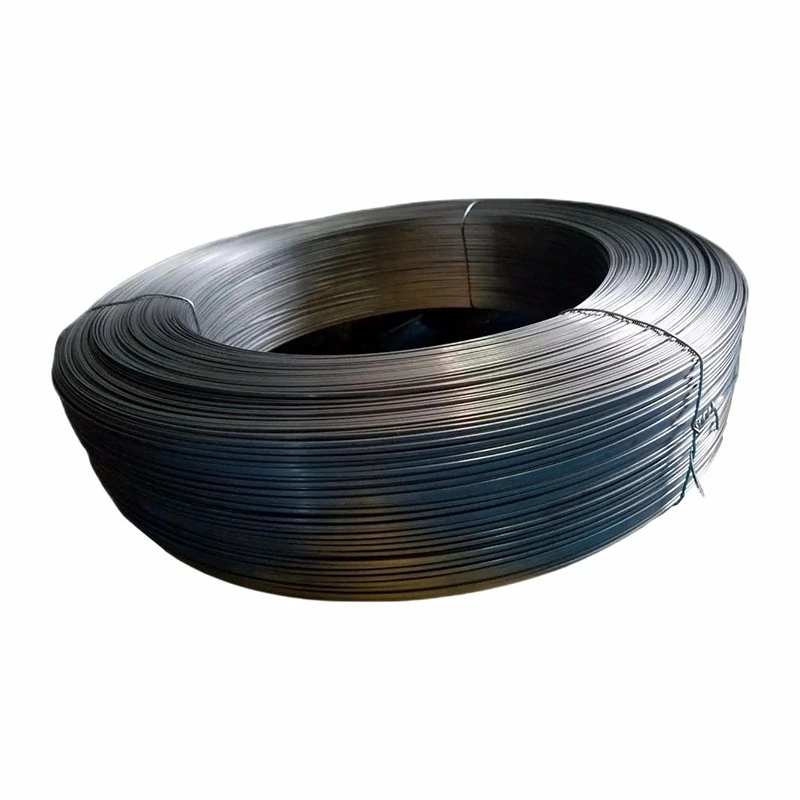
As a supplier, we offer a wide range of Round Steel Wire products with different specifications and shear strengths to meet the diverse needs of our customers. Our Round Steel Wire is manufactured using high - quality steel and advanced production techniques to ensure consistent quality and excellent mechanical properties.
We also provide Cold Rolled Flat Steel Wire Strips and Rectangular Steel Wire for applications where different shapes and sizes are required. Our team of experts can help you select the right product based on your specific requirements, including the desired shear strength.
Contact Us for Procurement
If you are in need of round steel wire or other related products, we invite you to contact us for procurement. Our experienced sales team can provide you with detailed product information, technical support, and competitive pricing. We are committed to providing high - quality products and excellent customer service to meet your needs. Whether you are a small - scale manufacturer or a large - scale construction company, we have the solutions for you.
References
- Callister, W. D., & Rethwisch, D. G. (2018). Materials Science and Engineering: An Introduction. Wiley.
- Ashby, M. F., & Jones, D. R. H. (2012). Engineering Materials 1: An Introduction to Properties, Applications, and Design. Butterworth - Heinemann.
- Dieter, G. E. (1986). Mechanical Metallurgy. McGraw - Hill.