

What is the Young's modulus of alloy steel wire?
Hey there! As a supplier of Alloy Steel Wire, I often get asked about the Young's modulus of alloy steel wire. So, let's dive right into it and break down what this term means and why it's super important in the world of alloy steel wire.
First off, what's the Young's modulus? Well, it's basically a measure of the stiffness of a material. You can think of it as how much a material resists deformation when a force is applied to it. In more technical terms, it's the ratio of stress (the force applied per unit area) to strain (the resulting deformation) within the elastic limit of the material. When we talk about alloy steel wire, the Young's modulus tells us how much the wire will stretch or compress when we pull or push on it.
Alloy steel wire is pretty amazing stuff. It's made by combining iron with other elements like chromium, nickel, and manganese. These alloying elements give the wire different properties, making it stronger, more corrosion - resistant, or better suited for specific applications. And the Young's modulus is a key factor in determining how the wire will perform in those applications.
The Young's modulus of alloy steel wire can vary depending on a few things. One of the main factors is the composition of the alloy. Different combinations of alloying elements can lead to different crystal structures within the steel, which in turn affect its stiffness. For example, if an alloy steel wire has a high percentage of chromium, it might have a different Young's modulus compared to a wire with more nickel.
Another factor is the heat treatment process. Heat treating the wire can change its microstructure, which can also impact the Young's modulus. Annealing, for instance, can make the wire more ductile and might slightly lower its stiffness, while quenching and tempering can increase its strength and potentially change the Young's modulus as well.
Typically, the Young's modulus of alloy steel wire falls in the range of about 190 - 210 GPa (gigapascals). That's a pretty wide range, but it gives you an idea of the general stiffness of this type of wire. To put it in perspective, materials with a higher Young's modulus are stiffer and harder to deform. So, an alloy steel wire with a Young's modulus closer to 210 GPa will be stiffer than one with a value closer to 190 GPa.
Now, why does the Young's modulus matter for alloy steel wire? Well, it's crucial in a whole bunch of applications. Take the aerospace industry, for example. In aircraft construction, alloy steel wires are used in various components like cables and fasteners. The stiffness of the wire, as determined by the Young's modulus, is essential for ensuring the structural integrity of these parts. If the wire is too flexible, it might not be able to withstand the forces exerted on it during flight, which could lead to failures.
In the automotive industry, alloy steel wire is used in suspension systems, engine components, and more. The Young's modulus helps engineers design these parts to have the right amount of flexibility and strength. A suspension wire with the appropriate stiffness can provide a smooth ride and good handling characteristics for the vehicle.
For us as a supplier of Alloy Steel Wire, understanding the Young's modulus is vital. It allows us to offer the right type of wire for different customer needs. Whether a customer is looking for a wire that's highly flexible or one that's extremely stiff, we can use the Young's modulus as a guide to recommend the best product.
We also offer Cold Drawn Stainless Steel Wire, which has its own unique properties related to the Young's modulus. Cold drawing is a process that can increase the strength and stiffness of the wire. During cold drawing, the wire is pulled through a die at room temperature, which changes its shape and microstructure. This can result in a higher Young's modulus compared to non - cold - drawn wire, making it suitable for applications where high stiffness is required.
When it comes to choosing the right alloy steel wire for your project, it's important to consider the Young's modulus along with other properties like tensile strength, corrosion resistance, and ductility. You need to find a balance between these factors to ensure that the wire will perform well in your specific application.
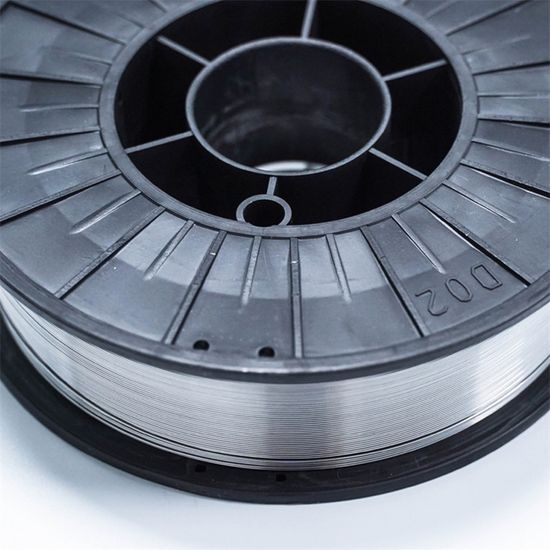
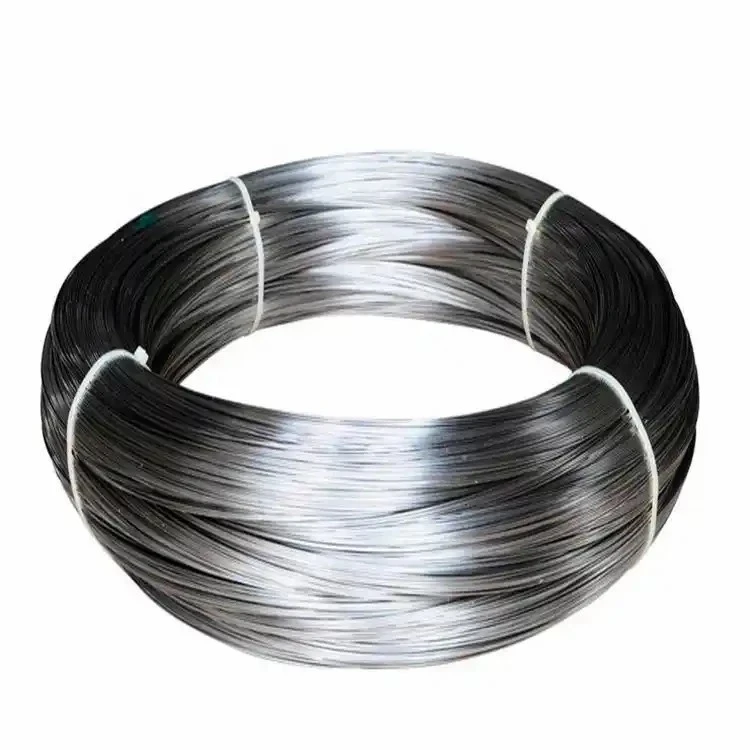
If you're in the market for alloy steel wire or cold - drawn stainless steel wire, don't hesitate to reach out. We're here to help you select the best product based on your requirements. Whether you're working on a small DIY project or a large - scale industrial application, we've got the knowledge and the products to meet your needs.
In conclusion, the Young's modulus of alloy steel wire is a key property that affects its performance in a wide range of applications. Understanding this concept can help you make more informed decisions when it comes to choosing the right wire for your project. So, if you have any questions or need more information, feel free to get in touch. We're always happy to assist you in finding the perfect alloy steel wire solution.
References:
- "Materials Science and Engineering: An Introduction" by William D. Callister Jr. and David G. Rethwisch
- "Mechanical Behavior of Materials" by N. E. Dowling