

What are the specifications of bead steel wire commonly used in the market?
Bead steel wire is a crucial component in the manufacturing of tires, playing a vital role in ensuring the structural integrity and performance of the tire. As a leading bead steel wire supplier, I am often asked about the specifications of the bead steel wire commonly used in the market. In this blog post, I will delve into the key specifications of bead steel wire, providing valuable insights for those involved in the tire manufacturing industry.
Chemical Composition
The chemical composition of bead steel wire significantly influences its mechanical properties and performance. Commonly, bead steel wire is made from high - carbon steel. The carbon content typically ranges from 0.70% to 0.90%. A higher carbon content enhances the strength and hardness of the wire. Manganese is another important element, usually present in the range of 0.30% - 0.60%. Manganese helps to improve the hardenability and toughness of the wire. Silicon, with a content of about 0.15% - 0.35%, contributes to the deoxidation process during steelmaking and also enhances the strength of the wire.
Sulfur and phosphorus are considered impurities in bead steel wire. Their content should be strictly controlled. Generally, the sulfur content is limited to less than 0.030% and the phosphorus content to less than 0.035%. High levels of sulfur and phosphorus can cause brittleness in the wire, reducing its ductility and fatigue resistance.
Diameter
Bead steel wire comes in various diameters to meet different tire manufacturing requirements. The most commonly used diameters range from 0.80 mm to 2.00 mm. Smaller diameter wires, such as those around 0.80 - 1.20 mm, are often used in passenger car tires. These tires require a more flexible bead structure to provide a comfortable ride. Larger diameter wires, in the range of 1.50 - 2.00 mm, are typically used in heavy - duty truck tires and off - road vehicle tires. The larger diameter wires can withstand higher loads and stresses, ensuring the durability of the tire.
Tensile Strength
Tensile strength is a critical specification for bead steel wire. It represents the maximum stress that the wire can withstand before breaking. For bead steel wire, the tensile strength usually ranges from 1800 MPa to 2300 MPa. High - strength bead steel wire is essential for maintaining the shape of the tire bead under high - pressure conditions. In passenger car tires, a tensile strength of around 1800 - 2000 MPa is often sufficient. However, for heavy - duty tires, a higher tensile strength of 2100 - 2300 MPa is required to ensure the tire's ability to carry heavy loads.
Elongation
Elongation is another important mechanical property of bead steel wire. It measures the ability of the wire to stretch before breaking. The elongation of bead steel wire is typically in the range of 2% - 5%. Adequate elongation is necessary to ensure that the wire can be bent and formed into the desired bead shape during the tire manufacturing process without cracking. A wire with low elongation may break during the forming process, leading to production inefficiencies and quality issues.
Surface Quality
The surface quality of bead steel wire is of great importance. A smooth and clean surface is required to ensure good adhesion between the wire and the rubber in the tire. Any surface defects, such as rust, scale, or scratches, can reduce the adhesion strength, which may lead to tire failure. To achieve a high - quality surface, bead steel wire is often subjected to processes such as pickling, phosphating, and copper - plating.
Pickling is used to remove the oxide scale on the surface of the wire. Phosphating forms a phosphate coating on the wire surface, which improves the adhesion between the wire and the rubber. Copper - plating provides a corrosion - resistant layer and also enhances the bonding with the rubber.
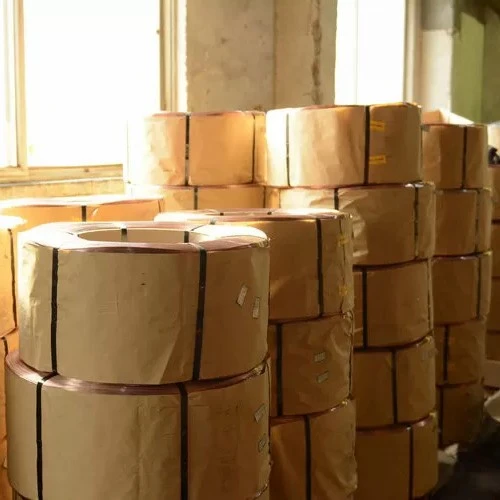

Spooling and Packaging
Bead steel wire is usually supplied in spools. The spooling should be uniform and tight to prevent the wire from tangling during handling and use. The spool size can vary depending on the customer's requirements. Common spool weights range from 100 kg to 500 kg.
Proper packaging is also crucial to protect the wire during transportation and storage. The wire is often wrapped with plastic film or placed in steel drums to prevent moisture and damage.
Related Products
In addition to bead steel wire, our company also offers a range of related products, such as Cold Drawn Spring Wire Rods, Steel Cut Wire Shot, and Steel Wire for Brush. These products are also widely used in different industries and can provide comprehensive solutions for our customers.
Conclusion
Understanding the specifications of bead steel wire is essential for tire manufacturers to ensure the quality and performance of their products. As a bead steel wire supplier, we are committed to providing high - quality products that meet the strictest industry standards. Our bead steel wire is carefully manufactured to have the right chemical composition, diameter, tensile strength, elongation, and surface quality.
If you are in the tire manufacturing industry or have any needs for bead steel wire, we would be more than happy to discuss your requirements and provide you with the best solutions. Contact us today to start a procurement negotiation and take your tire manufacturing to the next level.
References
- ASM Handbook Committee. ASM Handbook Volume 1: Properties and Selection: Irons, Steels, and High - Performance Alloys. ASM International, 1990.
- Tire and Rim Association. Year Book. Tire and Rim Association, various editions.