

What is the tensile strength of patented steel wire?
What is the tensile strength of patented steel wire?
As a supplier of Patented Steel Wire, I often encounter inquiries about the tensile strength of this remarkable product. Tensile strength is a crucial property that determines the wire's ability to withstand pulling forces without breaking. In this blog post, I will delve into the concept of tensile strength, explore its significance in patented steel wire, and discuss the factors that influence it.
Understanding Tensile Strength
Tensile strength is defined as the maximum amount of tensile (pulling) stress that a material can withstand before it fractures or breaks. It is typically measured in units of force per unit area, such as pounds per square inch (psi) or megapascals (MPa). In the context of steel wire, tensile strength is a key indicator of its quality and performance.
When a wire is subjected to a tensile force, it experiences internal stresses that cause it to stretch. As the force increases, the wire will eventually reach a point where it can no longer withstand the stress and will break. The tensile strength of the wire is the maximum stress it can endure before this occurs.
Significance of Tensile Strength in Patented Steel Wire
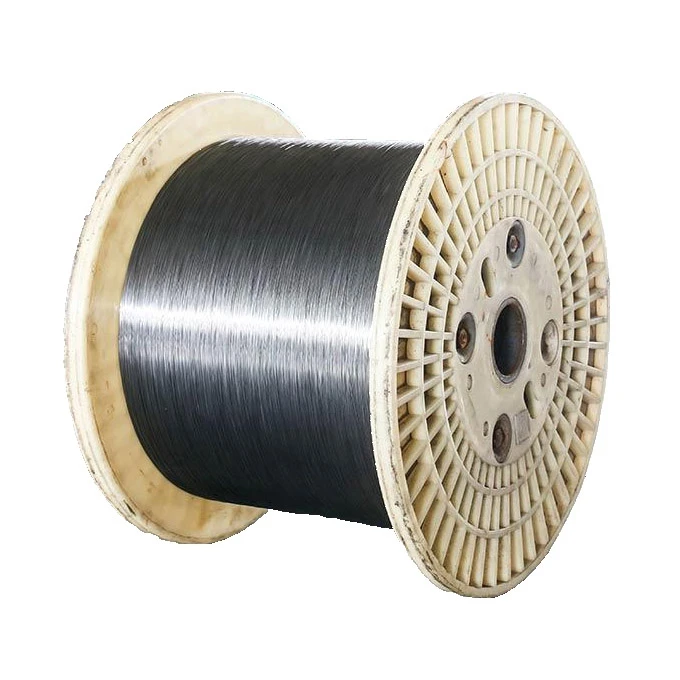
Patented steel wire is a high - quality wire that undergoes a specialized heat - treatment process known as patenting. This process involves heating the wire to a specific temperature and then rapidly cooling it in a controlled manner. The result is a wire with a fine, uniform microstructure that provides excellent strength, ductility, and toughness.
The high tensile strength of patented steel wire makes it suitable for a wide range of applications. It is commonly used in the manufacturing of springs, cables, ropes, and wire mesh. In spring applications, for example, the wire's high tensile strength allows it to store and release energy efficiently, providing reliable performance over a long period of time. In cable and rope applications, the strong wire can support heavy loads and resist abrasion and corrosion.

Factors Affecting the Tensile Strength of Patented Steel Wire
Several factors can influence the tensile strength of patented steel wire.
- Chemical Composition: The chemical composition of the steel is one of the most important factors. Elements such as carbon, manganese, silicon, and chromium can have a significant impact on the wire's strength. For instance, increasing the carbon content generally increases the tensile strength, but it may also reduce the wire's ductility. Alloying elements like chromium can enhance the wire's corrosion resistance and strength.
- Heat - Treatment Process: The patenting process is critical in determining the wire's microstructure and, consequently, its tensile strength. The heating temperature, holding time, and cooling rate during patenting must be carefully controlled. A proper heat - treatment process will result in a fine pearlitic or bainitic microstructure, which provides high strength.
- Wire Diameter: Generally, as the wire diameter decreases, the tensile strength increases. This is because smaller diameter wires have fewer internal defects and a more uniform microstructure. However, this relationship is not linear and can be affected by other factors such as the heat - treatment process and the chemical composition.
- Cold - Drawing Process: After patenting, the wire is often cold - drawn to reduce its diameter and improve its surface finish. Cold - drawing can further increase the tensile strength of the wire by work - hardening the material. However, excessive cold - drawing can lead to a decrease in ductility and an increased risk of cracking.
Measuring the Tensile Strength of Patented Steel Wire
To determine the tensile strength of patented steel wire, a tensile test is typically performed. In this test, a sample of the wire is placed in a testing machine and gradually subjected to a pulling force until it breaks. The machine records the maximum force applied and the cross - sectional area of the wire, and the tensile strength is calculated by dividing the maximum force by the cross - sectional area.
Standards such as ASTM A228 for oil - tempered carbon steel wire and ASTM A679 for cold - drawn steel wire for mechanical springs provide guidelines for conducting tensile tests and specifying the minimum and maximum tensile strength requirements for different types of steel wire.
Comparison with Other Types of Steel Wire
When compared to other types of steel wire, such as Oil Tempered Steel Wire and Phosphate Coating Steel Wire, patented steel wire often offers superior tensile strength. Oil - tempered steel wire is also heat - treated, but the patenting process of patented steel wire results in a more uniform and fine microstructure, which can lead to higher strength. Phosphate coating steel wire, on the other hand, is mainly coated with phosphate for corrosion resistance, and its tensile strength is more dependent on the base steel wire's properties and heat - treatment.
Applications Based on Tensile Strength
The high tensile strength of patented steel wire makes it an ideal choice for many demanding applications. In the automotive industry, it is used in valve springs, clutch springs, and suspension springs. These springs need to withstand high stresses and repeated loading cycles, and the high tensile strength of patented steel wire ensures their reliable performance.
In the construction industry, patented steel wire is used in prestressed concrete structures. The wire's high strength allows it to apply significant pre - stress to the concrete, improving its load - bearing capacity and durability.
In the manufacturing of wire ropes for the marine and mining industries, the high tensile strength of patented steel wire enables the ropes to support heavy loads and resist the harsh environmental conditions.
Conclusion
The tensile strength of patented steel wire is a vital property that determines its suitability for a wide range of applications. As a supplier of Patented Steel Wire, I understand the importance of providing high - quality wire with consistent and reliable tensile strength. By carefully controlling the chemical composition, heat - treatment process, and manufacturing steps, we can ensure that our patented steel wire meets the highest standards of strength and performance.
If you are in need of high - quality patented steel wire for your specific application, I encourage you to reach out to discuss your requirements. We can provide you with detailed information about our products, including their tensile strength, and work with you to find the best solution for your project. Whether you are in the automotive, construction, or any other industry, our patented steel wire can offer the strength and reliability you need.
References
- ASTM International. ASTM A228 Standard Specification for Oil - Tempered Carbon Steel Wire for Springs.
- ASTM International. ASTM A679 Standard Specification for Cold - Drawn Steel Wire, Music Spring Quality.
- ASM Handbook, Volume 1: Properties and Selection: Irons, Steels, and High - Performance Alloys. ASM International.