

What is the thermal expansion coefficient of stainless steel wire?
What is the thermal expansion coefficient of stainless steel wire?
As a supplier of stainless steel wire, I often get asked about various properties of our products, and one question that comes up quite frequently is about the thermal expansion coefficient of stainless steel wire. Understanding this property is crucial for many applications, as it can have a significant impact on the performance and durability of the wire in different environments.
What is the Thermal Expansion Coefficient?
Before we delve into the specific thermal expansion coefficient of stainless steel wire, let's first understand what the thermal expansion coefficient is. The thermal expansion coefficient is a measure of how much a material expands or contracts when its temperature changes. It is defined as the fractional change in length or volume per degree change in temperature. In the case of linear expansion, the coefficient is denoted by α (alpha) and is typically expressed in units of per degree Celsius (°C⁻¹) or per degree Fahrenheit (°F⁻¹).
Mathematically, the linear expansion can be calculated using the formula:
ΔL = α * L₀ * ΔT
Where:
- ΔL is the change in length
- α is the linear thermal expansion coefficient
- L₀ is the original length
- ΔT is the change in temperature
Thermal Expansion Coefficient of Stainless Steel Wire
Stainless steel is an alloy composed primarily of iron, chromium, and nickel, along with other elements in varying proportions. The thermal expansion coefficient of stainless steel wire can vary depending on its specific composition, heat treatment, and the type of stainless steel grade. Generally, the thermal expansion coefficient of stainless steel ranges from approximately 10 x 10⁻⁶ to 17 x 10⁻⁶ °C⁻¹.
For example, a common type of stainless steel, such as 304 stainless steel, has a thermal expansion coefficient of around 17.2 x 10⁻⁶ °C⁻¹ at room temperature. On the other hand, 430 stainless steel, which is a ferritic stainless steel, has a lower thermal expansion coefficient of about 10.4 x 10⁻⁶ °C⁻¹.
The variation in the thermal expansion coefficient among different stainless steel grades is due to differences in their crystal structures and the presence of alloying elements. Austenitic stainless steels, like 304 and 316, have a face - centered cubic (FCC) crystal structure, which generally results in a higher thermal expansion coefficient compared to ferritic stainless steels with a body - centered cubic (BCC) structure.
Importance of the Thermal Expansion Coefficient in Applications
The thermal expansion coefficient of stainless steel wire is an important consideration in many applications. Here are some examples:
Construction and Architecture
In construction, stainless steel wire is often used in structural components, such as cables, ropes, and reinforcement bars. When exposed to temperature variations, the wire will expand or contract. If the thermal expansion is not properly accounted for, it can lead to stress build - up, deformation, and even failure of the structure. For instance, in a large - scale bridge or building, the expansion and contraction of stainless steel wires due to seasonal temperature changes need to be considered during the design phase to ensure the long - term stability and safety of the structure.
Electrical and Electronic Applications
In electrical and electronic devices, stainless steel wire may be used as conductors, connectors, or in the construction of enclosures. Temperature changes can affect the electrical conductivity and mechanical properties of the wire. If the thermal expansion of the wire is not compatible with other components in the device, it can cause issues such as loose connections, short circuits, or mechanical damage over time.
Manufacturing and Industrial Processes
In manufacturing processes, stainless steel wire is used in various machinery and equipment. For example, in a precision manufacturing process where tight tolerances are required, the thermal expansion of the wire can affect the accuracy of the final product. In heat - treating furnaces or other high - temperature applications, understanding the thermal expansion coefficient is essential to prevent the wire from buckling or breaking under thermal stress.
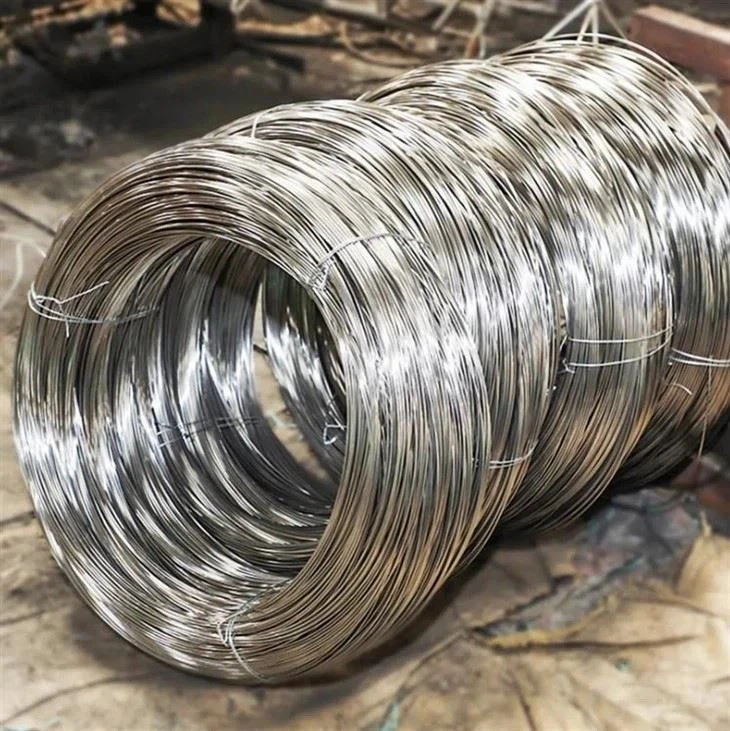
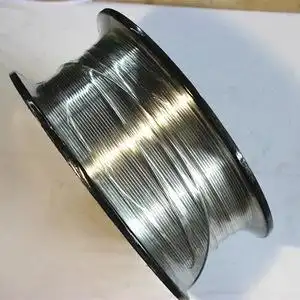
Our Stainless Steel Wire Products and Thermal Expansion
As a supplier of stainless steel wire, we offer a wide range of products to meet different customer needs. Our Cold Drawn Stainless Steel Wire is known for its high strength, smooth surface finish, and excellent dimensional accuracy. Cold drawing is a process that can improve the mechanical properties of the wire, but it also has an impact on its thermal expansion behavior. Our team of experts carefully selects the raw materials and controls the manufacturing process to ensure that the thermal expansion coefficient of our cold - drawn stainless steel wire is within the desired range for specific applications.
We also provide Alloy Steel Wire, which offers enhanced properties such as increased strength, corrosion resistance, and heat resistance. The thermal expansion coefficient of our alloy steel wire is carefully characterized and tested to ensure that it meets the requirements of our customers' applications.
How We Ensure Quality and Compatibility
To ensure the quality and compatibility of our stainless steel wire products, we conduct a series of tests and inspections. We use advanced testing equipment to measure the thermal expansion coefficient of our wires accurately. Our quality control team monitors every step of the manufacturing process, from the selection of raw materials to the final packaging of the products.
We also work closely with our customers to understand their specific application requirements. By providing detailed technical information about the thermal expansion coefficient and other properties of our products, we help our customers make informed decisions and select the most suitable stainless steel wire for their needs.
Contact Us for Your Stainless Steel Wire Needs
If you are in the market for high - quality stainless steel wire and have questions about the thermal expansion coefficient or other properties, we are here to help. Our experienced sales team can provide you with detailed product information, technical support, and competitive pricing. Whether you are a construction company, an electrical manufacturer, or an industrial user, we can offer customized solutions to meet your specific requirements.
Contact us today to start a discussion about your stainless steel wire procurement needs. We look forward to partnering with you and providing you with the best - in - class products and services.
References
- ASM Handbook, Volume 1: Properties and Selection: Irons, Steels, and High - Performance Alloys
- "Stainless Steel: A Technical Guide" by The Nickel Institute
- "Materials Science and Engineering: An Introduction" by William D. Callister, Jr. and David G. Rethwisch