

What is the Young's modulus of round steel wire?
Hey there! As a supplier of Round Steel Wire, I often get asked about the Young's modulus of round steel wire. So, I thought I'd write this blog to share some insights on what it is, why it matters, and how it relates to our products.
What is Young's Modulus?
First things first, let's break down what Young's modulus actually is. In simple terms, Young's modulus, also known as the modulus of elasticity, is a measure of a material's stiffness. It tells us how much a material will deform under a given amount of stress. When we talk about stress, we're referring to the force applied to the material per unit area, and deformation is the change in the material's shape or size.
The formula for Young's modulus (E) is E = σ/ε, where σ (sigma) is the stress and ε (epsilon) is the strain. Stress is measured in units like pascals (Pa), and strain is a dimensionless quantity representing the ratio of the change in length to the original length of the material.
For example, if you pull on a piece of wire, the stress is the force you apply divided by the cross - sectional area of the wire, and the strain is how much the wire stretches compared to its original length. A high Young's modulus means the material is stiff and doesn't deform easily under stress, while a low Young's modulus indicates that the material is more flexible and will deform more readily.
Young's Modulus of Round Steel Wire
Round steel wire is a commonly used material in a wide range of applications, from construction to manufacturing. The Young's modulus of round steel wire typically falls in the range of 190 - 210 GPa (gigapascals). This relatively high value indicates that steel wire is quite stiff and can withstand significant stress without undergoing excessive deformation.
The exact value of the Young's modulus can vary depending on several factors. One of the main factors is the type of steel used. Different steel alloys have different compositions, and these compositions can affect the material's internal structure and, consequently, its stiffness. For instance, high - carbon steel wires may have a slightly different Young's modulus compared to low - carbon steel wires.
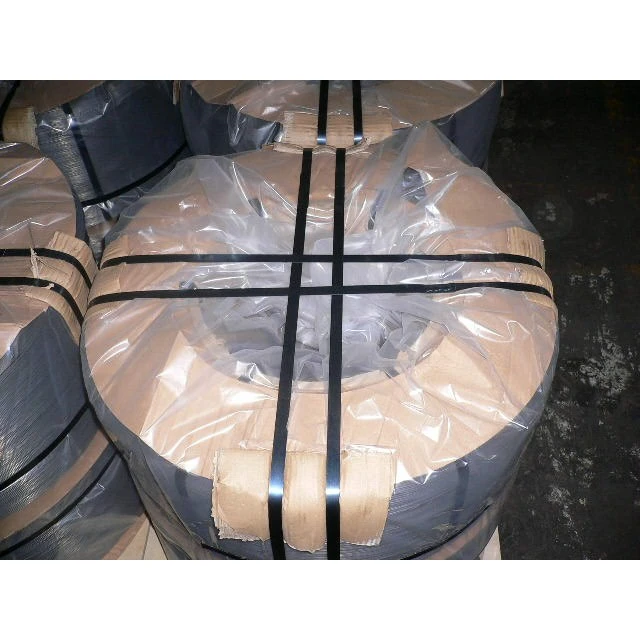

The manufacturing process also plays a role. If the wire is cold - drawn, for example, the process can introduce internal stresses and change the grain structure of the steel, which may have an impact on the Young's modulus. Heat treatment is another factor. Annealing the wire can relieve internal stresses and change the material's properties, potentially affecting its stiffness.
Why Does Young's Modulus Matter for Round Steel Wire?
Now, you might be wondering why the Young's modulus of round steel wire is so important. Well, it has a significant impact on the performance of the wire in various applications.
In construction, round steel wire is often used for reinforcement. For example, in concrete structures, steel wires are embedded to enhance the tensile strength of the concrete. The high Young's modulus of steel ensures that the wire can resist stretching and help the concrete structure withstand external forces such as wind, earthquakes, and the weight of the building itself. If the wire had a lower Young's modulus, it would deform more easily under stress, and the overall integrity of the structure could be compromised.
In manufacturing, round steel wire is used in the production of springs. The stiffness of the spring is directly related to the Young's modulus of the wire. A spring made from a wire with a high Young's modulus will be stiffer and require more force to compress or stretch. This property is crucial in applications where precise control of the spring's behavior is needed, such as in automotive suspension systems or mechanical watches.
Our Round Steel Wire Products
As a supplier of Round Steel Wire, we understand the importance of the Young's modulus and how it affects the performance of our products. We offer a wide range of round steel wires with different specifications to meet the diverse needs of our customers.
Our wires are made from high - quality steel alloys, and we carefully control the manufacturing process to ensure consistent quality. Whether you need a wire with a specific Young's modulus for a particular application or you're looking for a wire with other properties like high strength or corrosion resistance, we've got you covered.
If you're interested in learning more about our other wire products, you can check out our Cold Rolled Flat Steel Wire Strips and Rectangular Steel Wire. And of course, for our round steel wire products, visit Round Steel Wire.
How to Choose the Right Round Steel Wire Based on Young's Modulus
When choosing a round steel wire for your project, it's important to consider the Young's modulus in relation to your specific requirements. If you need a wire that can withstand high stress without much deformation, look for a wire with a higher Young's modulus. On the other hand, if you need a more flexible wire, a lower Young's modulus might be more suitable.
It's also a good idea to consult with our experts. We have a team of professionals who can help you understand the technical aspects of the wire and guide you in selecting the right product for your application. We can provide you with detailed information about the Young's modulus and other properties of our wires, as well as offer advice on installation and usage.
Contact Us for Procurement
If you're in the market for round steel wire or any of our other wire products, we'd love to hear from you. Whether you're a small - scale manufacturer or a large construction company, we can provide you with high - quality products at competitive prices.
We understand that every project is unique, and we're committed to providing personalized solutions to meet your specific needs. So, don't hesitate to reach out to us for a quote or to discuss your requirements in more detail. We're here to help you make the right choice and ensure the success of your project.
References
- Callister, W. D., & Rethwisch, D. G. (2011). Materials Science and Engineering: An Introduction. Wiley.
- Ashby, M. F., & Jones, D. R. H. (2005). Engineering Materials 1: An Introduction to Properties, Applications, and Design. Butterworth - Heinemann.