

What is the Young's modulus of stainless steel wire?
Hey there! As a stainless steel wire supplier, I often get asked about all sorts of technical stuff related to our products. One question that pops up quite a bit is, "What is the Young's modulus of stainless steel wire?" Well, let's dive right in and break it down.
First off, what the heck is Young's modulus anyway? In simple terms, Young's modulus is a measure of a material's stiffness or elasticity. It tells us how much a material will stretch or compress when a force is applied to it. Think of it like this: if you pull on a rubber band, it stretches a lot because it has a low Young's modulus. On the other hand, if you try to pull on a steel rod, it won't stretch much at all because it has a high Young's modulus.
Now, let's talk about stainless steel wire specifically. Stainless steel is an alloy made up of iron, chromium, and other elements. The exact composition can vary depending on the type of stainless steel, which affects its properties, including the Young's modulus.
The Young's modulus of stainless steel wire typically falls in the range of 190 - 210 GPa (gigapascals). But why does this number matter? Well, for starters, it's crucial in engineering and design. When you're using stainless steel wire in a project, you need to know how it will behave under different loads. For example, if you're using it to support a heavy structure, you want to make sure it won't deform too much under the weight. The Young's modulus helps engineers calculate things like stress and strain, which are essential for ensuring the safety and reliability of a design.
There are different types of stainless steel wire, and each type can have slightly different Young's modulus values. For instance, Alloy Steel Wire may have different properties compared to regular stainless steel wire due to the additional alloying elements. These elements can enhance certain characteristics, such as corrosion resistance or strength, which in turn can affect the Young's modulus.
Another type of stainless steel wire is Cold Drawn Stainless Steel Wire. Cold drawing is a process where the wire is pulled through a die at room temperature to reduce its diameter and increase its strength. This process can also have an impact on the Young's modulus. Generally, cold-drawn stainless steel wire tends to have a slightly higher Young's modulus compared to non-cold-drawn wire because the cold drawing process aligns the crystal structure of the metal, making it stiffer.
Let's take a real-world example to see how the Young's modulus of stainless steel wire plays out. Imagine you're building a suspension bridge. You'll need to use stainless steel wire cables to support the weight of the bridge deck and the traffic on it. The engineers will use the Young's modulus of the stainless steel wire to calculate how much the cables will stretch under the load. They'll also consider factors like the length and cross-sectional area of the cables to ensure that the bridge remains stable and safe.
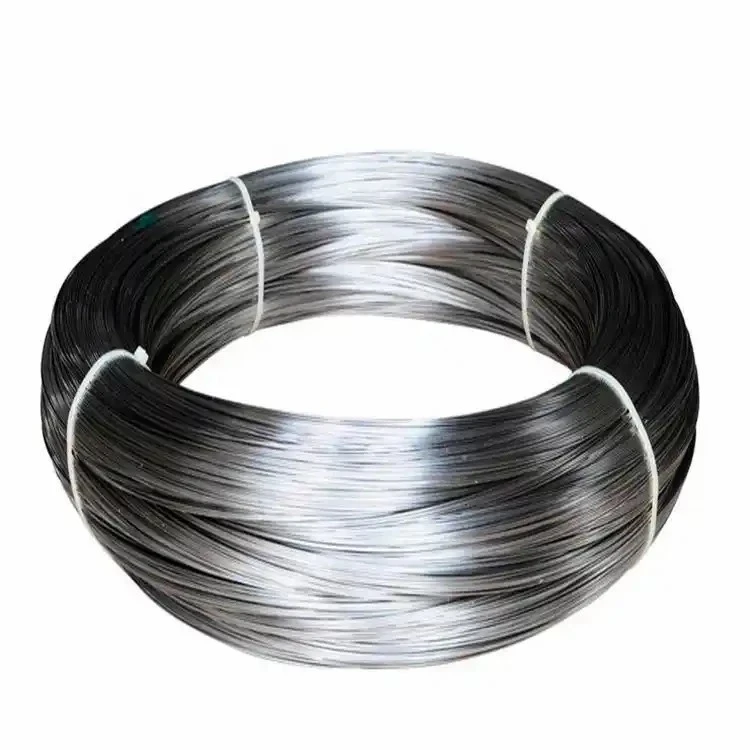

But it's not just in large-scale engineering projects that the Young's modulus matters. Even in smaller applications, like jewelry making or household appliances, understanding the stiffness of stainless steel wire is important. In jewelry, for example, you want the wire to hold its shape and not bend easily, so a higher Young's modulus is desirable.
Now, as a stainless steel wire supplier, we take great care to ensure that our products meet the highest quality standards. We test the Young's modulus and other properties of our wire regularly to make sure it performs as expected. We also work closely with our customers to understand their specific needs and recommend the right type of stainless steel wire for their projects.
If you're in the market for stainless steel wire, whether it's for a big engineering project or a small DIY job, I'd love to chat with you. We have a wide range of stainless steel wire products available, and we can provide you with all the technical information you need. Don't hesitate to reach out to us to discuss your requirements and get a quote.
In conclusion, the Young's modulus of stainless steel wire is a key property that affects its performance in various applications. Whether you're an engineer, a designer, or a DIY enthusiast, understanding this concept can help you make informed decisions when choosing stainless steel wire for your project. So, if you have any questions or need more information, just give us a shout. We're here to help you find the perfect stainless steel wire solution.
References
- "Materials Science and Engineering: An Introduction" by William D. Callister Jr. and David G. Rethwisch
- Various industry standards and research papers on stainless steel properties.