

What are the potential substitutes for bead steel wire?
As a supplier of bead steel wire, I've been in the industry long enough to know that the market is always evolving. There are times when customers might be looking for potential substitutes for bead steel wire, whether it's due to cost, availability, or specific application requirements. In this blog, I'll share some of the possible alternatives that you might consider.
1. Stainless Steel Wire
Stainless steel wire is one of the most common substitutes for bead steel wire. It offers excellent corrosion resistance, which is a major advantage in many applications. For instance, in marine environments or outdoor settings where the wire will be exposed to moisture and harsh weather conditions, stainless steel wire can outperform bead steel wire.
The strength of stainless steel wire is also quite impressive. It can handle significant loads and stresses, making it suitable for applications where high tensile strength is required. However, it's important to note that stainless steel wire can be more expensive than bead steel wire. So, if cost is a major factor in your decision - making process, you'll need to weigh the benefits against the higher price tag.
2. Galvanized Steel Wire
Galvanized steel wire is another option. This type of wire is coated with a layer of zinc, which provides protection against rust and corrosion. It's a cost - effective alternative to bead steel wire, especially for applications where corrosion resistance is a concern but the budget is tight.
Galvanized steel wire is commonly used in fencing, agricultural applications, and general construction. It has good strength and durability, although it may not have the same level of precision as bead steel wire in some high - end applications. But for many everyday uses, it gets the job done just fine.
3. Aluminum Wire
Aluminum wire is a lightweight alternative to bead steel wire. It's much lighter than steel, which can be an advantage in applications where weight is a critical factor, such as in aerospace or automotive industries.

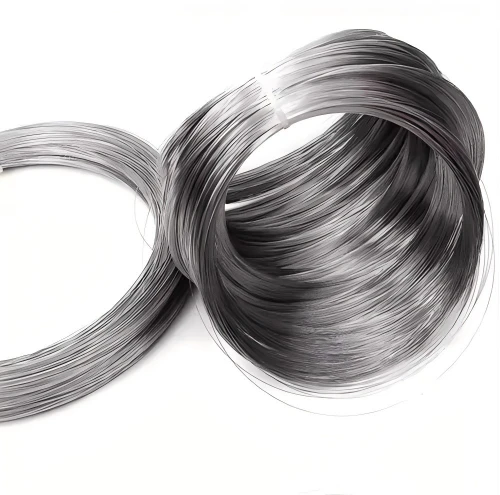
Aluminum wire also has good electrical conductivity, so it's often used in electrical applications. However, it has a lower tensile strength compared to steel wire. This means that it may not be suitable for applications that require high strength and load - bearing capacity.
4. Fiberglass Reinforced Plastic (FRP) Rods
FRP rods are becoming increasingly popular as a substitute for bead steel wire in some applications. They are made of glass fibers embedded in a plastic matrix, which gives them high strength and corrosion resistance.
FRP rods are non - conductive, which makes them ideal for electrical applications where there is a risk of electrical shock. They are also resistant to chemicals and UV radiation, making them suitable for outdoor and industrial applications. However, they are relatively new to the market, and their cost can be relatively high compared to traditional steel wires.
5. Nylon Rope
In some cases, nylon rope can be used as a substitute for bead steel wire. Nylon rope is flexible, lightweight, and has good shock - absorbing properties. It's commonly used in marine applications, such as mooring lines and towing ropes.
Nylon rope is also resistant to abrasion and chemicals, which makes it suitable for a variety of industrial and outdoor uses. However, it has a lower tensile strength compared to steel wire, so it's not suitable for applications that require high strength and load - bearing capacity.
6. Other Specialized Wires
There are also some specialized wires that can be considered as substitutes depending on the specific application. For example, Steel Wire for Optical Fibre Cable is designed for use in optical fiber cable manufacturing. It has specific properties such as high precision and good flexibility to meet the requirements of this industry.
Cold Drawn Spring Wire Rods are another option. These rods are cold - drawn to improve their strength and elasticity, making them suitable for spring - related applications.
Flexible Duct Wire is designed for use in ductwork systems. It has the flexibility to conform to different shapes and sizes, which is essential for this type of application.
When choosing a substitute for bead steel wire, it's important to consider several factors. First, you need to understand the specific requirements of your application, such as strength, corrosion resistance, flexibility, and cost. You also need to consider the availability of the substitute material and whether it can be easily sourced.
As a bead steel wire supplier, I understand that sometimes a substitute might be the best option for your project. That's why I'm always here to help you make the right choice. Whether you're looking for a cost - effective alternative or a material with specific properties, I can provide you with the information and advice you need.
If you're interested in learning more about bead steel wire or any of the substitutes I've mentioned, or if you're ready to start a procurement discussion, feel free to reach out. I'm happy to have a chat and see how we can work together to meet your needs.
References
- "Materials Science and Engineering: An Introduction" by William D. Callister Jr. and David G. Rethwisch
- Industry reports on wire and cable manufacturing
- Technical specifications of various wire and rod products from manufacturers