

What kind of welding methods are suitable for carbon steel wire?
When it comes to carbon steel wire, one crucial aspect that often comes into play is the welding method. As a reliable carbon steel wire supplier, I understand the importance of choosing the right welding technique to ensure the quality and performance of the final product. In this blog post, I'll explore several welding methods suitable for carbon steel wire and provide insights to help you make an informed decision.
Shielded Metal Arc Welding (SMAW)
Shielded Metal Arc Welding, also known as stick welding, is a widely used method for welding carbon steel wire. This process involves using a consumable electrode coated in flux. When the electrode is struck against the workpiece, an arc is formed, melting both the electrode and the base metal. The flux coating on the electrode decomposes, creating a shielding gas that protects the weld pool from atmospheric contamination.
One of the main advantages of SMAW is its versatility. It can be used in various positions, including flat, horizontal, vertical, and overhead. This makes it suitable for a wide range of applications, from simple repairs to complex fabrication projects. Additionally, SMAW equipment is relatively inexpensive and portable, making it accessible for small-scale operations and fieldwork.
However, SMAW also has some limitations. The process is relatively slow compared to other welding methods, and the quality of the weld can be affected by the skill of the operator. The slag produced during the welding process also needs to be removed after each pass, which can be time-consuming.
Gas Metal Arc Welding (GMAW)
Gas Metal Arc Welding, commonly referred to as MIG (Metal Inert Gas) welding, is another popular choice for welding carbon steel wire. In this process, a continuous solid wire electrode is fed through a welding gun and an inert gas, such as argon or a mixture of argon and carbon dioxide, is used to shield the weld pool from oxidation.
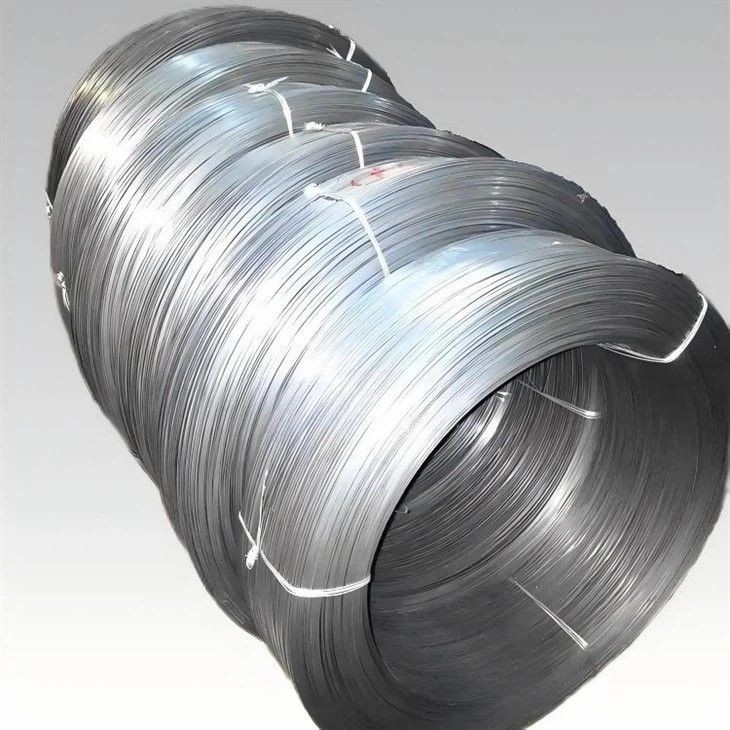
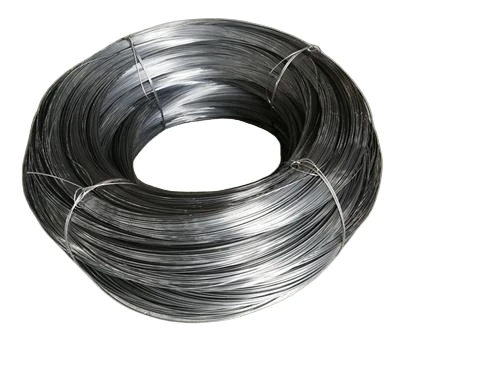
GMAW offers several advantages over SMAW. It is a faster process, allowing for higher productivity and efficiency. The weld quality is generally higher, with less porosity and better bead appearance. The process is also easier to learn and control, making it suitable for beginners.
However, GMAW equipment is more expensive than SMAW equipment, and the process requires a constant supply of shielding gas. Additionally, GMAW is more sensitive to wind and drafts, which can disrupt the shielding gas and affect the quality of the weld.
Gas Tungsten Arc Welding (GTAW)
Gas Tungsten Arc Welding, also known as TIG (Tungsten Inert Gas) welding, is a precise and high-quality welding method suitable for carbon steel wire. In this process, a non-consumable tungsten electrode is used to create an arc, and a separate filler metal is added to the weld pool as needed. An inert gas, such as argon, is used to shield the electrode and the weld pool from oxidation.
GTAW offers excellent control over the welding process, allowing for precise welds with minimal distortion. The process produces high-quality welds with good mechanical properties and a clean appearance. It is also suitable for welding thin materials and can be used in applications where aesthetics are important.
However, GTAW is a relatively slow process and requires a high level of skill and experience. The equipment is also more expensive than SMAW and GMAW equipment, and the process is more sensitive to contamination.
Resistance Welding
Resistance welding is a group of welding processes that use the heat generated by the resistance to electric current flow through the workpiece to create a weld. There are several types of resistance welding, including spot welding, seam welding, and projection welding.
Spot welding is the most common type of resistance welding used for carbon steel wire. In this process, two copper electrodes are placed on either side of the workpiece, and a high current is passed through the electrodes for a short period of time. The heat generated by the resistance to the current flow melts the metal at the contact points, creating a weld.
Resistance welding offers several advantages, including high productivity, consistent weld quality, and the ability to weld thin materials. The process is also relatively clean and does not require the use of shielding gas or filler metal.
However, resistance welding equipment is expensive and requires a high initial investment. The process is also limited to welding relatively small areas and may not be suitable for large-scale production.
Submerged Arc Welding (SAW)
Submerged Arc Welding is a high-productivity welding method suitable for welding thick carbon steel wire. In this process, an arc is formed between a continuous solid wire electrode and the workpiece, and the arc is submerged under a layer of granular flux. The flux protects the weld pool from oxidation and provides a slag that floats on the surface of the weld, protecting it from the atmosphere.
SAW offers several advantages, including high deposition rates, excellent weld quality, and the ability to weld thick materials in a single pass. The process is also relatively clean and produces minimal fumes and spatter.
However, SAW equipment is large and expensive, and the process requires a dedicated welding area. The flux used in the process also needs to be recycled, which can add to the cost of the operation.
Choosing the Right Welding Method
When choosing a welding method for carbon steel wire, several factors need to be considered, including the thickness of the wire, the type of application, the desired weld quality, and the available equipment and resources.
For thin carbon steel wire, GTAW or resistance welding may be the best choice, as they offer precise control and minimal distortion. For thicker wire, SMAW, GMAW, or SAW may be more suitable, as they offer higher deposition rates and the ability to weld thick materials in a single pass.
The type of application also plays a role in the choice of welding method. For applications where aesthetics are important, GTAW or GMAW may be preferred, as they produce clean and attractive welds. For applications where strength and durability are the main concerns, SAW or resistance welding may be more appropriate.
Finally, the available equipment and resources also need to be taken into account. If you have limited budget and equipment, SMAW may be the most practical choice. If you have access to more advanced equipment and resources, GMAW, GTAW, or SAW may offer better performance and productivity.
Conclusion
As a carbon steel wire supplier, I understand the importance of choosing the right welding method to ensure the quality and performance of the final product. Each welding method has its own advantages and limitations, and the choice of method depends on several factors, including the thickness of the wire, the type of application, the desired weld quality, and the available equipment and resources.
If you're looking for high-quality carbon steel wire for your welding projects, we offer a wide range of products, including High Carbon Patented Spring Steel Wire, Cold Drawn High Carbon Steel Wire, and Ungalvanized High Carbon Patented Steel Wire. Our products are made from high-quality materials and are available in a variety of sizes and specifications to meet your specific needs.
If you have any questions or need further information about our products or welding methods, please don't hesitate to contact us. We're here to help you find the right solution for your welding projects.
References
- AWS Welding Handbook, Volume 1: Welding Science and Technology, American Welding Society
- Welding Metallurgy and Weldability of Stainless Steels, John C. Lippold and David J. Kotecki
- Modern Welding Technology, Richard L. Petzold